Spring 2025 Student Research Project: Stingrays
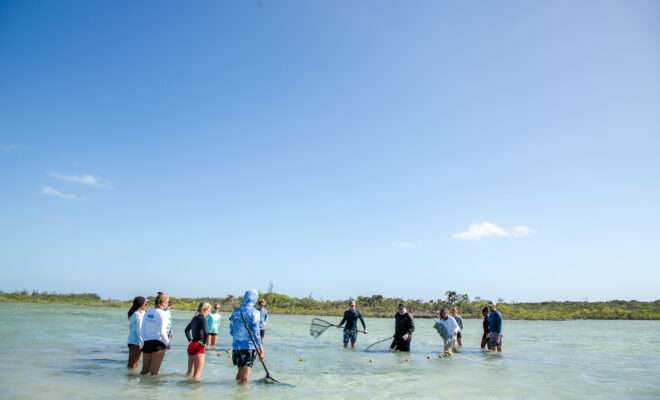
Each semester, Island School students dive into hands-on research alongside scientists from the Cape Eleuthera Institute, contributing to meaningful, place-based studies that explore the unique ecosystems of The Bahamas. These Spring 2025 research groups—focused on conch, stingrays, coral grazers, corals, lobsters, sharks, and sustainable energy—are tackling real-world questions with curiosity, collaboration, and care.
In this blog series, students share their experiences, challenges, and discoveries as they navigate the research process and deepen their understanding of both science and self.
Rays in the Light: Assessing Ray Diversity and Conservation in The Bahamas
Vivienne Alfonso, Addie Clark, Cian Davis, Jack Kriebel, Koa Opper, Lila Plenge, Sienna Pollock, Gabriella Ransom, and Sonja Rikkers
Introduction
Batoids (rays and skates) are facing intense environmental and human threats. They belong to the world’s second most threatened vertebrate group, elasmobranchs, which also includes sharks. Batoids in particular have experienced a 31% increase in threatened species between 1970 and 20202. The Bahamas is home to diverse ray species, such as the Southern Stingray and the Spotted Eagle Ray, which benefit the country’s tourist-reliant economy and the broader ecosystem3. Rays contribute significantly to ecosystem dynamics through bioturbation—the process of creating pits in the sand while searching for buried prey—which promotes nutrient redistribution and benefits fish and other marine species4. Additionally, their position in the food web helps stabilize ecosystems by regulating populations of lower trophic-level organisms4.
Approximately 36% of ray species worldwide are threatened, primarily due to overfishing, as they are targeted for their gill plates, fins, and meat. They are also frequently caught as bycatch in various fishing gear2,4. Shallow water ray species are more threatened due to habitat overlap with fishing activity and easier access. Deep water ray populations may become more threatened as fisheries continue their trend of moving into deeper waters to account for shallow water population declines. Due to their later age of maturity and lower reproduction rate, it is harder for ray species to recover from the overfishing and other threats like habitat loss1.
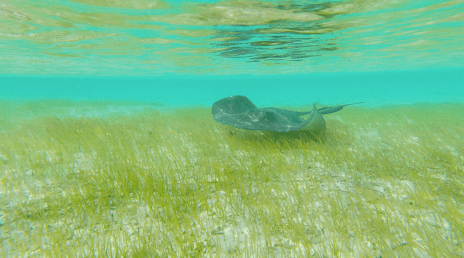
In The Bahamas, there are knowledge gaps surrounding ray abundance, diversity, and threats. Therefore, this research project is aiming to fill some of these gaps by gathering available data from published research papers, social media posts, and a citizen science platform (iNaturalist), along with surveys around South Eleuthera to support the deserved conservation of rays.
Research Methods
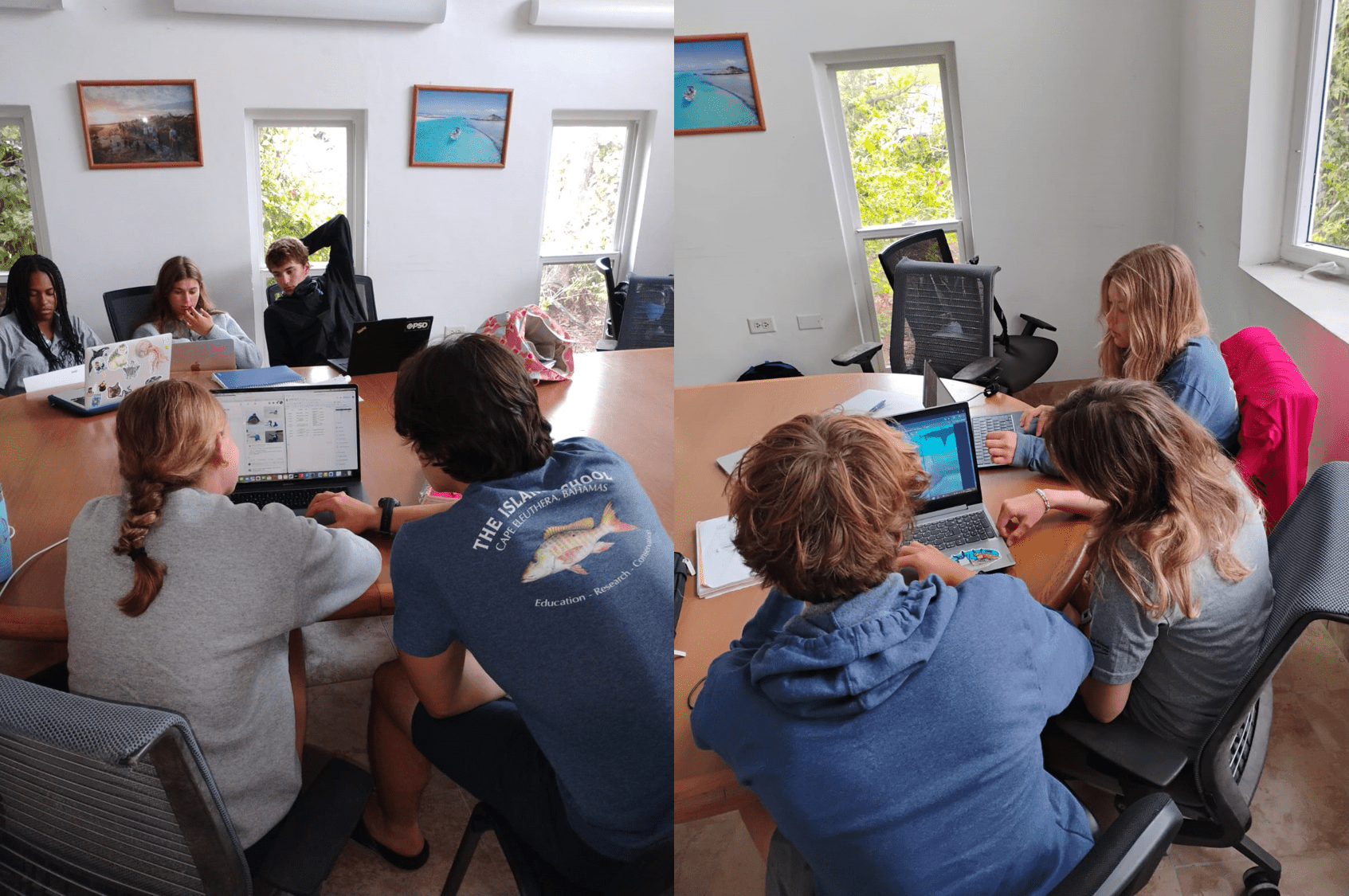
To become more familiar with the topic, we read and discussed pre-selected research papers. After reading these papers our research group started looking for other relevant literature on Google Scholar, which is a tool we employed to find reliable sources. To do so we selected a combination of key words (rays + conservation + The Bahamas) to narrow down the search. Next, we would spreadsheet the relevant information so we could start creating a data base. Then we used non-traditional sources to gather data (Instagram + Facebook + iNaturalist) regarding media posts that provided the location, year, and quality photos in which the species and sex could be determined. To better understand how rays contribute to the Bahamian economy, we also collected data about tourist activities using TripAdvisor and general google searches using specific key words (rays + The Bahamas + feeding + snorkeling + experience).
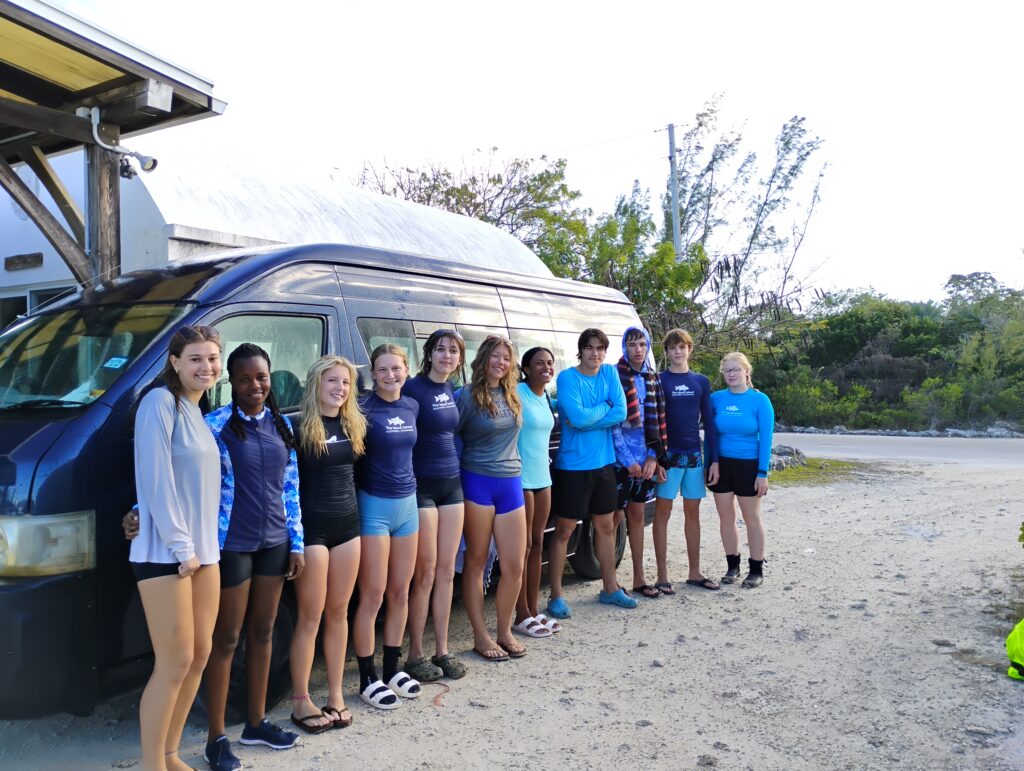
During our field blocks, we snorkeled in mangrove creeks, coves, and the open ocean, keeping an eye out for rays. We minimized splashing to not scare them away. Once a ray was spotted, someone would take photos while keeping a safe distance, prioritizing ours and the ray’s safety.

These photos were uploaded in a folder that all research team members have access to, to further analyze and extract data from it. Photos of other animals found in these surveys were also included in the database.

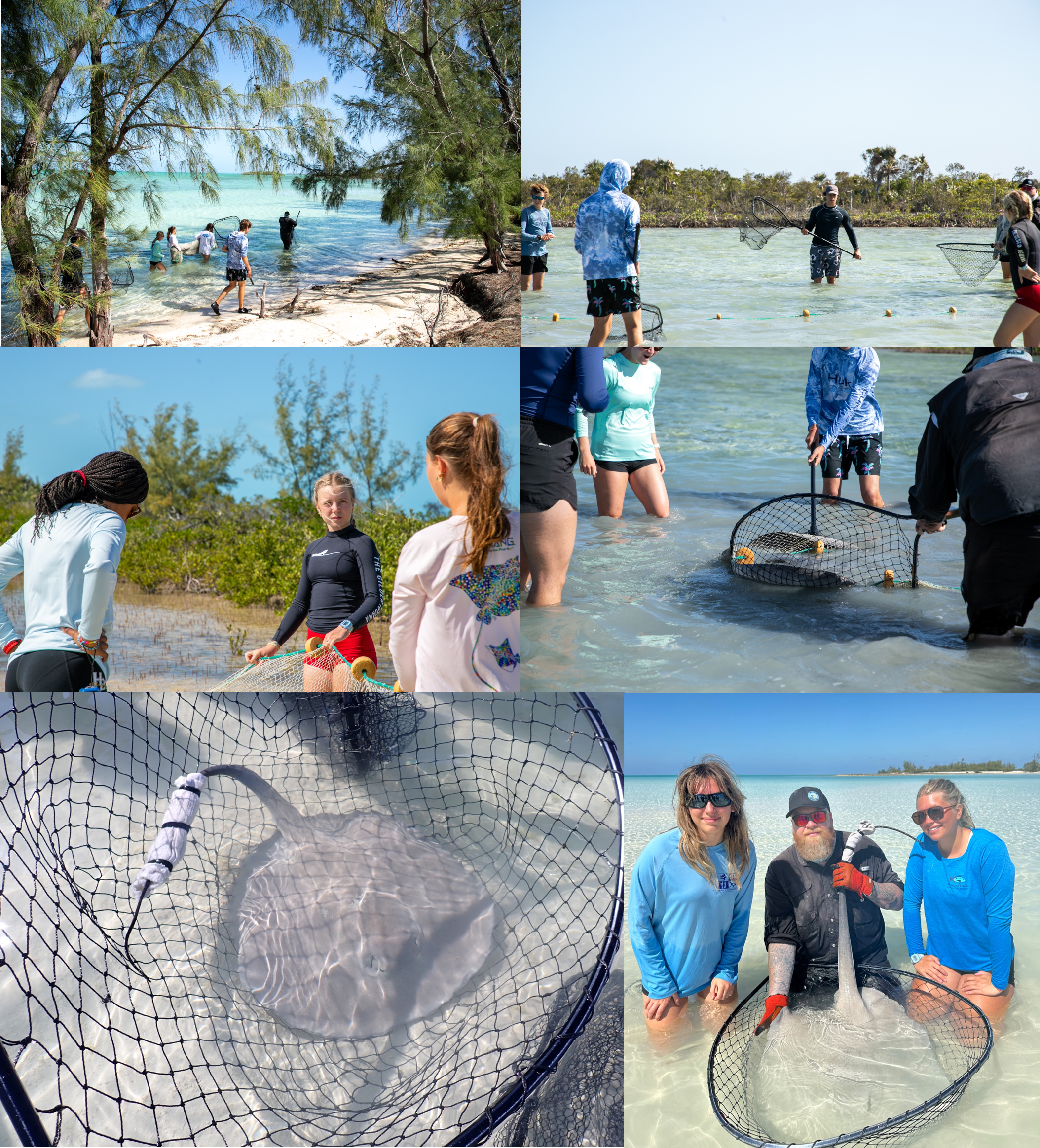
We also went out fishing for rays (Research Permit: BS2024572006) and collected body measurements, blood samples, and photos. This data complemented the other projects being developed by CEI on rays.
Expected Outcomes
Our research will provide a compilation of knowledge surrounding ray diversity, abundance, and threats in The Bahamas. In our paper searches we expect to find information that address the current status (or the lack) of rays in The Bahamas. In our social media/iNaturalist/TripAdvisor searchers, we expect to find more information on ray tourism and local conservation efforts. Lastly, by going into the field, we hope to create a database of different types of rays living in the region, such as Southern, Yellow, and Chupare stingrays, and map where they are. Overall, we’re hoping to spark the creation of long-term policy regarding the protection and conservation of rays in The Bahamas.
Citations:
1 Kyne, P.M. (2016). Ray Conservation. In P. Last, W. White, M. de Carvalho, B. Seret, M. Stellman, & G. Naylor (Eds.), Rays of the World (1st ed., pp. 21-24). CSIRO Publishing.
2 Dulvy, N. K., Pacoureau, N., Matsushiba, J. H., Yan, H. F., VanderWright, W. J., Rigby, C. L., Finucci, B., Sherman, C. S., Jabado, R. W., Carlson, J. K., Pollom, R. A., Charvet, P., Pollock, C. M., Hilton-Taylor, C., & Simpfendorfer, C. A. (2024). Ecological erosion and expanding extinction risk of sharks and rays. Science (AAAS), 386(6726), eadn1477.
3 Haas, A. R., Fedler, T., & Brooks, E. J. (2017). The contemporary economic value of elasmobranchs in The Bahamas: Reaping the rewards of 25 years of stewardship and conservation. Biological Conservation, 207, 55–63.4 Flowers, K. I., Heithaus, M. R., & Papastamatiou, Y. P. (2021). Buried in the sand: Uncovering the ecological roles and importance of rays. Fish and Fisheries (Oxford, England), 22(1), 105–127.
4 Flowers, K. I., Heithaus, M. R., & Papastamatiou, Y. P. (2021). Buried in the sand: Uncovering the ecological roles and importance of rays. Fish and Fisheries (Oxford, England), 22(1), 105–127.