Spring 2025 Student Research Project: Shark Behavior
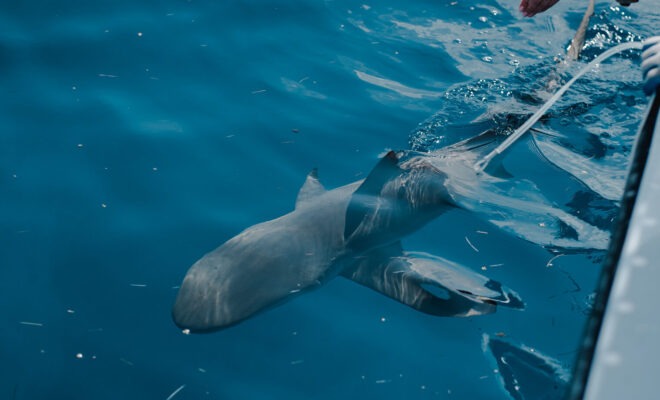
Each semester, Island School students dive into hands-on research alongside scientists from the Cape Eleuthera Institute, contributing to meaningful, place-based studies that explore the unique ecosystems of The Bahamas. These Spring 2025 research groups—focused on conch, stingrays, coral grazers, corals, lobsters, sharks, and sustainable energy—are tackling real-world questions with curiosity, collaboration, and care.
In this blog series, students share their experiences, challenges, and discoveries as they navigate the research process and deepen their understanding of both science and self.

Do Sharks Behave Differently Depending on How They are Fed?
Claus Smith, Rhys Brooks, Mac Pierce, Teddy Fischer, Oliver Foster, Quinn Hogan, Katherine (Kate) Klebe, Aish Priesing, Lily Early
Jaws, The Meg, Sharknado, and the list goes on. Sharks have been painted in a negative connotation for centuries. They have been framed to be bloodthirsty people-eaters. The popular media has struck fear into the people’s hearts about these aquatic creatures. This fear feeds the curiosity that so many have for sharks. Enthusiasts travel hundreds of miles and spend thousands of dollars for the chance to see one. In fact, shark tourism is a leading contributor to many small countries’ annual revenue, with it bringing in $113 million to The Bahamas annually. Thankfully, due to the longline fishing ban in 1993, and the establishment of the Bahamas Shark Sanctuary, the country is home to some of the healthiest shark populations in the world. A lot of the tourism that is brought into The Bahamas is largely due to this healthy shark population: these activities are generally called “elasmobranch tourism.”
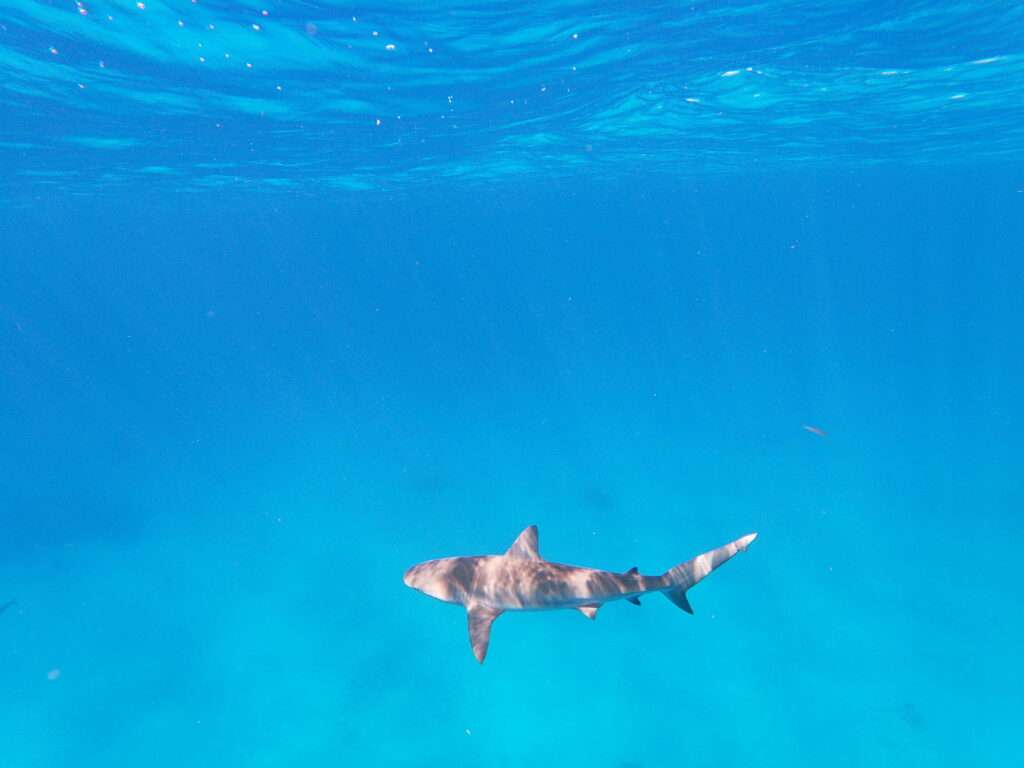
Photo Credit: Mac Pierce
1 Haas, A., Fedler, T., & Brooks, E.J. (2027). The contemporary economic value of elasmobranchs in The Bahamas: Reaping the rewards 25 years of stewardship and conservation. Biological Conservation, 207, 55-63, hhtp://dx.doi.org/10.1016?j.biocon.2017.01.007
Mission
Elasmobranch tourism is any shark and ray diving, snorkeling and provisioning (also known as feeding). These activities bring in $113 million annually to The Bahamas GDP. When elasmobranch tourism is managed in a positive way, it can have positive effects on the economy, support conservation efforts, and inform people on sharks. Unfortunately, it is not always managed correctly and can have many long-term negative impacts for sharks and people. Shark tourism can have both positive and negative effects and it is important to ensure that it is conducted responsibly.
Many shark diving operations in The Bahamas use provisioning (feeding) to draw the sharks in and guarantee that divers will be able to see them. Feeding the sharks can potentially cause long term impacts on their behavior such as inbreeding and not migrating, however this area needs more research. Provisioning can even cause the sharks to associate humans or a dive site with food, which may increase risky interactions with divers.
This semester, our research project aims to study the behavior of sharks based on the type of provisioning occurring in the area. Our study aims to test different methods of feeding that are commonly used by ecotourism companies, specifically: chumming or using a bait crate on the sea surface, and using a bait crate or a “chumcicle” (a frozen block of chum) on the seafloor, to understand how these methods of attraction change sharks’ behavior. This topic is extremely relevant in Eleuthera and throughout the Bahamian Islands, because of dive operations chumming every day, and we are wondering how this affects the sharks.8 If we can find ways to attract sharks to specific and safe dive locations without negatively affecting shark behavior, we could potentially help manage some of the negative impacts on the sharks and ensure the safest interactions for the divers as well.
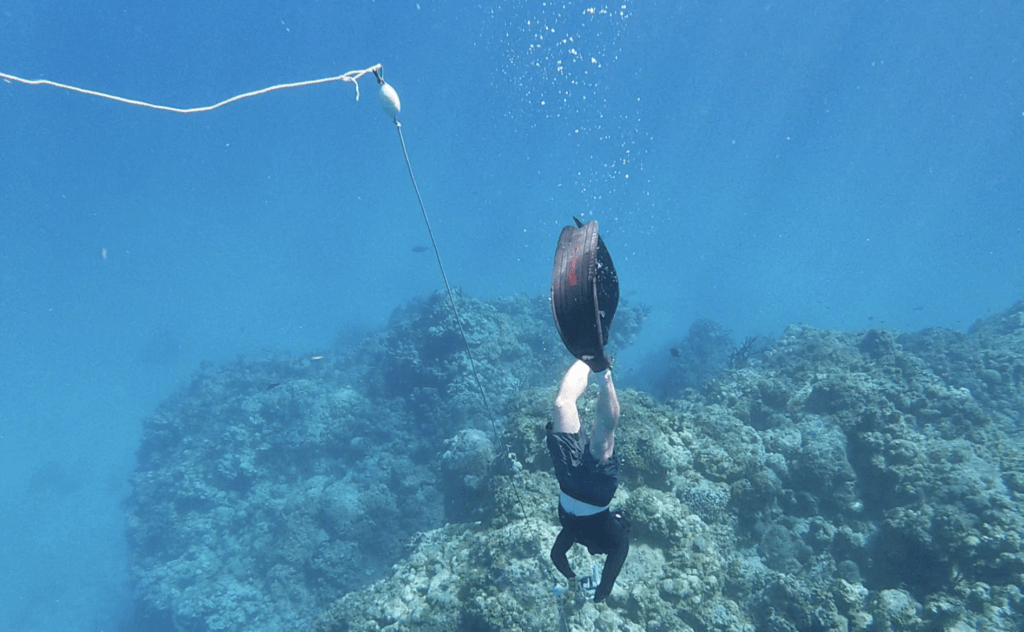
Photo Credit: Mac Pierce
Research Methods
When conducting our experiments, we will be using Bonito fish to standardize our variables, so sharks don’t change attraction to bait based on different food sources. We will measure ‘behavior change’ in two main ways; swimming velocity (or speed) and turning rate. For our first test, we filled a metal chum crate with bait and lowered it to the bottom and attached to a camera that tracks shark movements on the bottom of the ocean. For our second test, we placed a camera on the seafloor and kept the chum crate with Bonito at the surface, tracking shark movements at the surface of the ocean. For our third test, we froze Bonito and water in a bucket, making what we call a “chumsicle.” We attached the chumcicle to a concrete block for it to sink, and filmed from just beneath the surface, tracking shark movements. For our final test, we cut up bait and chummed from the surface, filming the shark movements from below.
Although we have not gathered results yet, we can make some inferences on shark behavior. The main difference between using a bait crate and feeding is that with the crate, the sharks can smell the food but not eat, while with the feeding the sharks can eat the food. Our hypothesis is that the sharks will most likely show the biggest change in swimming speed, and behavior, when chum is introduced on the sea surface. This could be because they have direct access to the food rather than just the scent.
Unfortunately, there can be negative effects of feeding sharks the correct way to make tourists happy, causing increased risk for the sharks, and tourists. However, there are also great benefits to the economy and education if these activities are done well. If we can find out which feeding method least affects the shark’s behavior (if any), we could propose a set of ‘best practices’ in order to protect the sharks and people from any greater risk. Elasmobranch tourism definitely has its positive effects, but in order to keep the environment safe and sharks happy we have to find the method of feeding that will produce the least behavioral changes for the sharks to ultimately benefit the shark’s relationship with us and our relationship with sharks.
Citations
1 Haas, A., Fedler, T., & Brooks, E.J. (2027). The contemporary economic value of elasmobranchs in The Bahamas: Reaping the rewards 25 years of stewardship and conservation. Biological Conservation, 207, 55-63, hhtp://dx.doi.org/10.1016?j.biocon.2017.01.007
2 Healy, T., Hill, N., Barnett, A., Chin, A., (2020). A global review of elasmobranch tourism activities, management and risk. Marine Policy, 118. https://doi.org/10.1016/j.marpol.h2020.103964.
3 Hass, A., Felder, T., & Brooks, E., (2017). The contemporary economic value of elasmobranchs in The Bahamas: Reaping the rewards of 25 years of stewardship and conservation. Biological Conservation, 207 ; 55-63. http://dx.doi.org/10.1016/j.biocon.2017.01.007
4 Healy, T., Hill, N., Barnett, A., Chin, A., (2020). A global review of elasmobranch tourism activities, management and risk. Marine Policy, 118. https://doi.org/10.1016/j.marpol.h2020.103964.
5 Hass, A., Felder, T., & Brooks, E., (2017). The contemporary economic value of elasmobranchs in The Bahamas: Reaping the rewards of 25 years of stewardship and conservation. Biological Conservation, 207 ; 55-63. http://dx.doi.org/10.1016/j.biocon.2017.01.007
6 Becerril-Garcia, E., Hoyos-Padilla, E., Micarelli, P., Galvan-Magana, F., & Sperone, E. (2020). Behavioural Responses of White Sharks to Specific Baits During Cage Diving Ecotourism. Scientific Reports, https://doi.org/10.1038/s41598-020-67947-x.
7 Becerril-Garcia, E., Hoyos-Padilla, E., Micarelli, P., Galvan-Magana, F., & Sperone, E. (2020). Behavioural Responses of White Sharks to Specific Baits During Cage Diving Ecotourism. Scientific Reports, https://doi.org/10.1038/s41598-020-67947-x.
8 Healy, T., Hill, N., Barnett, A., Chin, A., (2020). A global review of elasmobranch tourism activities, management and risk. Marine Policy, 118. https://doi.org/10.1016/j.marpol.h2020.103964.
9 Becerril-Garcia, E., Hoyos-Padilla, E., Micarelli, P., Galvan-Magana, F., & Sperone, E. (2020). Behavioural Responses of White Sharks to Specific Baits During Cage Diving Ecotourism. Scientific Reports, https://doi.org/10.1038/s41598-020-67947-x.