Deep Creek Middle School Educator Takes Experiential Learning to New Depths

When Ashlee Major first arrived at Deep Creek Middle School (DCMS) to complete her teaching practice, she had no idea that the experience would completely reshape the way she thought about education—and herself.
Originally from Long Island in the Central Bahamas, Ashlee had heard about The Island School from her peers, as well as her teaching mentors, and knew that our teaching style was different from other schools in The Bahamas.
When she had the opportunity to join DCMS and complete her teaching practice through the Teaching Fellowship Program, a partnership between The Island School and the University of The Bahamas, she decided to take the chance.
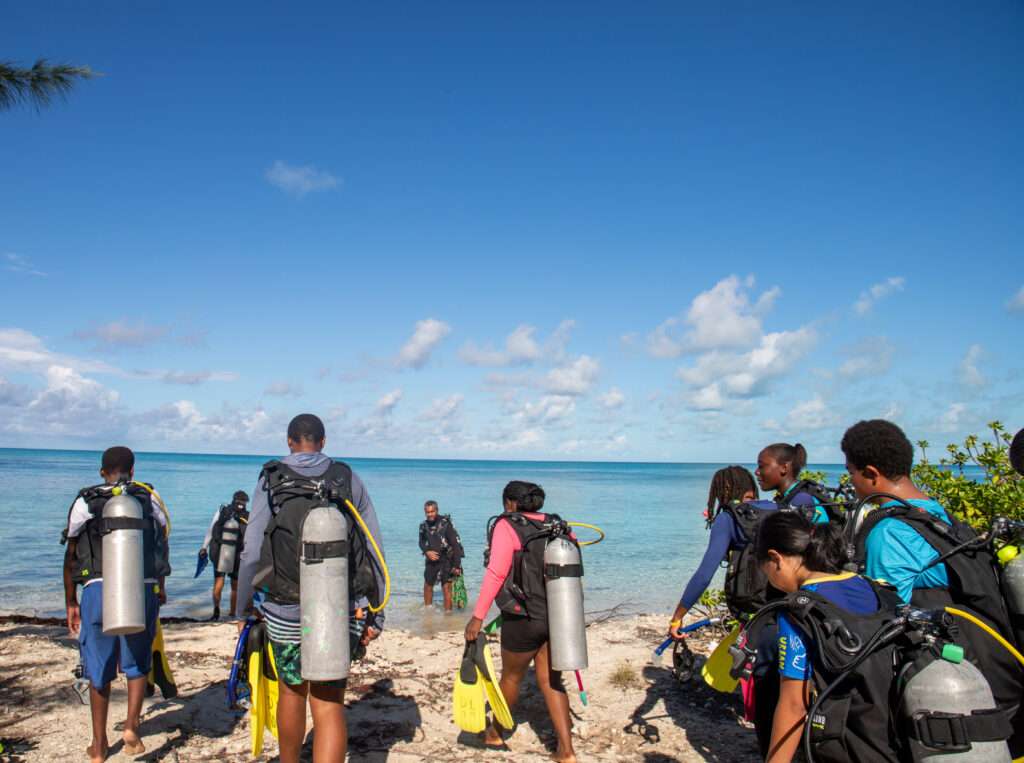
“DCMS has a more hands-on, place-based learning approach compared to the traditional schooling system in The Bahamas,” Ashlee said. “We follow a curriculum, and we include more experiential learning tactics in our lessons. You don’t see a lot of that in the traditional classroom setting. Maybe in science classes where you’re doing experiments, but here, you get to see it in English; you see it in social studies. Our kids are making podcasts, they’re doing research, they’re writing. They’re learning by doing.”
After completing her teaching certificate, she stayed on as a full-time English and literature teacher for grades seven through nine.
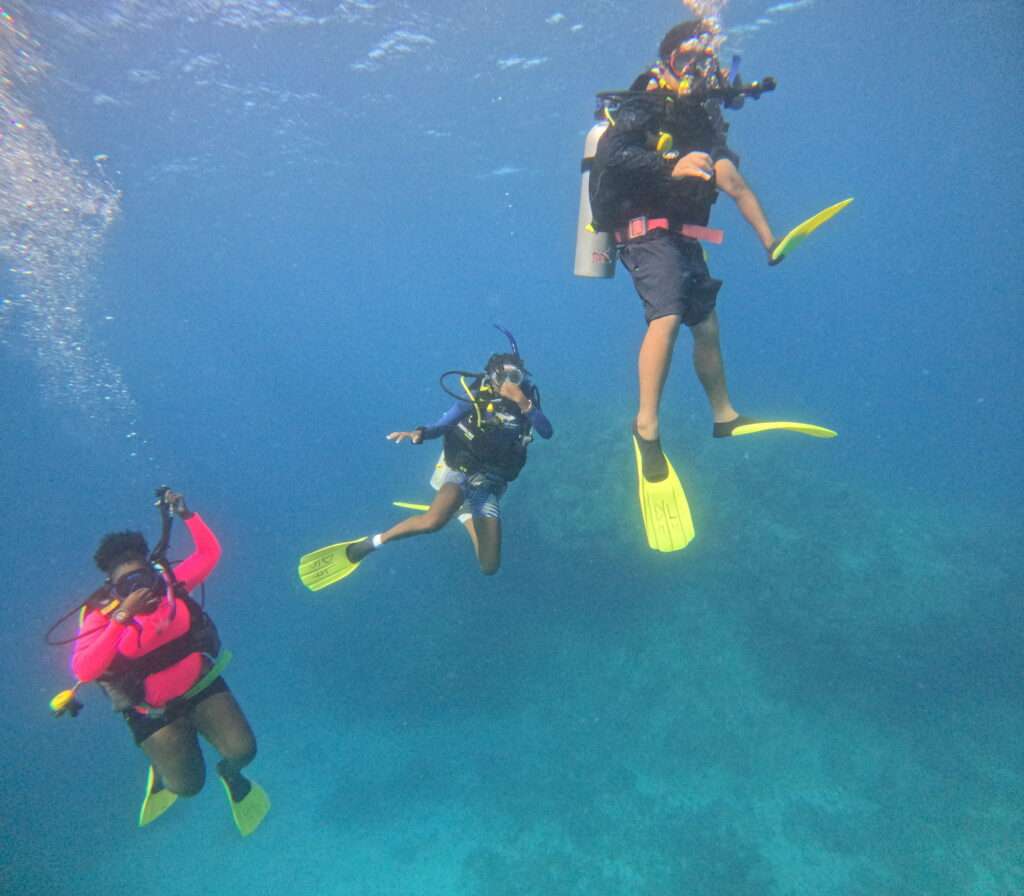
In the spirit of experiential learning, Ashlee is taking herself to new depths, and she just accomplished something she never thought she would: her scuba certification.
Diving Into Learning Together
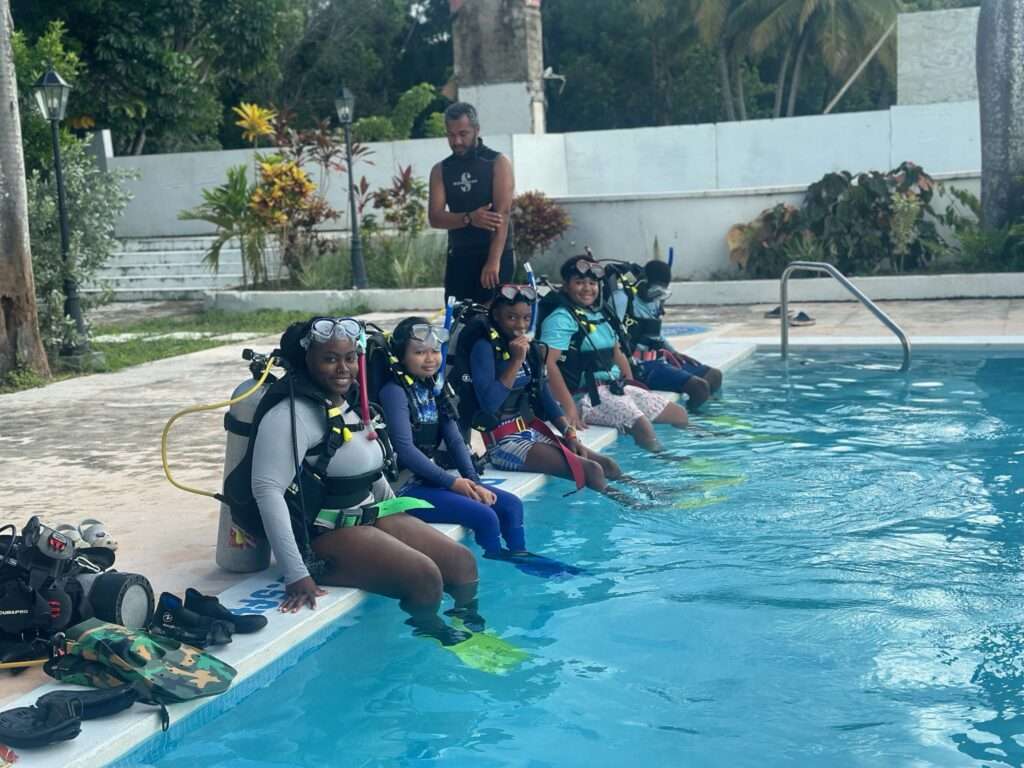
Each year, DCMS Grade 9 students complete their Open Water Scuba Certification as part of School Without Walls, a program that is designed to get students outside of the traditional classroom setting and learn from the world around them. During Ashlee’s first School Without Walls, she was amazed to see the students gearing up for a dive.
“I remember thinking, ‘these kids are 13 and getting scuba certified!’ I was 24 at the time, and I thought, if they can do it, I can too. Especially living in The Bahamas, surrounded by water—it just made sense,” she said.
What started as a casual idea quickly became a personal challenge for Ashlee. “At first I just said it, like ‘yeah, I’m going to get scuba certified,’” she laughed. “Then someone asked if I was really going to do it—and I realized I had to follow through.”
And that’s exactly what she did.
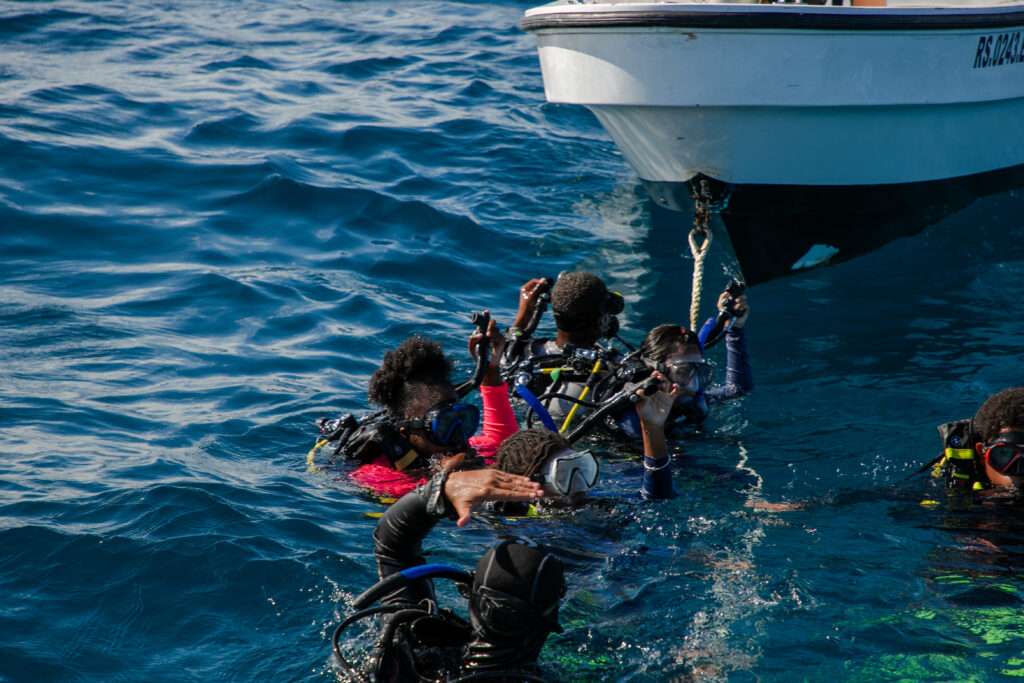
This fall, alongside her Grade 9 students, Ashlee completed her PADI Open Water Certification.
“It was surreal,” Ashlee said. “Just breathing underwater for the first time—it felt so strange, so new. Hearing the hissing of the regulator, seeing how the light changes, the different shades of blue. It’s spectacular. And seeing the coral reef up close, watching how the fish interact—it reminded me of how we interact with our community. It made me want to protect it.”
And her students shared that same sense of awe. While some were nervous at first, watching their teacher gave them the courage they needed to dive in. “They’d look over and see me doing it, and suddenly they’d try again. A few who planned not to dive ended up getting certified. That was really special, being part of that growth.”
From the Ocean to the Classroom
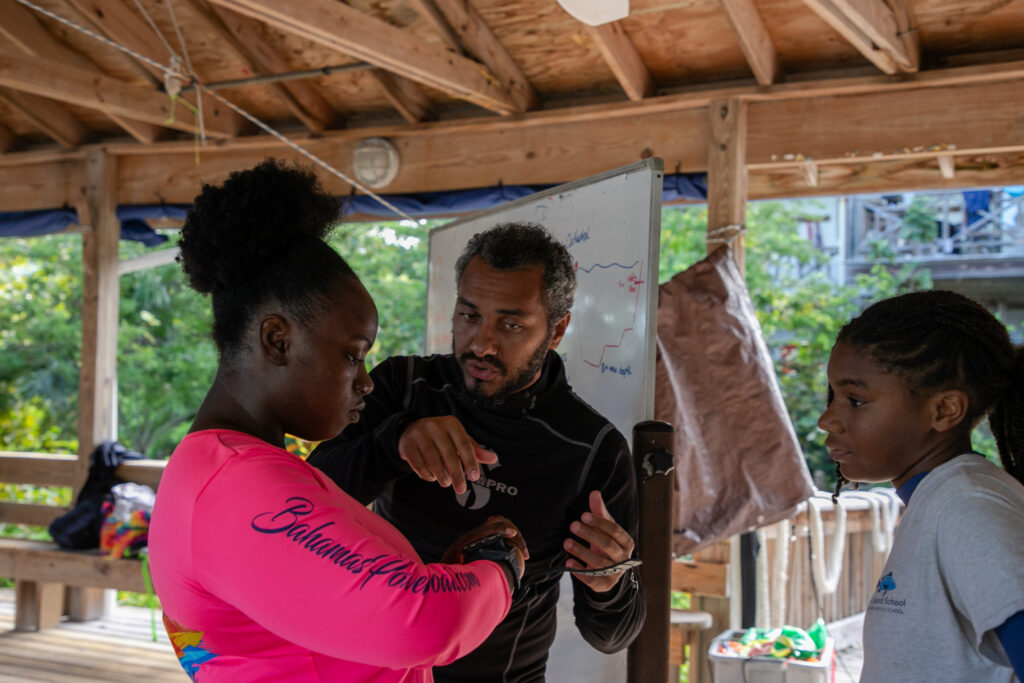
Back in the classroom, the group’s new scuba experiences became a source of creative inspiration.
Ashlee said that she herself was incredibly moved by the sights, sounds, and sensations that accompany your first breaths underwater, and quickly worked to incorporate that into her lessons.
“Last year, I would’ve never imagined teaching creative writing based on what my students and I saw underwater,” she said. “Now they’re writing poems and short stories inspired by our dives—describing the light, the sound, the feeling of being under the surface. It has made their writing come alive.”
Those connections, between the environment, the curriculum, and the students’ personal experiences, are what make the learning experience at DCMS so unique.
Growing As An Educator
Ashlee’s time at DCMS has also deepened her understanding of what it means to teach.
“I’ve always loved watching that ‘ooh’ moment when something clicks for a student,” she said. “But here. It’s more than that. I see the impact of giving students real experiences, of watching them connect what they’re learning in class to what they see in the world.”
Since joining DCMS, Ashlee has not only grown as an educator and earned her scuba certification. She has also completed Wilderness First Aid and other professional development courses. “These are things I never imagined doing as a teacher,” she said. “Now I’m here looking for the next opportunity. I’m thinking about getting my boat captain’s license. I love teaching, and now I love diving. Maybe one day I’ll combine them and become a dive instructor to teach others to explore and protect the ocean.”
Her experience has reinforced her belief that learning isn’t limited to a classroom or a textbook. She has seen experiential learning transform students and help those who have different learning styles build confidence in their abilities.
Inspired by Students and the Sea
For Ashlee, the partnership between The Island School and the University of The Bahamas has opened doors she didn’t know existed. “I didn’t even know that there were schools in The Bahamas doing this kind of learning,” she said. “Now I see how impactful it is—not just for students, but for teachers too.”
Watching her students dive into new experiences continues to inspire her. “When I see them realizing what’s possible—that they can use their scuba certification to work in marine science or tourism—it’s amazing. Their possibilities are endless.”
One thing’s for sure: whatever she does, Ashlee Major will keep learning by doing—and inspiring her students to do the same.