Spring 2026 Student Research Project: Sharks
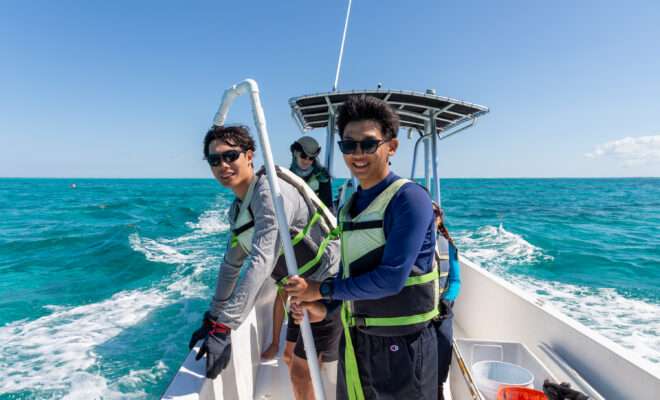
Each semester, Island School students dive into hands-on research alongside scientists from the Cape Eleuthera Institute, contributing to meaningful, place-based studies that explore the unique ecosystems of The Bahamas. These Spring 2026 research groups—focused on queen conch, Marine Protected Areas (MPA), corals, sharks, marine mammals, black land crabs, agroforestry, and sustainable systems—are tackling real-world questions with curiosity, collaboration, and care.
In this blog series, students share their experiences, challenges, and discoveries as they navigate the research process and deepen their understanding of both science and self.
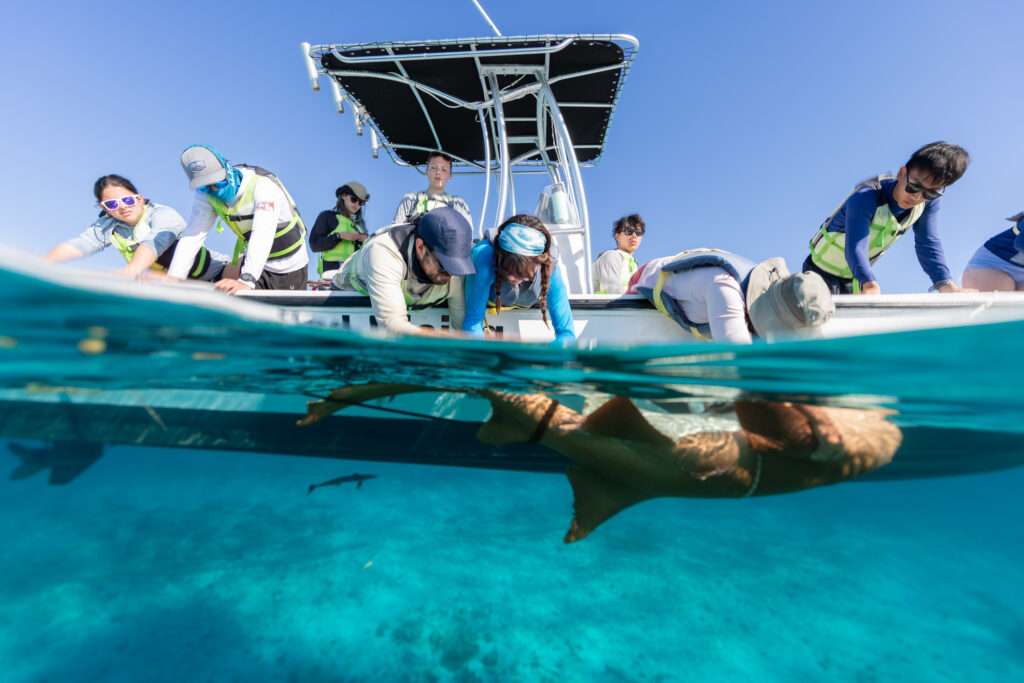
What a Catch: A Study of Nurse Shark Reproduction
Written by the Shark research team: Corby Adams, Sasha Wagner, Will Carnell, Elias Steiner, WeiLi Huang, Chris Son, Josephine O’Brien, led by Candace Fields, Ph.D., and Noah Sonnenberg, assisted by Amya Martinov, Jacob Coates, Sofia Lordello.
Here, at The Island School, shark research isn’t something we study in textbooks; it’s something that we live and experience firsthand. This spring, our shark research team asked a focused but meaningful question: How does reproductive hormone concentration in nurse sharks vary seasonally within a localized coastal population? Behind this grand question lies early-morning hustle, careful fieldwork, the study of shark biology, and a deeper effort to understand the rhythms of marine life.
Sharks are often portrayed as furious apex predators, but beneath their strong presence lies a complex and highly interesting reproductive system. Our group mainly focuses on the nurse shark (Ginglymostoma cirratum), a coastal species abundant throughout the Caribbean (Castro, 2000). Nurse sharks are a perfect fit for this research because they tend to remain in localized areas during reproductive activities, which is critical for collecting data. Additionally, by focusing on a single coastal population, we can examine seasonal changes in reproductive hormones, including testosterone (T), progesterone (P4), and estradiol (E2).
Why are we conducting this specific research project? Understanding these seasonal hormonal shifts is important for more than academic curiosity. This work is to protect the nurse shark population and create awareness. Reproductive biology and timing influence population stability, nursery habitat use, and vulnerability to stressors. If we can determine when nurse sharks are most reproductively active, conservation strategies can better protect them during critical periods. Especially in a world where marine species’ lives are significantly affected by climate change, habitat degradation, and human activity, detailed research about reproductive biology becomes essential.
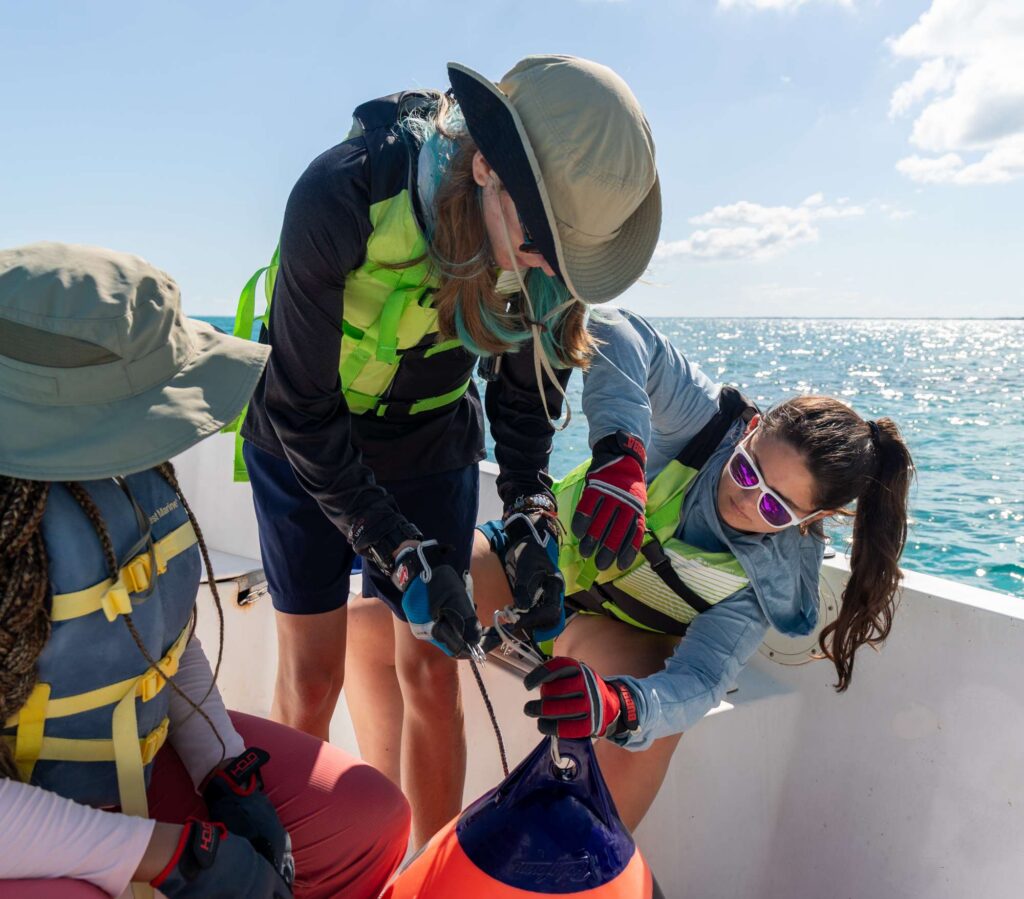
Our research group meets twice weekly, once for a field block where we fish off the coast of South Eleuthera, The Bahamas, and once for discussion. Field observations and work begin early in the morning. Preparation is key: bait crates, measuring tape, datasheet, med kit, tool kit, drums, buoys, yoyo lines, and tagging tools are all required for the work we do. Like many other scientific reports, we use similar methods, such as taking measurements, fin clipping, tagging, and blood extraction, to identify and obtain essential information from each nurse shark. Every one of our group members is assigned a specific role on the boat: head rope, tail rope, mid-body standby, data collection, fin clipping, and tagging. Depending on the shark’s sex, additional data is collected. For males, we take clasper measurements, and for females, we perform an ultrasound to determine their reproductive stage (i.e., whether they have pups or developing eggs). Unlike males, females lack external reproductive organs, making it more difficult to assess their maturity levels. However, for every shark, we always record the precaudal, fork, and total length, as well as girth. This helps us assess a shark’s maturity; males reach maturity at a total length of ~214 cm, whereas females reach maturity at ~224 cm (Castro, 2000).
In discussion blocks, we review the scientific literature as a group and receive lectures from the shark team. Over time, we gained numerous experiences and expanded our knowledge of shark biology and ecology. Our group mostly focused on mating behaviors of the nurse sharks, such as biting, triennial and biennial reproductive cycles, and chasing (Pratt & Carrier, 2001). These valuable insights help us understand the biology of nurse sharks, recognize the importance of protecting them, and inform future research.
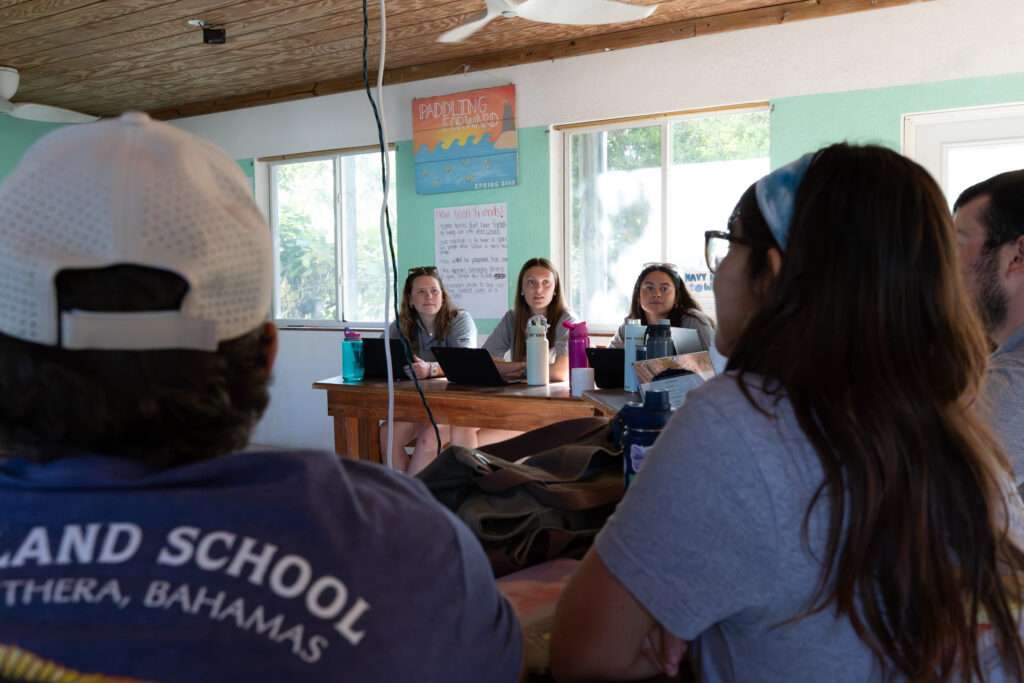
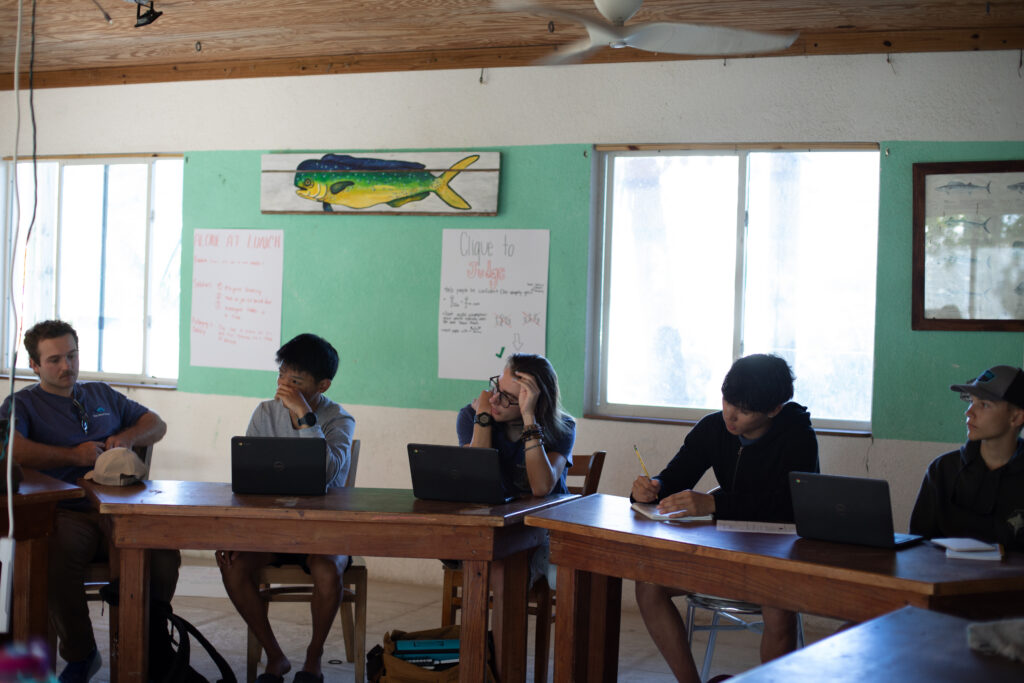
Fig 3 & 4. The Shark team during a discussion block.
This research is both demanding and rewarding. It requires precision, teamwork, and respect for the animals we study. Most importantly, it provides moments of awe: holding a living shark or feeling its skin on your bare hands. Through our work at The Island School, we are not only collecting hormone data; we are paving the way for a brighter future. Throughout the remainder of the semester, we hope to continue to gain insight into the biological cycles that sustain nurse shark populations and, ultimately, into how best to protect them.
References
- Castro, J. I. (2000). The biology of the nurse shark, Ginglymostoma cirratum, off the Florida east coast and the Bahama Islands. Environmental Biology of Fishes, 58(1), 1-22.
- Pratt, H. & Carrier, J. (2001). A review of elasmobranch reproductive behavior with a case study on the nurse shark, Ginglymostoma cirratum. Environmental Biology of Fishes, 60(1), 157-188.