Spring 2026 Semester Research Project: Marine Mammals
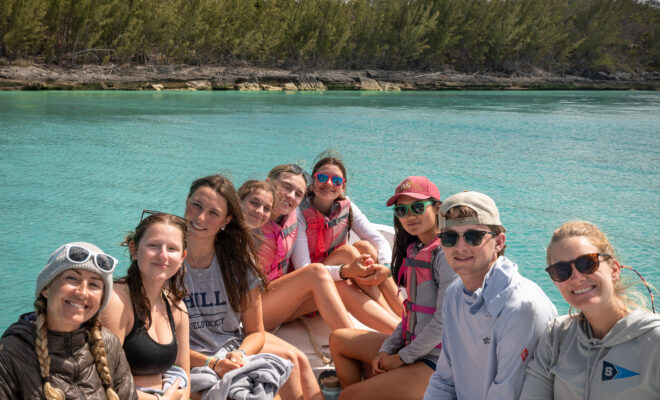
Each semester, Island School students dive into hands-on research alongside scientists from the Cape Eleuthera Institute, contributing to meaningful, place-based studies that explore the unique ecosystems of The Bahamas. These Spring 2026 research groups—focused on queen conch, Marine Protected Areas (MPA), corals, sharks, marine mammals, black land crabs, agroforestry, and sustainable systems—are tackling real-world questions with curiosity, collaboration, and care.
In this blog series, students share their experiences, challenges, and discoveries as they navigate the research process and deepen their understanding of both science and self.

Solving the Mystery of Toothed Whales in the Exuma Sound: Beaked Whales and Why They Are So Understudied
Written by the marine mammals research team: Gioia Brown, Avery Loughborough, Maerav Duchovnay, Bridget Igoe, Kyla Partensky, Vienna Ting, and George Saunders, led by Natalie Hodges and assisted by Eloise Pieper
How long would it take you to free dive 2000 meters? Could you stay this deep for two hours long? Would you be able to find your prey in the deep, dark depths of the sea? Probably not! But, do you want to know what can? Beaked whales.
Beaked whales (family Ziphiidae), are a group of species in the category of toothed whales (Odontocetes). Toothed whales are characterised by their lack of baleen. This includes the two species we are focusing our research on, beaked whales and bottlenose dolphins. Currently, 24 species of beaked whales are known to science, and they make up around 25% of all whale and dolphin species. All of this said, scientists are still discovering new species today!
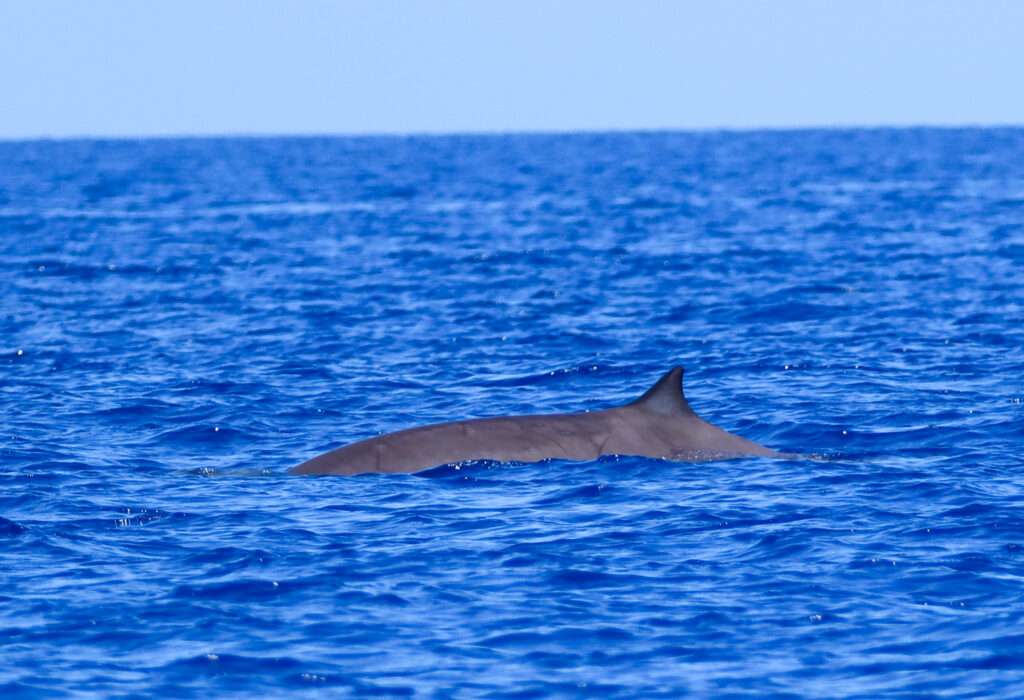
Beaked whales are capable of diving over 1000 meters deep (that’s almost 2 miles!). They do this by slowing their heart rates and compressing their rib cages to prevent nitrogen from getting into their bloodstreams. During these dives beaked whales hunt for their primary prey, the deep-sea squid, in order to reduce competition from other species. When they do eventually surface, spotting these whales is challenging due to their small bodies, which tend to look like waves, making the task even more strenuous. Given this challenge, researchers have found a method that avoids the biases from weather and light. This method is called acoustic monitoring, which uses hydrophones to observe patterns in whale sounds to better estimate abundance 2.
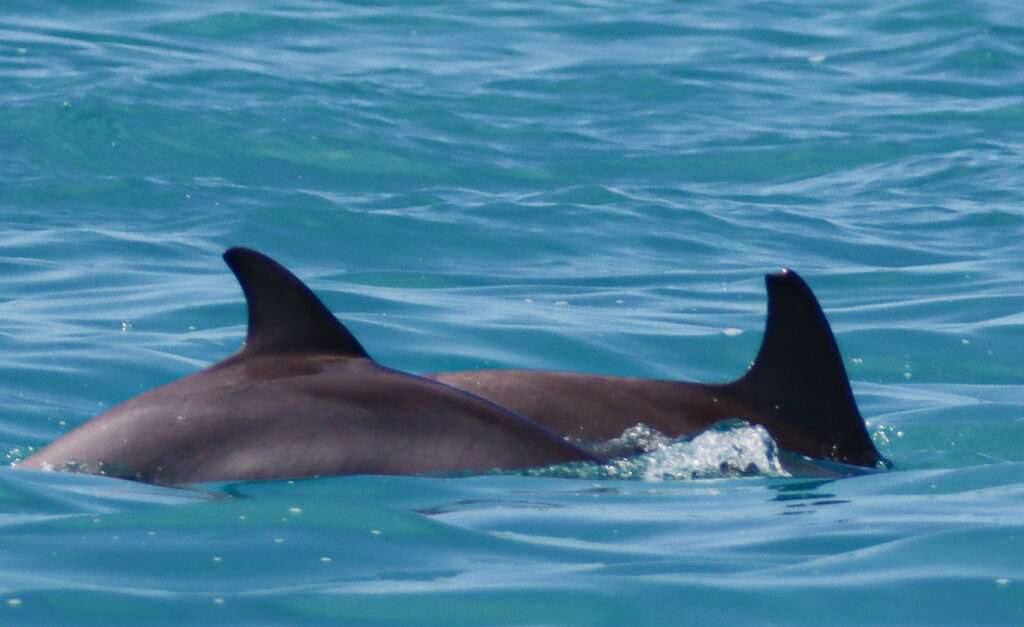
Whales produce echolocation clicks used to forage and navigate through the darkness. These clicks are produced at a high frequency of 40 Kilohertz which humans cannot hear. Dolphins also have signature whistles that they use to identify themselves when socializing. Both clicks and whistles are picked up by the hydrophone to collect data on abundance and distribution. Through their deep dives beaked whales provide a major ecosystem benefit by helping recirculate nutrients and sinking carbon in the ocean. This characteristic is called the “whale pump.”
Although these whales seem superhuman, they also have their kryptonite! Beaked whales face many threats in their existence, although there are three specific threats that seem to have the largest impact on this species. This includes climate change, plastic pollution, and acoustic disturbance. Climate change harms these whales by adjusting their environment, which, in turn, affects their diet, habitat, and reproductive rate.
Plastic pollution negatively affects beaked whales because their main prey, deep-sea squid, have incredibly similar acoustics to the plastic. This causes the beaked whales to mistake the plastic for the squid when using echolocation in searching for food 4. Lastly, acoustic disturbances harm beaked whales because they are very sensitive to noise, triggering a fight or flight response and causing them to surface too quickly. These extreme measures can cause organ damage, hearing impairments, and sometimes death, as well as disrupting foraging, displacement, and decreased socialization. By researching these threats and the impacts they have, we can increase awareness and conservation for these mammals.
What is the Goal of Our Research?
Through our research we want to figure out patterns in when certain species are encountered. The specific research question we are trying to answer is, “Are there patterns in where (spatial) and when (temporal) different species are encountered, that could be explained by environmental variables such as depth, temperature, salinity, tidal cycle?” We are looking at patterns in where and when we are seeing these species and figuring out how we can use environmental variables to explain these patterns. The variables we are focusing on are depth, temperature, salinity, and tidal cycle. Figuring out where these species are residing will allow us to better estimate the abundance of toothed whales globally.
Getting abundance estimates is vital to the protection of toothed whales. If we can figure out how many individuals of a species are in a given area then we estimate how many there are in total and if some species need to be better protected. By figuring out the patterns we previously talked about we can better understand how to protect these species as we can focus our efforts on the areas the whales are mainly living in.
What Methods Did We Use to Conduct Our Research?
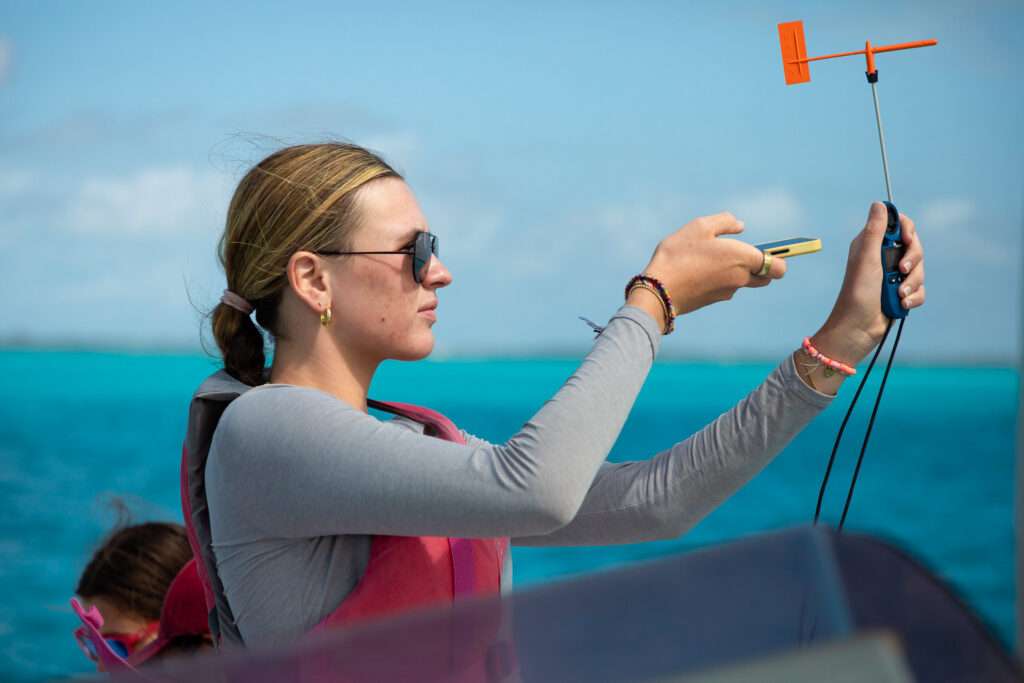
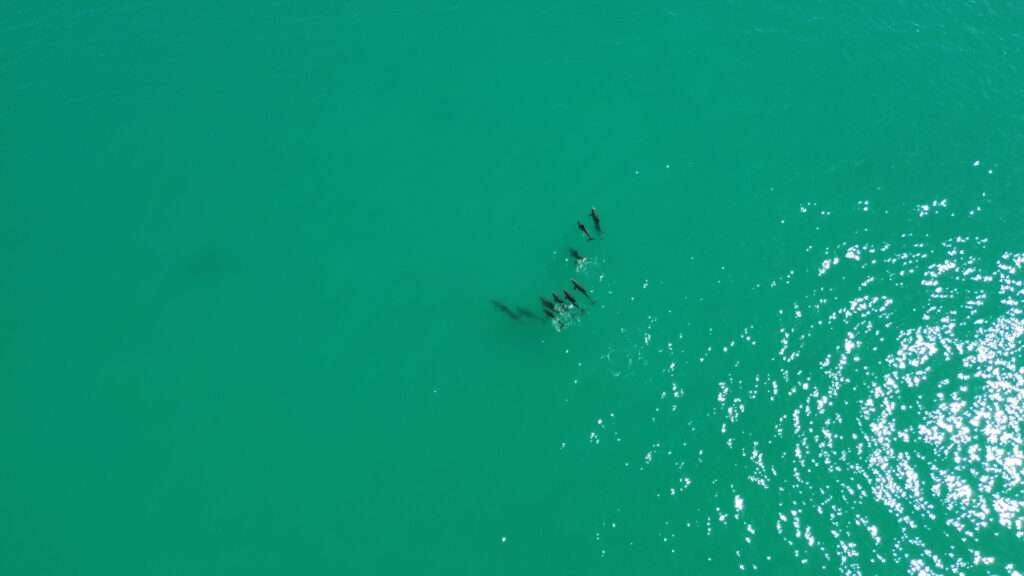
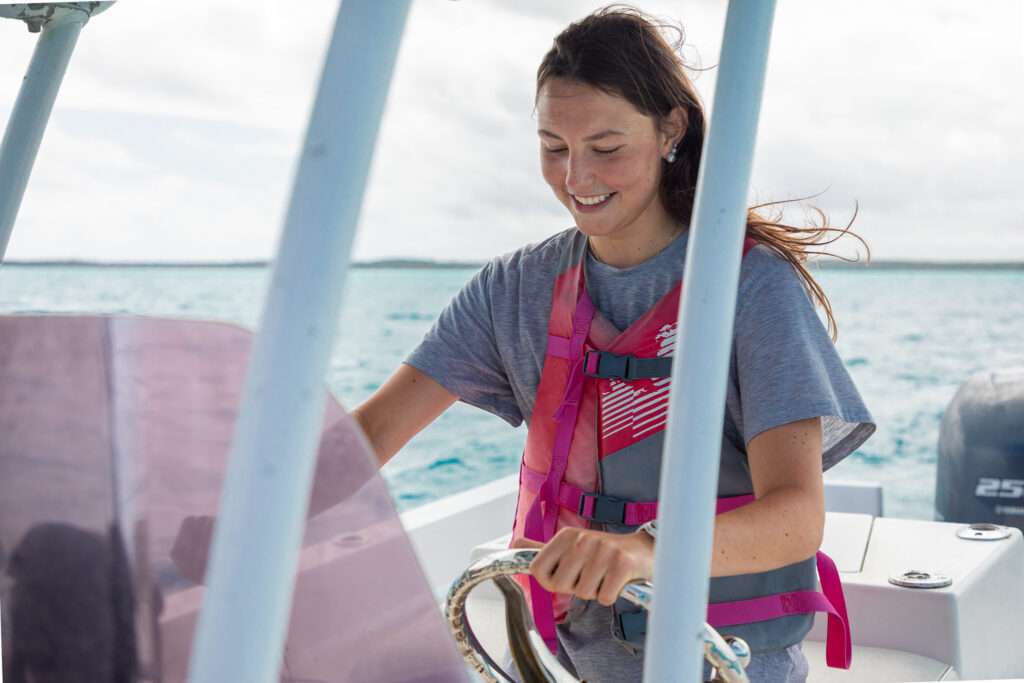
To study beaked whales and bottlenose dolphins, we are conducting visual surveys and acoustic monitoring in the Exuma Sound and Rock Sound3. Visual surveys involve following randomized transect lines on a boat and visually scanning the surface of the water for their dorsal fins. For our research, we are conducting these visual surveys in closing mode, meaning that upon spotting a group of animals, we stop the transect line and approach to gather more data. The main data collected upon encountering whales are species identity, distance from the transect, number of whales, and high-quality images of the animals’ dorsal fins. These images allow us to identify specific individuals based on their distinctive features, such as notches and scars on their fins and bodies, either manually or through an online platform called Flukebook.
Count data is taken by visually counting the number of individuals and confirming the count with drone images. Distances from the transect are measured using a rangefinder. We will also be conducting acoustic monitoring using hydrophones lowered to 800m deep in the ocean to record beaked whale and dolphin clicks up to a maximum distance of 8km. This data will hopefully uncover when beaked whales are in certain areas and indicate patterns in their distribution. We can also use distance-sampling to estimate abundance from acoustic data, as acoustic data is often more accurate than visual surveys due to the probability that beaked whales in an area are not available for detection from the surface.
References
- Feyrer, L. J., Stanistreet, J. E., & Moors-Murphy, H. B. (2024). Navigating the unknown: assessing anthropogenic threats to beaked whales, family Ziphiidae. Royal Society Open Science, 11(4), 240058.
- Hammond, P. S., Francis, T. B., Heinemann, D., Long, K. J., Moore, J. E., Punt, A. E., … & Zerbini, A. N. (2021). Estimating the abundance of marine mammal populations. Frontiers in Marine Science, 8, 735770.
- Thomas, L., & Marques, T. A. (2012). Passive acoustic monitoring for estimating animal density. Acoustics Today, 8(3), 35-44.
- Warner, B. (2025, December 30). The sounds revealing the secrets of world’s most elusive whales. https://www.bbc.com/future/article/20251230-the-sounds-revealing-the-secrets-of-worlds-most-elusive-whales