Spring 2026 Semester Research Projects: Coral
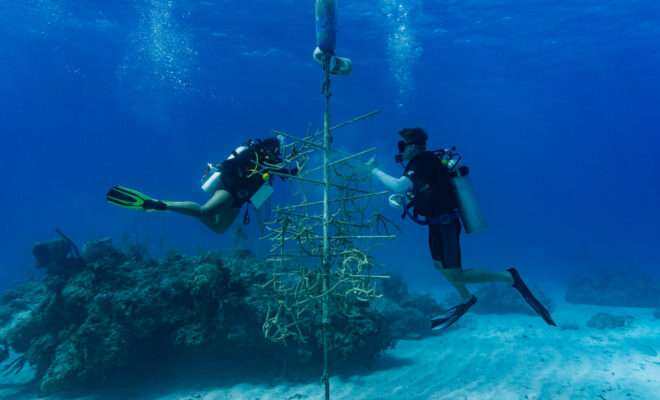
Each semester, Island School students dive into hands-on research alongside scientists from the Cape Eleuthera Institute, contributing to meaningful, place-based studies that explore the unique ecosystems of The Bahamas. These Spring 2026 research groups—focused on queen conch, Marine Protected Areas (MPA), corals, sharks, marine mammals, black land crabs, agroforestry, and sustainable systems—are tackling real-world questions with curiosity, collaboration, and care.
In this blog series, students share their experiences, challenges, and discoveries as they navigate the research process and deepen their understanding of both science and self.
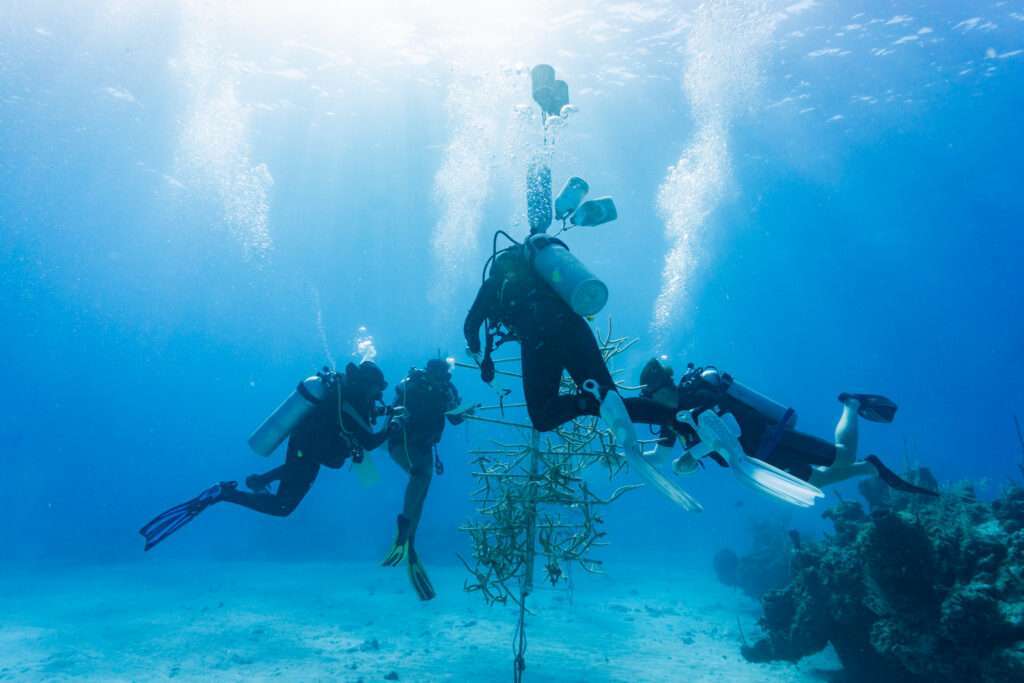
Using Juvenile Corals to Assess Reef Recovery After Mass Bleaching Events
Written by the coral research team: Obi Blumenfield, Stella Brunk, Lucas Russack, Viggo Salz, Quincy Shoff, & Brody Wiltshire
Corals may be more important than you think. These organisms are classified as animals and fall into the same family as jellyfish. Coral reefs are one of the most diverse ecosystems in the world, providing a home for diverse fish and other marine organisms. Reef fish help corals by feeding and controlling any excessive macroalgae cover, and make up part of the reef food chain, where larger marine animals such as sharks feed on smaller species such as fish.
Coral reefs provide essential ecosystem services for both economic and cultural prosperity. The physical structure of coral reefs protects shorelines from coastal erosion and boosts local economies through fishing and tourism (Figure 1). However, these ecosystems are increasingly vulnerable to climate change impacts, particularly mass coral bleaching events.
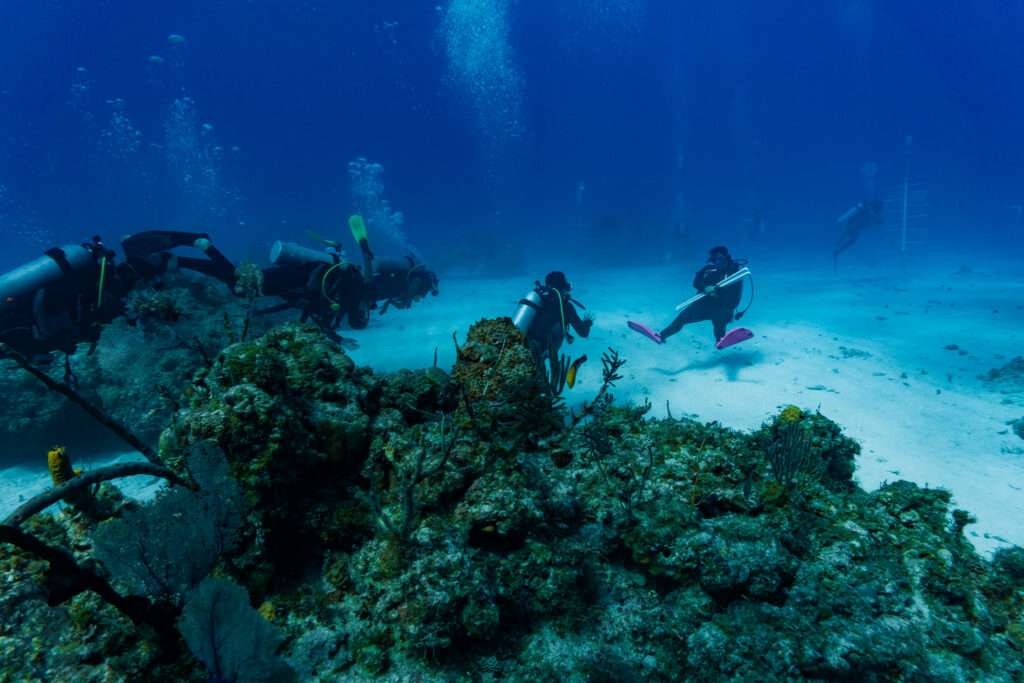
Over the past decade, mass coral bleaching has become an unfortunate reality. Coral bleaching is a natural process and does not always indicate that the coral is dead. However, continuous and prolonged stress events can reduce the chances of the coral surviving.
Mass coral bleaching, similar to large wildfires for forests, is not good for reefs and can cause the reef to be heavily impacted. When the coral bleaches and turns white in color, it expels the algae (aka zooxanthellae) that provide them with nutrients and their colorful appearance. Coral and algae have a symbiotic relationship where the coral provides a home for the algae, and the algae provides food for the coral via photosynthesis. In 2023, a severe regional bleaching event stressed coral populations across the Caribbean, causing widespread mortality and raising serious questions about the long-term health of these ecosystems (Sugget et al., 2024). These mass bleaching events have impacted certain coral species more than others (Díaz-Talamantes et al., 2025).
While the immediate effect on adult corals is often visible, the long-term recovery of Caribbean reefs hinges significantly on the survival and gain of resilient species. The survival of Caribbean reefs depends on the ability of resilient corals to reproduce. We will be able to identify if the resilient corals are reproducing by finding juveniles in the reefs.
Hypothesis & Objectives:
The objectives of this study are to find the current status and health of coral juveniles through conducting surveys of the coral reef and identifying resilient coral species. If more juvenile corals are found in an area post bleaching events, then that coral species is considered resilient because of their ability to recover and withstand bleaching. Our goal is to find these species so we can map out which species are more resilient.
Methods:
Scientists are approaching different ways to help recover bleached reefs, one way being through tracking the success of coral juveniles settling and growing on the reefs in Southwest Eleuthera.
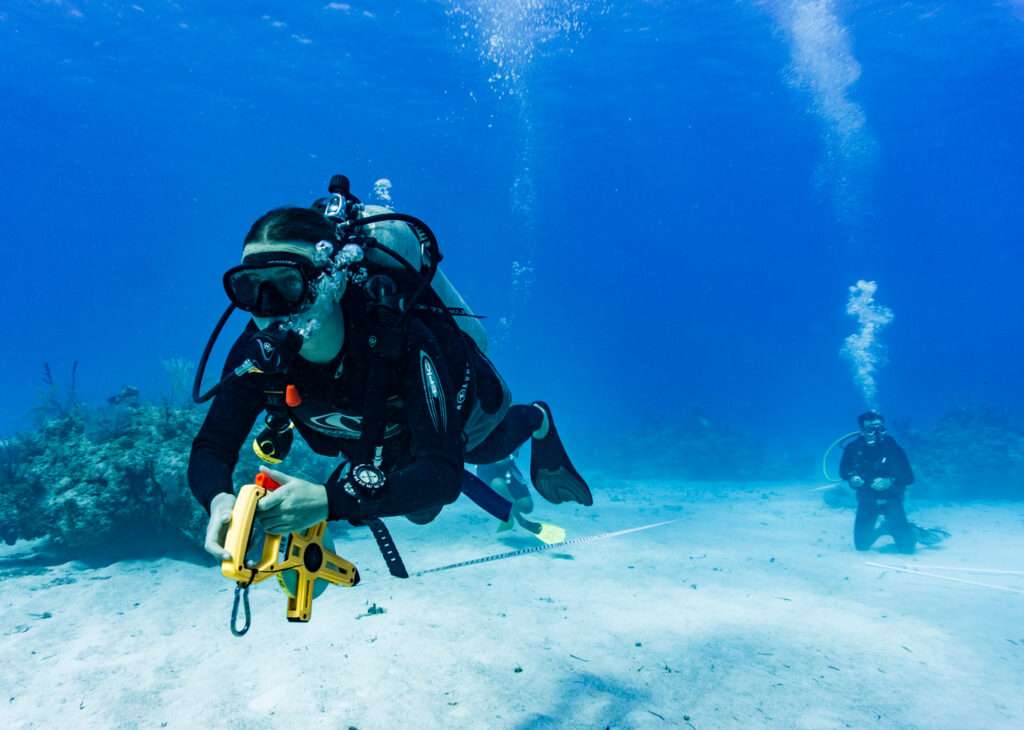
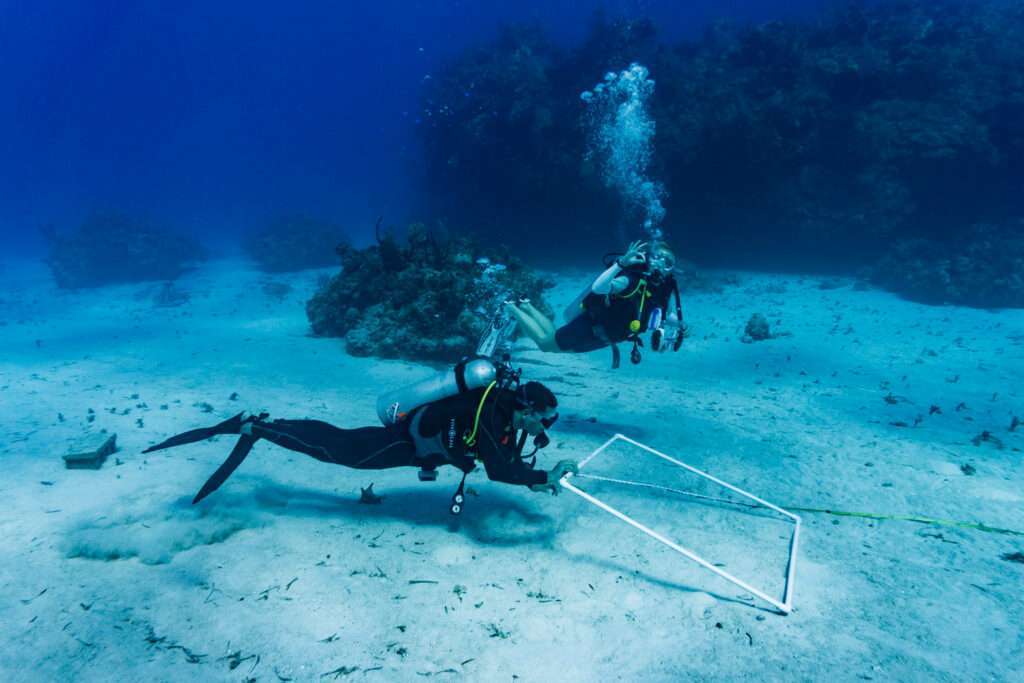
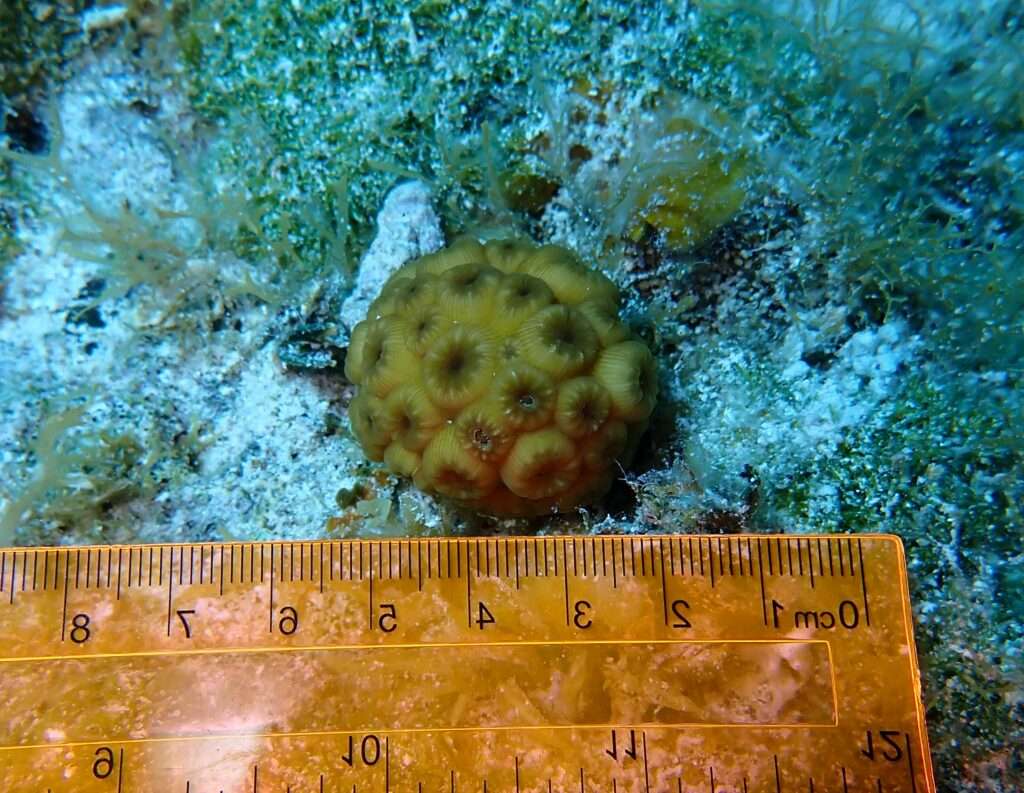
In our study, we do this by visiting the reef sites and first measuring out 33ft or 10m with a measuring tape to establish our survey area (Figure 2). After creating a transect line, we place a 1m x 1m quadrat along the measuring tape and search for coral juveniles (Figure 3). If juveniles are found, they are measured and classified as such if they are five centimeters or less. Flags are then placed next to the juveniles, and close-up photos are taken with the ruler to record measurements (Figure 4), as well as a wider photo that shows the whole reef area within the quadrat. Finally, we flip over the quadrat to the next spot of coral and repeat the process until we reach 10 meters, then we change sides and repeat the process coming back. While doing this, it is extremely important to note that while searching, you are not being biased and choosing the area where there are more coral juveniles. While taking these measurements, we sampled randomly, which is important because this is the most accurate way to present the whole reef and all of its juveniles.
Expected Outcomes:
Based on the objectives of the research project, we expect to find resilient coral species that will serve as an indicator of good reef health. This is because if the parents could survive the bleaching and other stress events, then their offspring are most likely more resilient. We hope to see a trend of resilient species all over The Bahamas as we work to restore the reefs. Understanding which species are surviving is the first step towards building a more resilient future for these vital ecosystems, because these corals have the ability to recover (Diaz-Talamantes et al., 2025).
References
- Suggett D. J., Camp E. F., Edwards A., Goergen L., Hein M., Humanes A., Levy J. S., Montoya-Maya P. H., Smith D. J., Vardi T., Winters S. & Moore T. (2024). “Restoration as a meaningful aid to ecological recovery of a coral reefs.” NPJ Ocean Sustainability, 3;30, 1-4.
- Díaz-Talamantes. R., Pérez-Cervantes. E., & Álvarez-Filip, L. (2025). “Juveniles reveal natural recovery potential of Caribbean coral species after a widespread disease die-off.” A Nature Portfolio, 6:1010, 1-10.