Spring 2026 Student Research Project: Black Land Crabs
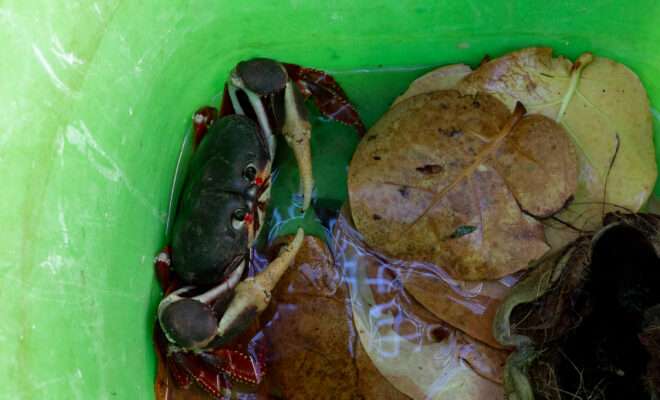
Each semester, Island School students dive into hands-on research alongside scientists from the Cape Eleuthera Institute, contributing to meaningful, place-based studies that explore the unique ecosystems of The Bahamas. These Spring 2026 research groups—focused on queen conch, Marine Protected Areas (MPA), corals, sharks, marine mammals, black land crabs, agroforestry, and sustainable systems—are tackling real-world questions with curiosity, collaboration, and care.
In this blog series, students share their experiences, challenges, and discoveries as they navigate the research process and deepen their understanding of both science and self.
Beyond the Dark Shell: Color Variation among Black Land Crabs
Written by the black land crab research team: Connor John Moody, Daniel Webb, John Warner, Jacob Mendelsohn, Matthew Baer, and Eamon Cummins
The Bahamian black land crab (Gecarcinus ruricola), a species of crab whose predecessors lived in the ocean millions of years ago, is the focus of our research. Evidence suggests that extreme predation pressure and competition for resources slowly pushed them to rely less and less on the ocean.
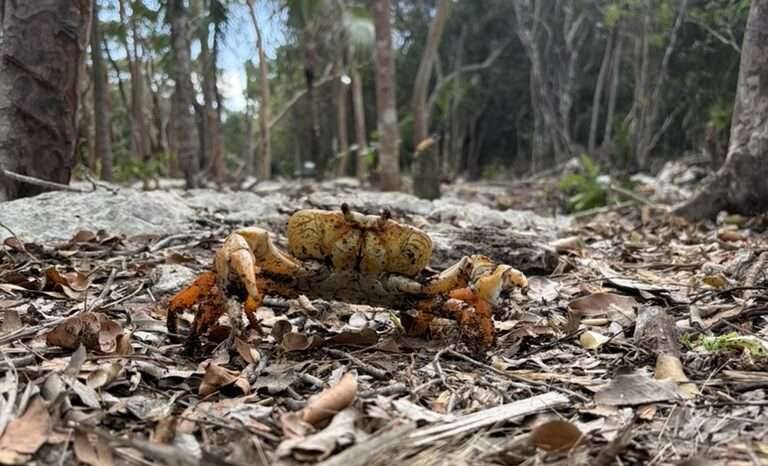
Interestingly enough, these crabs still start their life as planktotrophic pelagic larvae, before moulting and moving to their home habitat, the black coppice (Figure 1). Land crabs are important ecosystem engineers in the forest. They help to replenish nutrients in the soil by eating decaying matter and then burrowing and defecating.
Beyond the ecosystem, black land crabs hold large economic value for several Bahamian communities. They are a reliable source of food and a popular export to other Bahamian islands. However, these two important traits of land crabs oppose each other. As predation increases, size and population of land crabs decrease. With less land crabs to support the ecosystem, the forest can become less vegetated and lead to an unhealthy habitat.
Methods
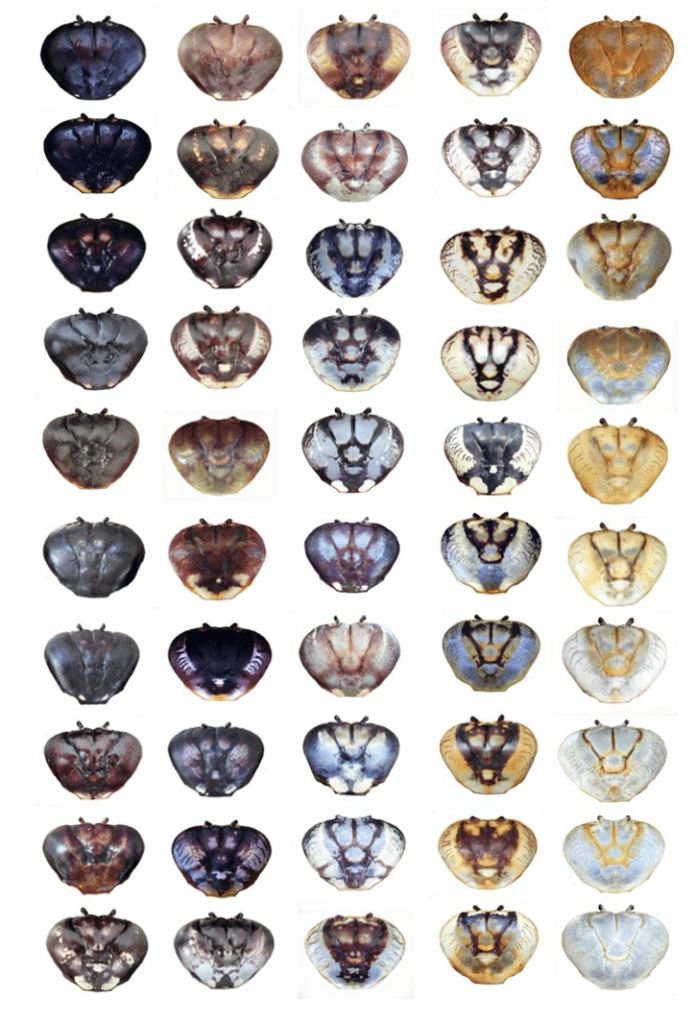
The objective of our study is to determine the purpose of the colour variation of the black land crab, specifically if the colour variation they exhibit imparts a benefit to camouflage against different background types. We are employing our methods in three components. The first involves classifying the colour morphs of the black land crab into five categories (Figure 2). We are surveying crabbers and non-crabbers in the Island School community to classify 156 images of their various colour morphs.
The second method entails a camouflage human detection analysis test. This involves taking three types of aerial photographs of black land crabs immersed against four background types (roads, limestone, shrubland, and coppice floor) (Figure 3).
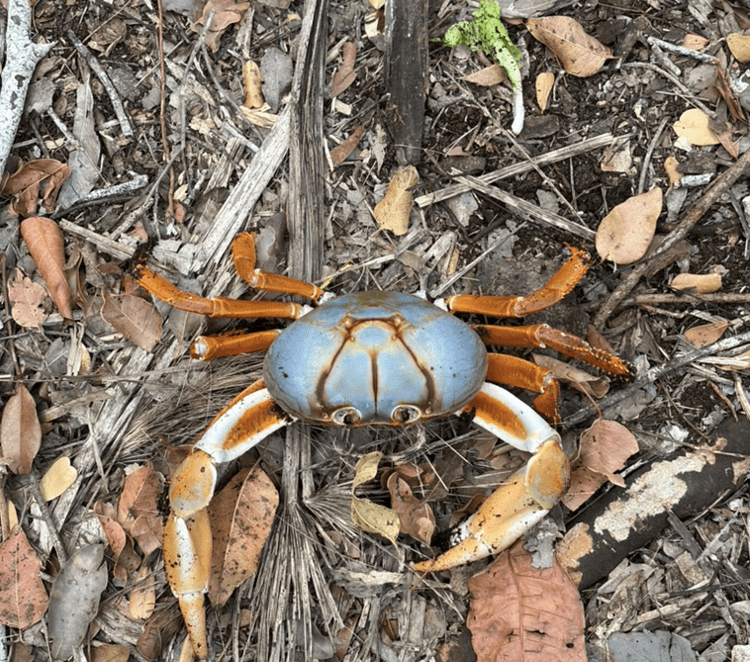
The third and final method consists of a simulated predator vision detection test using a visual light filter. The first step is to use Julius.A.I to overlay predation filters on top of the aerial photographs. This tool accounts for the different light spectrums predators see, assisting us in visualizing how the other predators perceive the various colour morphs against the four different backgrounds (Figure 4).
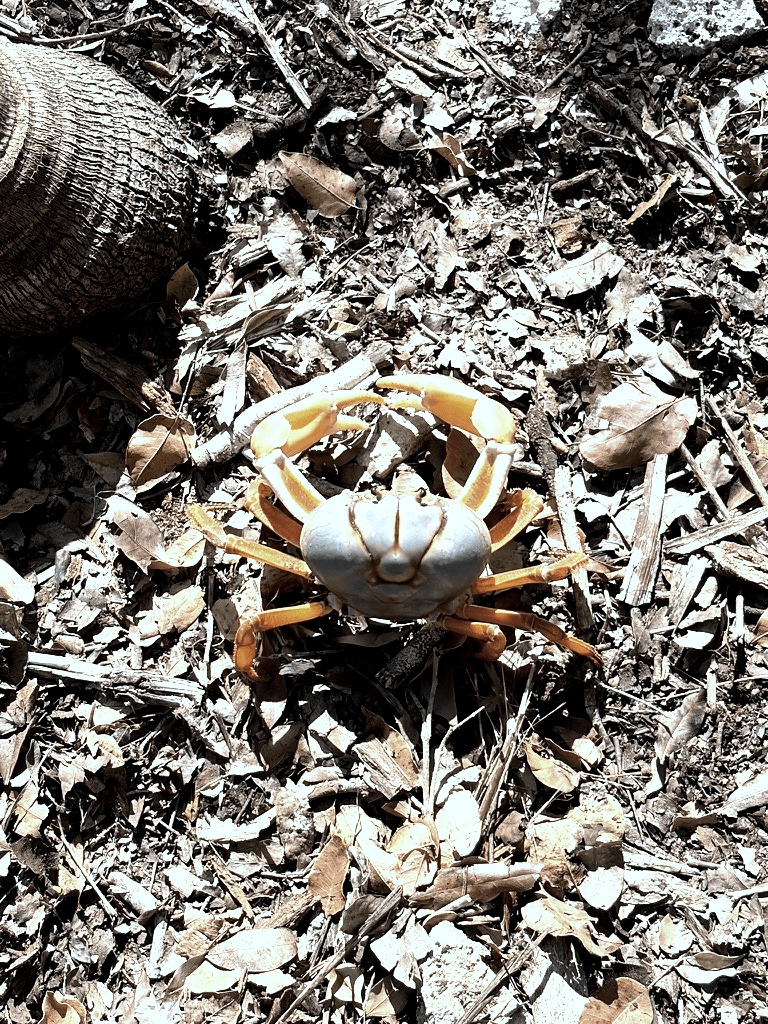
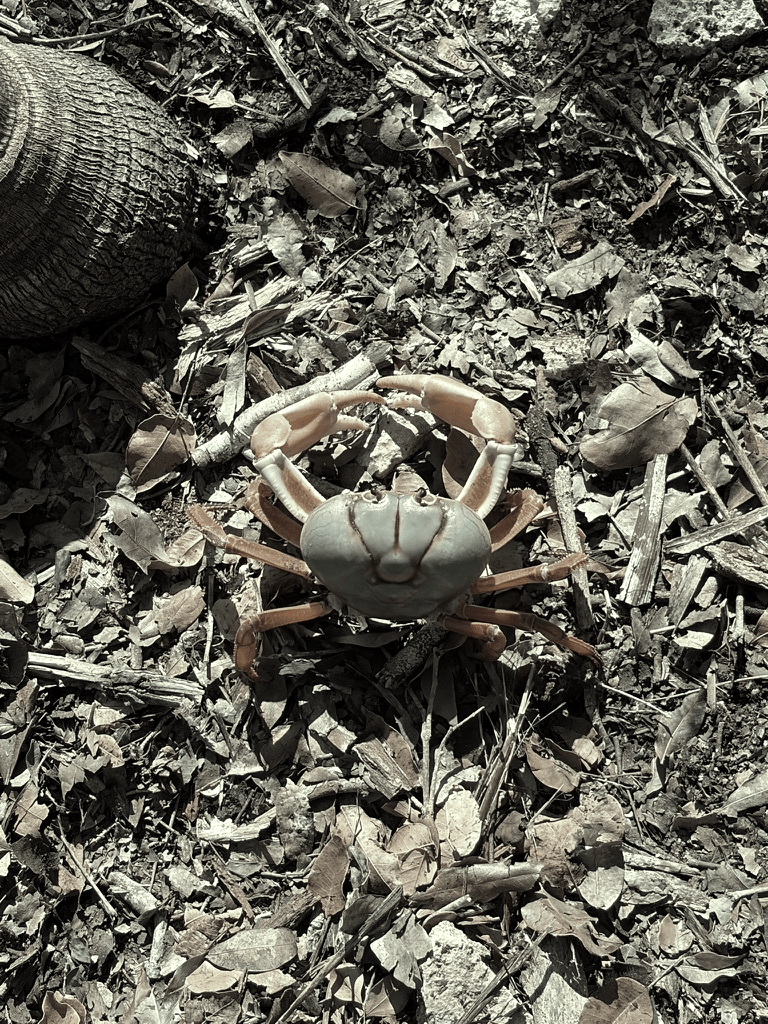
Figure 4. Image of black land crab against a coppice floor background from a night-herron’s point of view (left) and a raccoon’s point of view (right).
The second step is for the tool to calculate similarity index values between the search image recognition patterns of different predators.
Expectations
At the end of this semester, we expect to find a significant difference between how crabbers and non-crabbers perceive different land colour morphs, as well as a difference in how people view black land crabs in their natural substrates vs their unnatural substrates. We believe the darker colour morphs will be harder to detect in their natural substrates because they are adapted to living in the black coppice. The broader issue we expect to discover is that recent habitat fragmentation will threaten or affect their ability to camouflage themselves in their natural environment.
References
- 1. Hartnoll, R. G., Baine, M.S.P., Grandas, Y., James, J., Alkins, H.,(2006) Population biology of the Black Land Crab, Gecarinus Ruricola in the San Andres Archipelago, Western Caribbean, Journal of Crustacean biology, 26(3): 316-325
- 2. Sabat, A.M.,(2009) Effect of harvesting, vegetation structure and composition on the abundance and demography of the land crab Cardisona guanhumi in Puerto Rico, Wetlands Ecol Manage, 17: 627-640
- 3. Bigelow, W.F., Walls, G.L., Higgs, D.N., Mcgaw, I. J.,(2025) Impacts of project precipitation decline on water balance in the black land crab, (Gecurcinus ruricola) in The Bahamas, Science of total environment, 180103:(1-14)
- 4. Joao, M.C.A., Duarte, R.C., Freire, A.S., Pinheiro, A.A.M.,(2023) Interspecific color diversity and camouflage associated with ontogeny in an insular land crab, Behavioral Ecology and Sociobiology, 77: 120(1-15)