Spring 2026 Student Research Project: Agroforestry
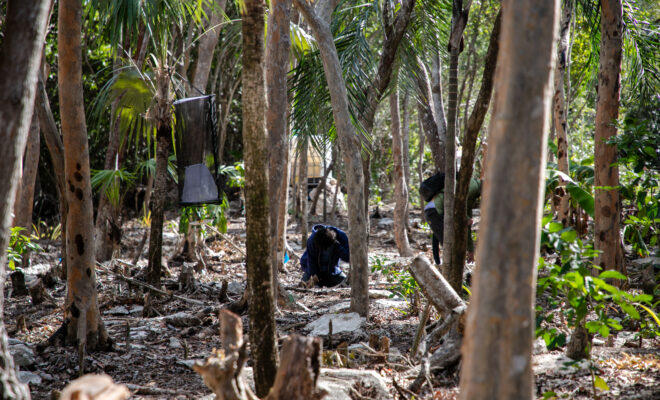
Each semester, Island School students dive into hands-on research alongside scientists from the Cape Eleuthera Institute, contributing to meaningful, place-based studies that explore the unique ecosystems of The Bahamas. These Spring 2026 research groups—focused on queen conch, Marine Protected Areas (MPA), corals, sharks, marine mammals, black land crabs, agroforestry, and sustainable systems—are tackling real-world questions with curiosity, collaboration, and care.
In this blog series, students share their experiences, challenges, and discoveries as they navigate the research process and deepen their understanding of both science and self.
Agroforestry: Agriculture Outside the Box
Written by the agroforestry research team: Abbott, Berna, Dougherty, Hamrick, Hillis, Lopez-Rubio, Morris
Agroforestry is a method of agriculture that has been practiced for hundreds of years by indigenous communities. However, the term has only become widely recognized within the past 30 years, leading to a lack of published scientific research on the subject.
Agroforestry is defined as the practice of intentionally integrating trees into crop and livestock systems to increase farm productivity, ecosystem services, and ecosystem resilience (Nair, 2011). By creating this hybrid blend of farming and forest ecosystems, agroforestry ensures environmental protection and maintains a natural flow of nutrients throughout the ecosystem.
This approach to agriculture minimizes the negative impacts that monoculture, the cultivation of a single crop over a large area for consecutive seasons, can cause. Monoculture can be devastating for the health and stability of ecosystems, causing soil nutrient depletion, accelerated erosion, and a lack of biodiversity (Wedder, 2026).
In contrast, agroforestry improves soil fertility, protects against erosion, and promotes a more diverse habitat (Bhagwat et al., 2008).
The Bahamas imports 90% of its food as a country, while The Island School imports 70%.
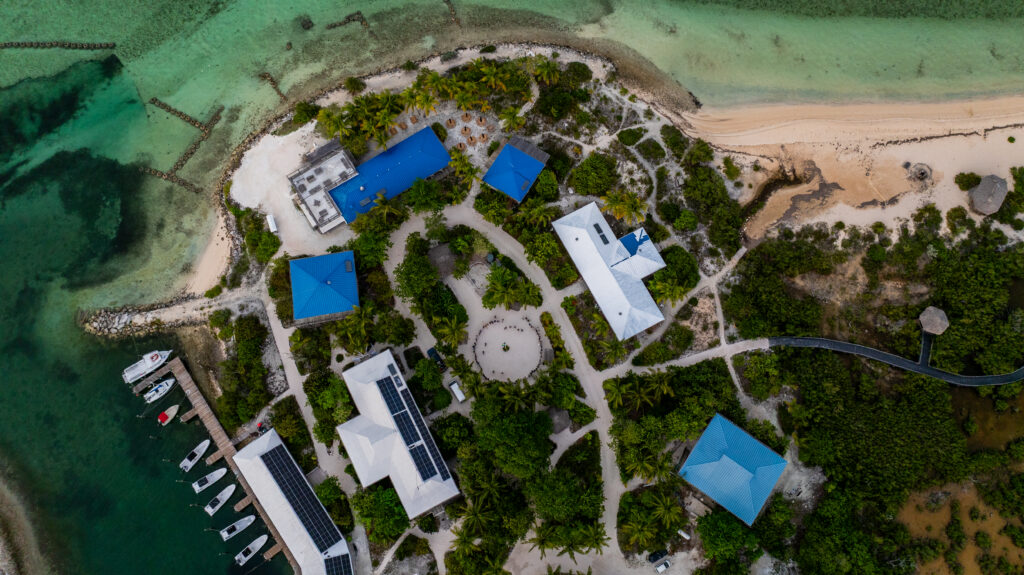
Importing such a significant amount of food leaves the island very vulnerable if delivery routes are compromised, releases high amounts of carbon dioxide into the atmosphere, and costs The Bahamas about one billion dollars annually. To address these issues, The Island School hopes to minimize our reliance on imported foods in our kitchen. Our long-term goal is to supply the dining hall in full with all of the produce needed to feed our community.
Our agroforest will be a significant help by offering a myriad of produce that can be used on campus for meals. Not only does this cut costs on imported goods, but it also promotes a more sustainable method of obtaining food (Nair, 2011).
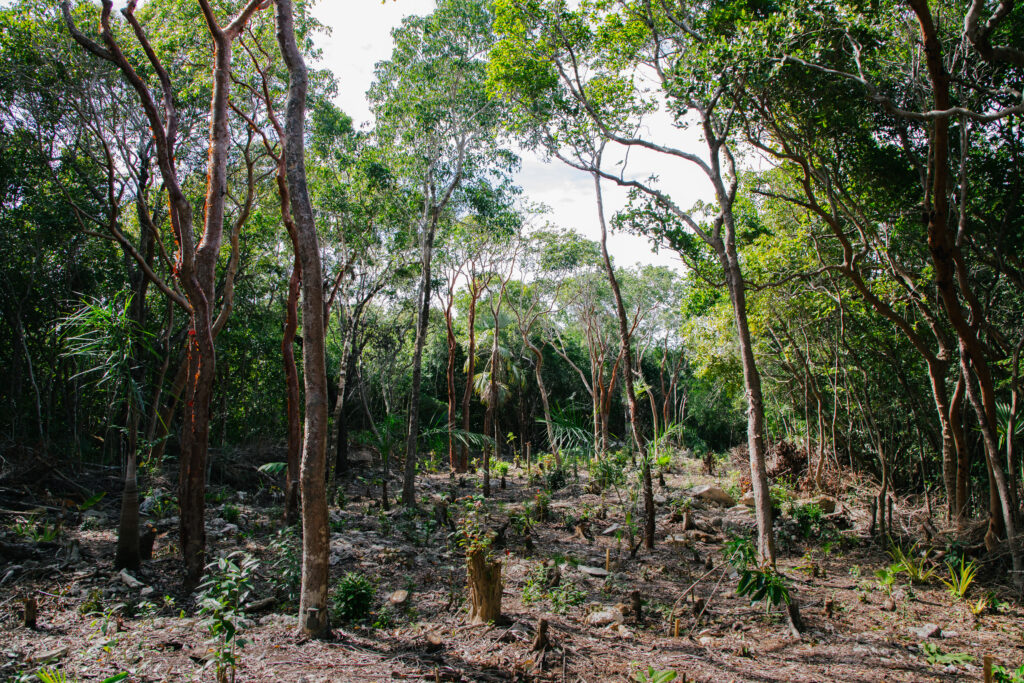
So far, The Island School has one agroforestry plot that is 40 feet by 300 feet, or about a quarter of an acre. A variety of crops have been planted: avocado, mango, citrus, sugar apple, breadfruit, moringa, mahogany, neem, bananas, plantains, coconuts, pineapple, passion fruit, soursop, and starfruit are all growing, with a total of 170 plants.
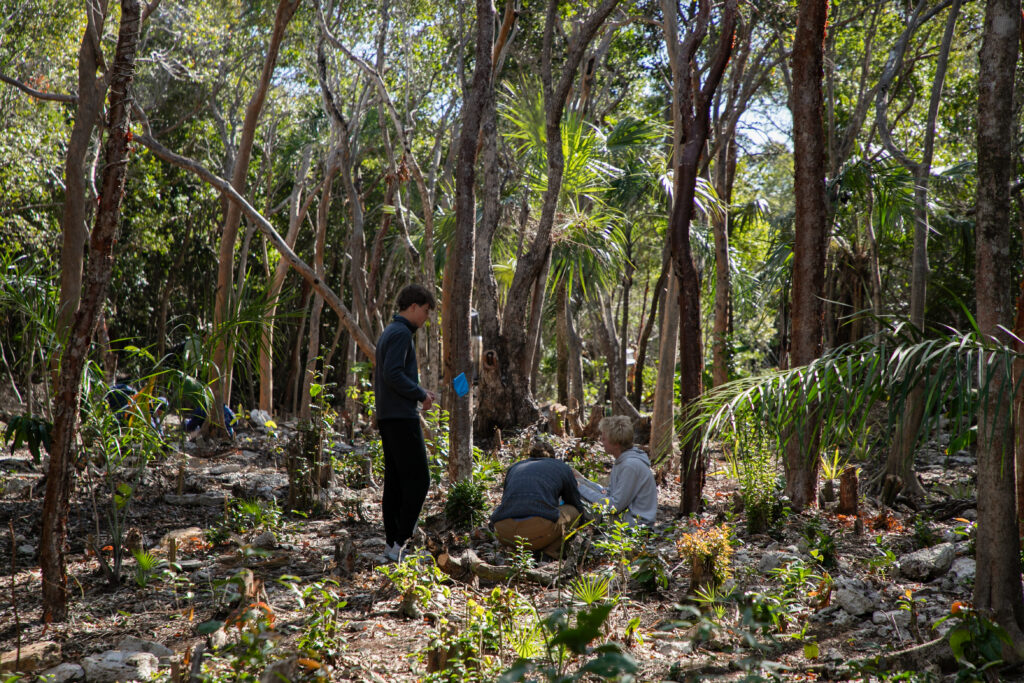
We mapped out the second plot using Google Earth and a GPS and have begun clearing the trees that need to be removed using hand saws. Between each plot, we leave the same size rectangular area unaltered to provide shade for our crops while simultaneously protecting them from wind and inclement weather.
Current calculations tell us that it will take eight acres, or 32 total rows, to supply the dining hall with enough food to feed the Island School campus.
The social benefits of agroforestry mentioned above depend on ecological system function, and a key part of ecosystem functioning is biodiversity. Insects play a critical role in maintaining productive systems, driving processes such as nutrient cycling, pest control, and pollination (Burgess & Rosati, 2018).
As a result, to further understand how agroforestry impacts biodiversity, we have been working to answer the question: “How does the insect biodiversity present in an integrated agroforestry plot compare to that of the unaltered coppice ecosystem in Eleuthera, The Bahamas?” (Wedder, 2026). To test this, we set a variety of insect traps at both the agroforestry plot and our control site, the unaltered Bahamian forest, or coppice, once a week. By comparing the amount and species of insects we catch at each site, we can further understand the impact of agroforestry on ecosystem biodiversity in Eleuthera.
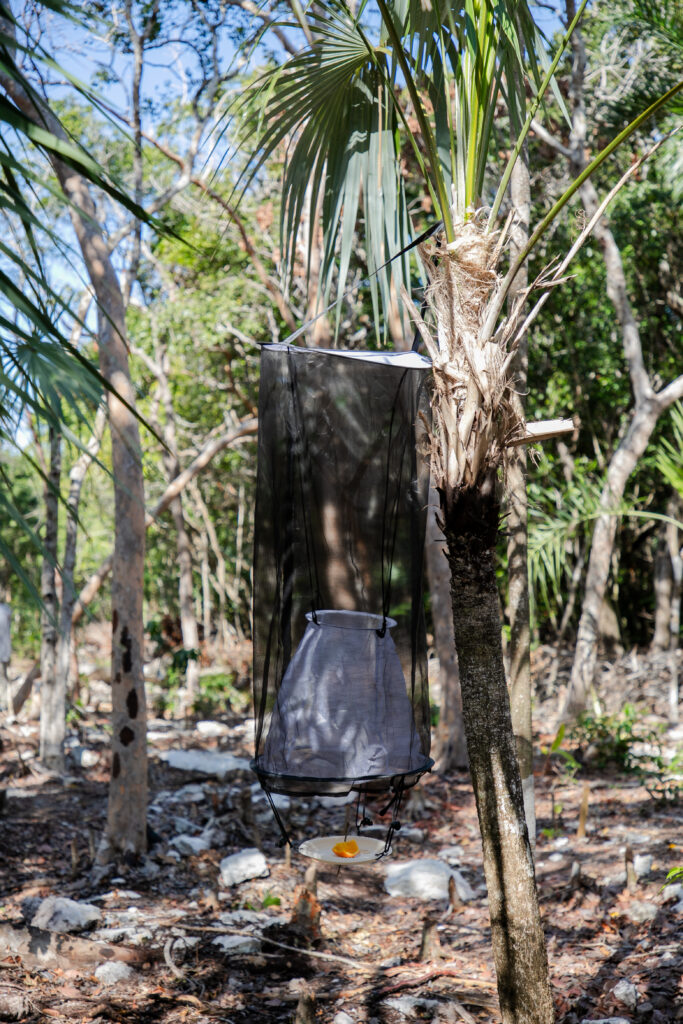
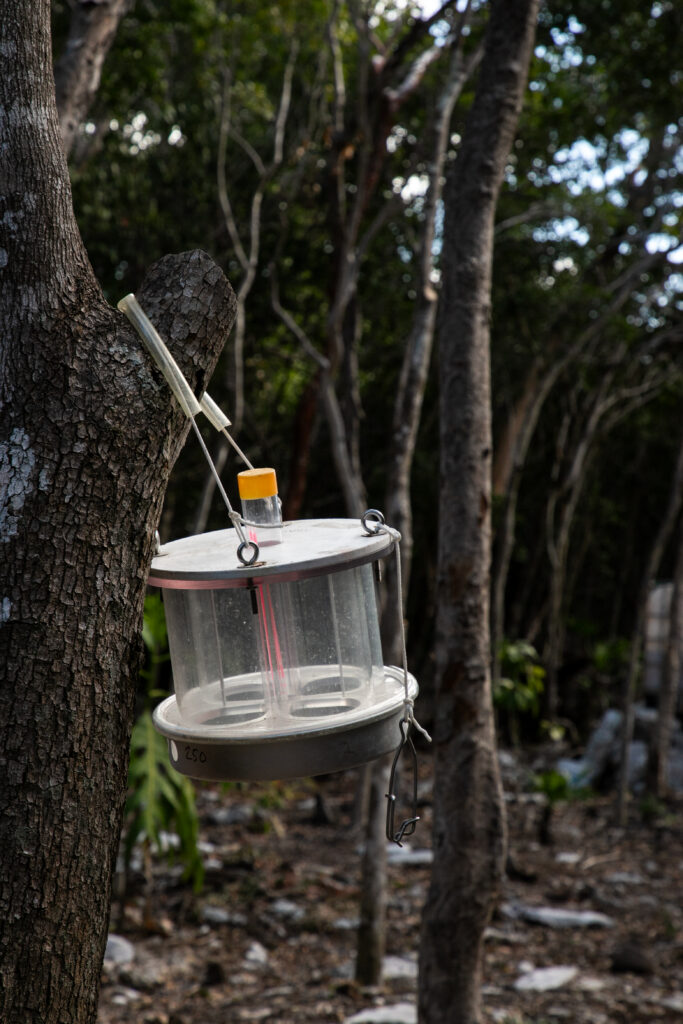
Figures 2 and 3: Butterfly trap (left) and quatrefoil light trap (right) used to study the
biodiversity levels of flying insects.
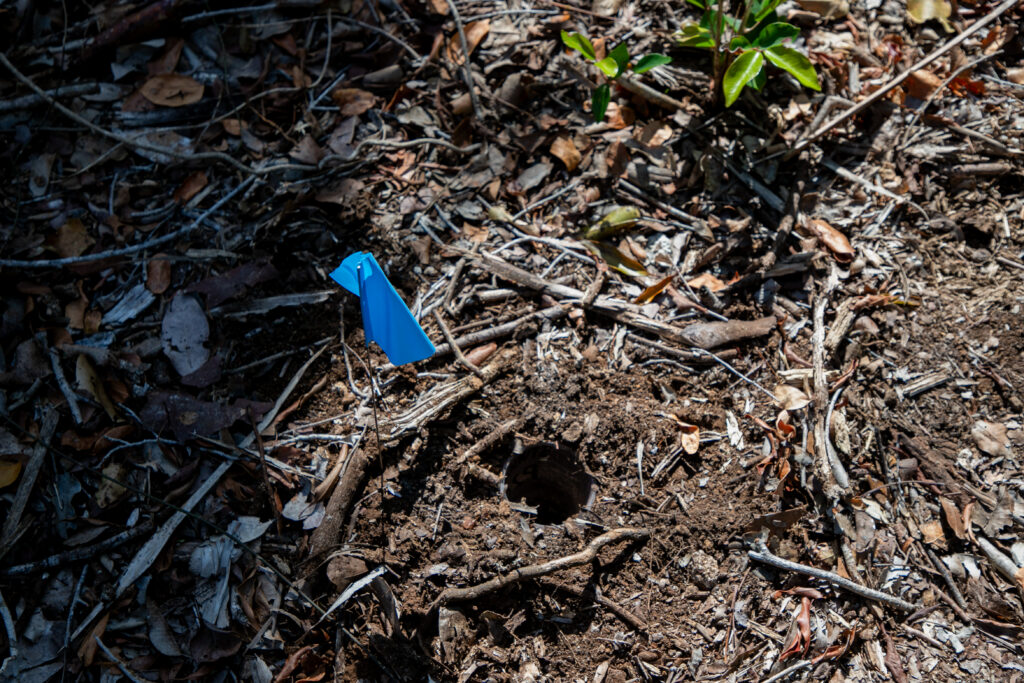
We set three different types of insect traps throughout the sites. The main type of trap we set are pitfall traps, which catch ground-dwelling insects that cannot fly. We set twelve pitfall traps at each location by placing plastic cups into holes we dig that are evenly and randomly dispersed throughout the sites. We then fill in the space around the cup with dirt and tree debris so the ground is level with the top of the cup, allowing insects to fall into the cup but not escape. The pitfall traps are deployed for 48 hours.
Next, we set one butterfly trap at each location for the same duration of time. These traps work by placing an orange slice below a net with an open bottom. Butterflies only fly upward after they eat, so the butterflies get caught in the net after feeding.
Lastly, we set one quatrefoil light trap at each site overnight for 12 hours. Nocturnal, flying insects are attracted to the trap using glow sticks and caught inside the bottom compartment.
Each trap is labeled with its own identification label. After collecting the traps from the field, we pour the collected content into a white tray and record the number and species of insects present in each trap.
In conclusion, our research group has gained valuable insight on how agroforestry will benefit not only The Island School, but The Bahamas as a whole.
From Tuesdays spent deploying insect traps and Thursdays spent recording our findings, we have improved our understanding of the insect biodiversity that both the agroforestry plot and coppice control site contain. During our first academic period, we also analyzed four peer-reviewed scientific papers about the benefits of agroforestry that challenged our understanding of traditional agriculture by considering its long-term effects.
The addition of the agroforest and the progress we have made within our brand new research group is reassurance that we are headed in the right direction. Ultimately, we hope to show others that agroforestry is not only possible but capable of thriving on the island of Eleuthera.
References
- Bhagwat, S. A., Willis, K. J., Birks, H. J. B., & Whittaker, R. J. (2008). Agroforestry: a refuge for tropical biodiversity? Trends in Ecology & Evolution, 23(5), 261–267. https://doi.org/10.1016/j.tree.2008.01.005
- Burgess, P. J., & Rosati, A. (2018). Advances in European agroforestry: results from the AGFORWARD project. Agroforestry Systems, 92(4), 801–810. https://doi.org/10.1007/s10457-018-0261-3
- Nair, P. K. R. (2011). Agroforestry Systems and Environmental Quality: Introduction. Journal of Environmental Quality, 40(3), 784–790. https://doi.org/10.2134/jeq2011.0076
- Wedder, P. (2026, February 10). Agroforestry: Concepts and Definitions [Review of Agroforestry: Concepts and Definitions]. Google Classroom. https://docs.google.com/presentation/d/1xJ0C4mleQh7hAjcGlzQRveQm5ueFagaUxj96SrHjy_E/edit?slide=id.g3b889ac06e9_0_0#slide=id.g3b889ac06e9_0_0