CEI Researchers Jump Into Global Aquaculture Conversation at Aquaculture America Conference
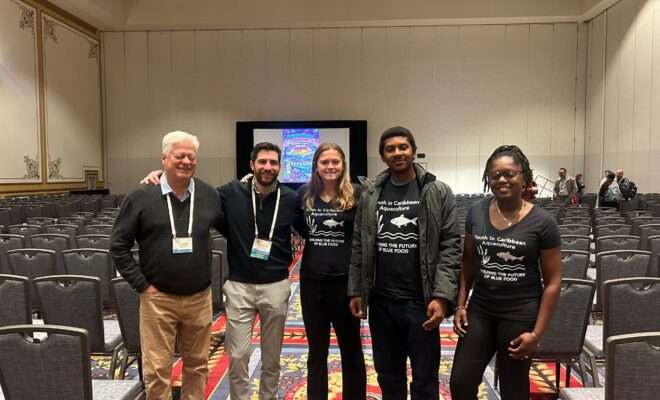
In February, Mia Avril (CEI’s Aquaculture manager) and Tereno Johnson (Assistant Research Faculty) attended “Aquaculture America,” a conference organized by the World Aquaculture Society (WAS), in Las Vegas, Nevada. The event featured the works of a diverse range of scientists, industry leaders, and corporate exhibitors. While most attendees were from the United States, attendees from South American, African, and Asian nations were also well represented.
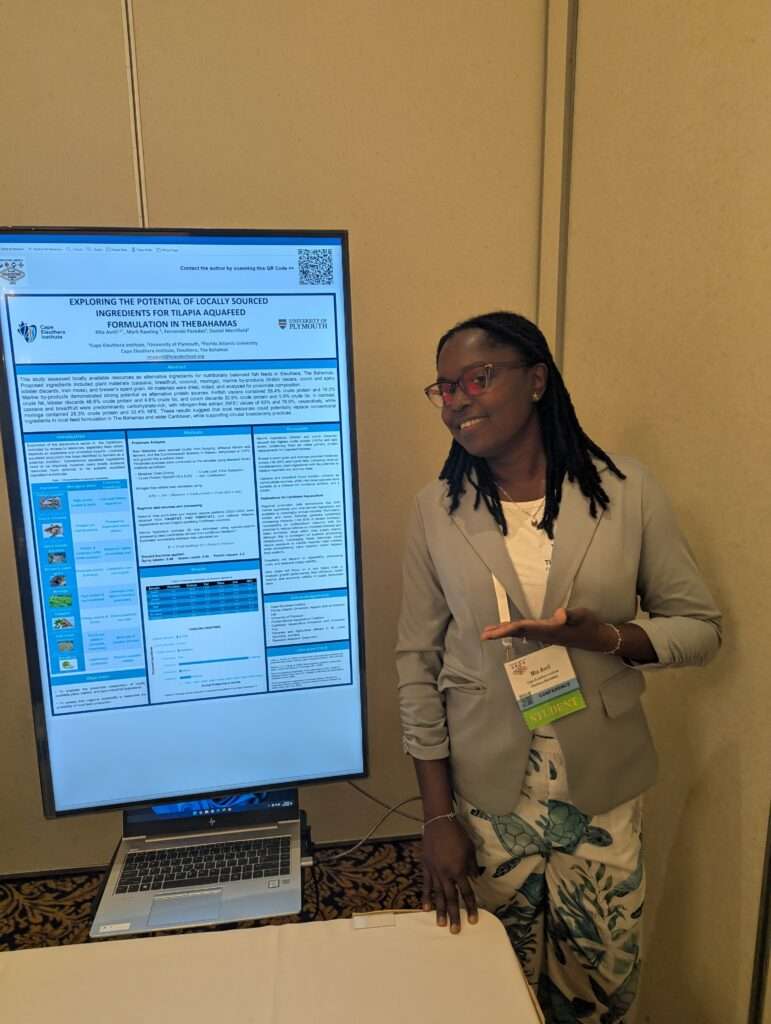
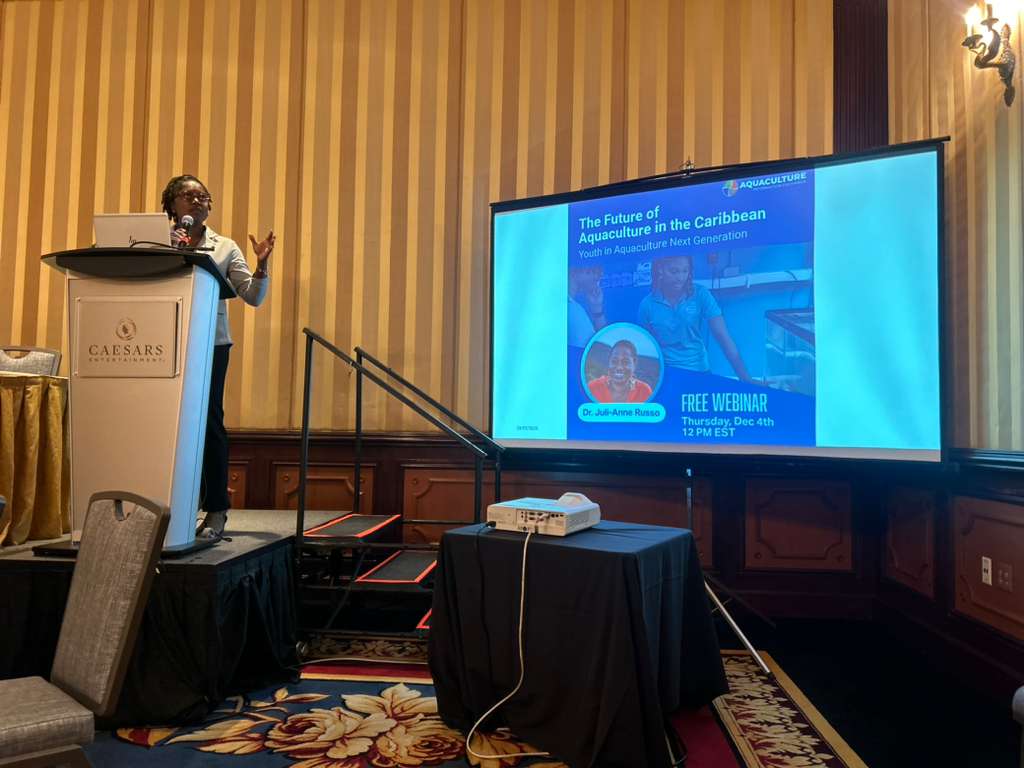
The breadth of topics covered was large, with presentations ranging from recent advances in genomics, novel feed ingredients, and culture techniques to focused discussions on conservation, gender awareness, and the economic viability of aquaculture. Mia Avril presented a poster on her Ph.D. research, which is focused on developing locally sourced aquafeeds for the Caribbean. She also delivered an oral presentation on behalf of the Caribbean Aquaculture Network, addressing the future opportunities and challenges facing aquaculture development in the region.
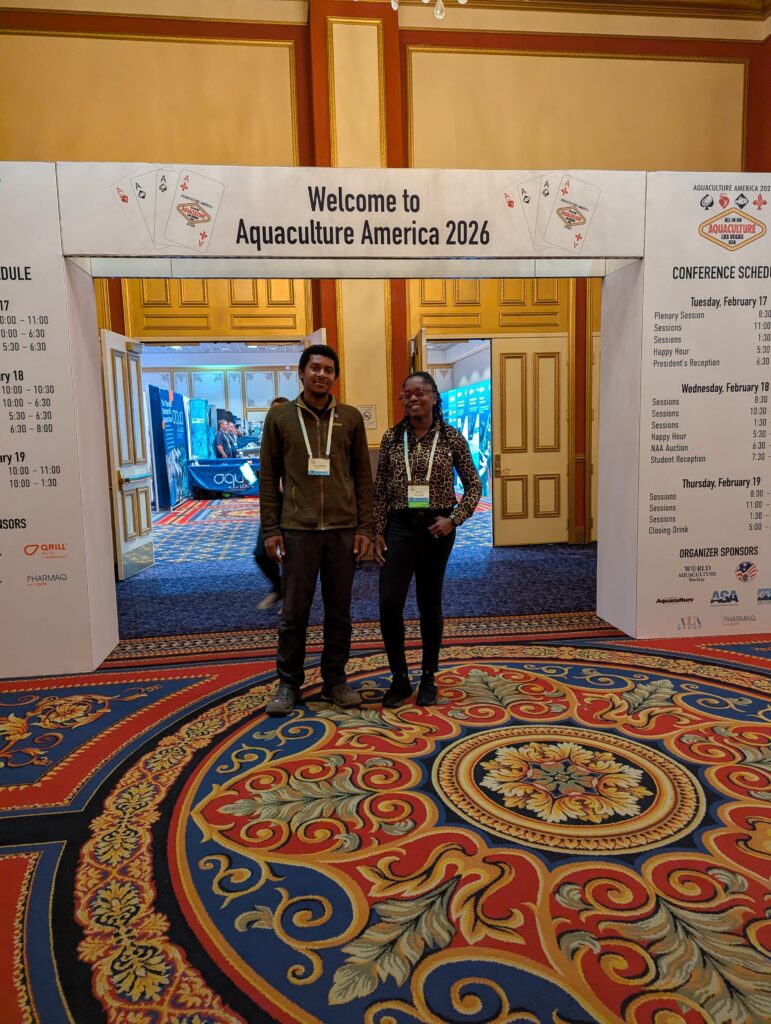
Connecting with Fellow Aquaculture Experts
Networking was a key feature of the conference; with its opening day marked by a mentor-mentee breakfast where expertise was shared, and connections were forged over coffee and muffins. Engaging with fellow researchers, conservationists, and industry leaders throughout the conference was eye-opening and thought-provoking for our team. This year, both CEI attendees developed contacts with members of the American and African WAS chapters; some of which potentially lead to future opportunities for CEI’s collaboration and inclusion on upcoming efforts in The Bahamas.
In addition to the academic offerings, the event featured a trade fair, where a number of companies showcased their most recent products and developments. While most of them specialized in precision aquaculture equipment, there were also a fair number of scientific equipment suppliers and feed ingredient suppliers. With this assemblage of exhibitors, the trade fair proved to be a great opportunity to update knowledge of the current technological frontier, and connect with suppliers, building bridges to support future CEI endeavors.
Solving Food Security and Conservation Challenges Through Aquaculture
In recent months, CEI’s aquaculture research team has made major strides in a few key areas, spanning broader-scale problems in aquaculture to progress in solving local community conservation issues. Mia Avril’s work entails tackling two problems head-on: the broader need for more efficient, sustainable ingredients in commercial aquaculture feeds, as mentioned above, as well as assessing the general public’s perception of aquaculture products.
Our aquaculture research at CEI expands far beyond finfish. We launched the Cape Eleuthera Queen Conch Conservancy in 2025 in partnership with Florida Atlantic University Harbor Branch Oceanographic Institute and supported by the Longer Tables Fund.
This initiative is a community-based aquaculture restoration project that aims to rebuild queen conch populations in The Bahamas and create a restoration model that can scale across the Caribbean. Tereno is at the center of this project, focusing on conch nutrition and the use of aquaculture as a conservation tool. His nutrition work involves investigating ways to grow natural algae species to provide quality nutrition for queen conch from juvenile to adult. In our new facility, queen conch can be grown from eggs to competent juveniles.
We are excited to continue our aquaculture work and explore its potential for expanding food security and protecting keystone species across The Bahamas and the wider Caribbean region.