Conch-ering Conservation at the Cape Eleuthera Institute
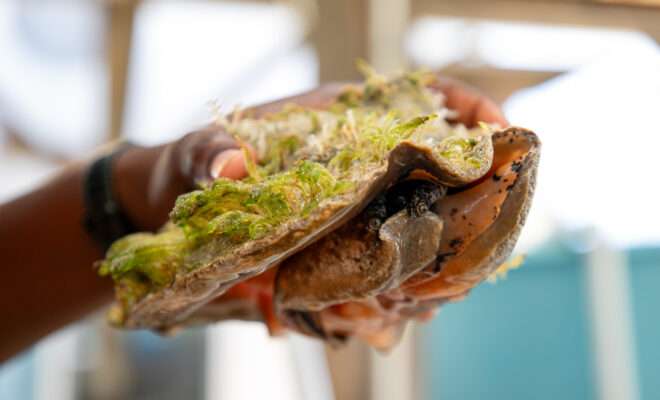
Article written by Agusta Halle, Amelia Pratt, Widlene Alexis, and Mia Avril
Class is in session, not just for the researchers at the Cape Eleuthera Institute (CEI), but for you—yes, you.
Before we dive into the innovative aquaculture work happening here on Eleuthera, let’s get familiar with one of the Bahamas’ most iconic creatures: the Queen Conch.
These slow-hopping, algae-munching mollusks are more than just pretty pink shells scattered across the seafloor. They play a starring role in Caribbean culture, local economies, and marine ecosystems. From the way they grow to how they move (yes, they hop), Queen Conchs are full of surprises, and they’re also in need of some serious support. That’s where CEI comes in. But first, let’s get to know the conch a little better.
Q: What is a Queen Conch and where does it live?
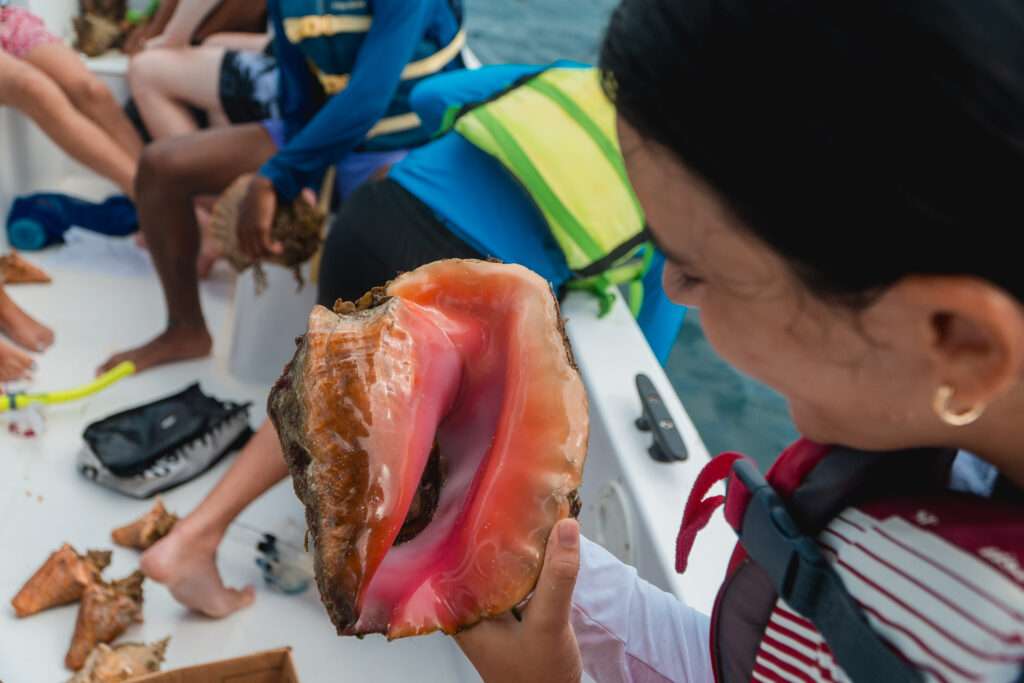
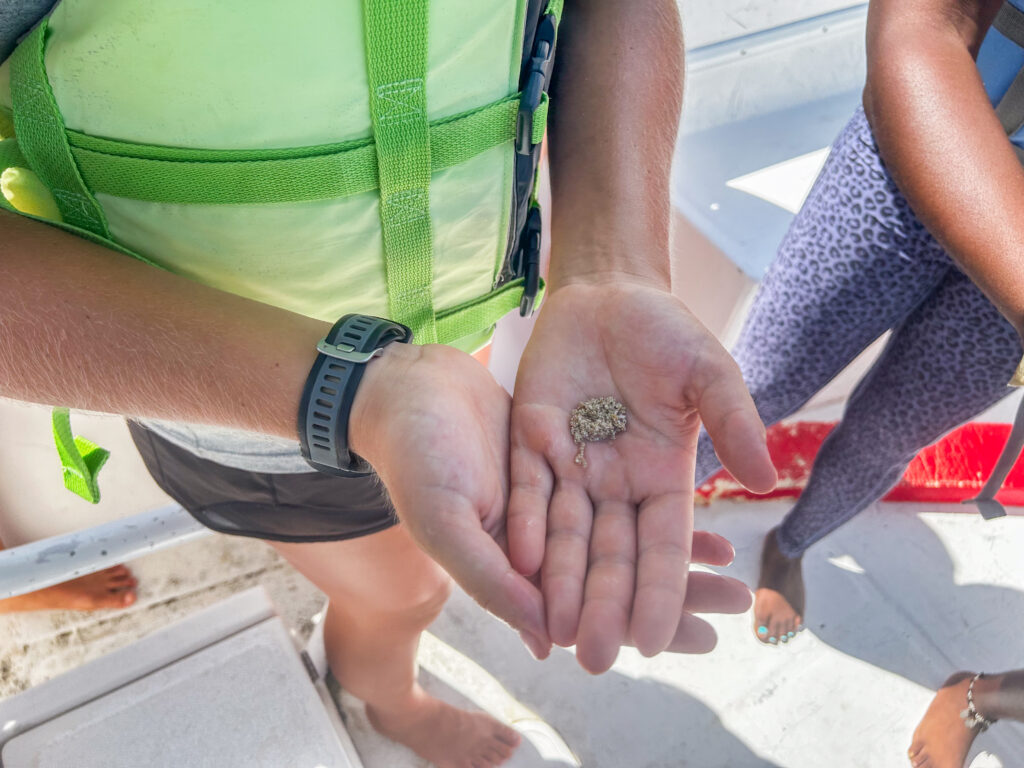
A: The Queen Conch (Aliger gigas) is a marine gastropod known for its unmistakable pink, spiraled shell and its ecological and cultural significance in the Caribbean. The mollusk is commonly found in tropical, shallow waters across the globe such as the Bahamas, the Florida Keys, Puerto Rico, and the U.S. Virgin Islands. Although often perceived as slow, the conch is quite mobile, using a muscular foot to “hop” across the sea floor and “leap” short distances. Reaching reproductive maturity takes about four to five years, at which point the shell’s lip thickens to over 15 millimeters. At maturity, female conches can produce up to 10 million eggs in what look like long, sandy coils. With lifespans extending to as long as 30 years, Queen Conchs have ample time to influence their environment by grazing on algae, supporting benthic health, and serving as indicators of reef vitality.
Q: What do Conch eat and what eats them?
A: Queen Conchs are mostly herbivores, grazing their way across the seafloor like goats of the ocean. Their diet includes algae, seagrass, plankton, biofilm, and dead organic matter, most of it scraped off seagrass beds as they slowly move along. This grazing isn’t just about feeding themselves; it also helps keep algae in balance and supports the health of their habitat. But conchs aren’t invincible. Juveniles are often eaten by crabs, rays, octopuses, fish, and of course, humans. As adults, their thick shells offer some protection, but humans remain their largest predator.
Q: What makes the Queen Conch so special biologically?
A: They say don’t judge a book by its cover, but when it comes to Queen Conchs, their shells actually say a lot. The iconic pink, spiral shell isn’t just for show—it’s a record of growth, built in a natural logarithmic pattern that reflects the conch’s age and health. Conchs also have long eye stalks that help them scan their surroundings in addition to a claw-like protective plate called the operculum which helps them move. Their life cycle is just as fascinating as their anatomy – after hatching from stringy sand piles of eggs, baby conchs float as tiny plankton before settling down and slowly developing into adults over several years. From shell shape to slow growth, every stage of a conch’s life tells a story, making them not just biologically unique, but important indicators of ocean health.
Fun fact: You can “hear the ocean” in a conch shell, but it’s actually your own blood echoing!
Q: Why should the Queen Conch matter to me (and to you)?
A: The Queen Conch’s influence reaches far beyond the ocean floor, shaping culture, economy, and ecology across the Caribbean. Its cultural and economic value runs deep, but its ecological role is just as important. As aforementioned, conchs help keep algae in balance through grazing, support seafloor health, and signal the strength of marine ecosystems. Though today, their populations are dwindling. Overfishing, coupled with loose regulations have made the Queen Conch harder to find in places where it was once abundant. Protecting conch populations is not just about saving a species. It’s about protecting livelihoods, ecosystems, and a way of life that depends on the sea.
Q: What can I do to help protect Queen Conchs?
A: Great question! Conch conservation isn’t just about science and policy, it’s about people. Conch consumers, fishers, and sellers alike can all play a part in sustaining this sea snail. Queen Conchs are now listed as ‘Threatened’ by the IUCN, mostly due to harvesting before they’ve had a chance to reproduce. A key indicator of maturity is lip thickness, but with no universal agreement on where to measure it, enforcement can get murky. Add in juvenile harvesting and loose regulations, and it’s easy for well-intentioned efforts to fall short. Choosing mature conchs (and simply spreading the word) can make a real difference.
Here in The Bahamas, where conch is central to culture and the economy, the goal isn’t to stop conch fishing, it’s to keep it going. With shared effort and a focus on long-term abundance, we can strike a balance that supports both the species and the communities that depend on it. If we want to ensure that future generations are able to enjoy conch, we need to preserve and protect conch today.
CEI Scientists Develop Conch Conservation Efforts
At CEI, researchers are turning science into stewardship.
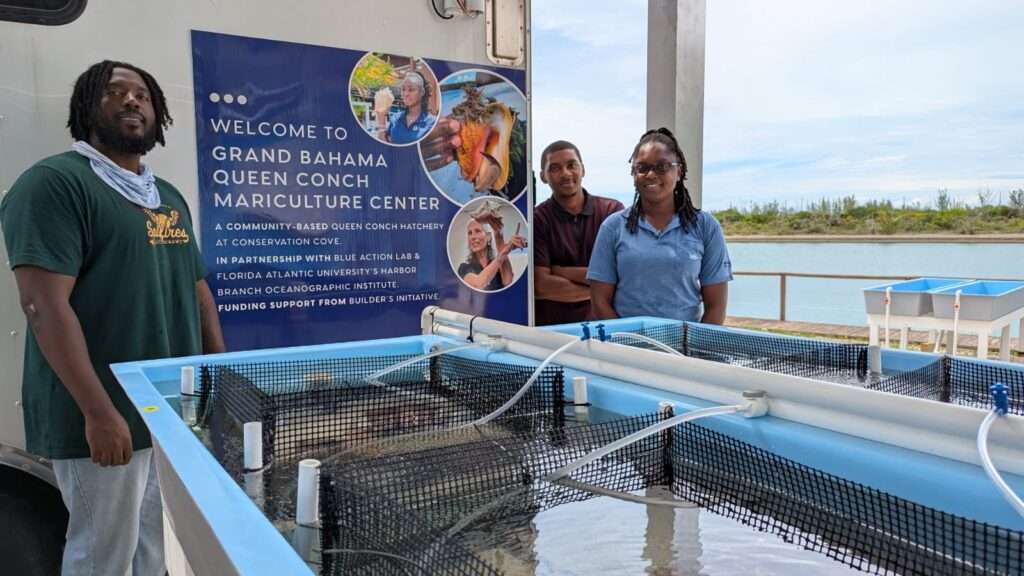
Ask CEI’s aquaculture team what it takes to raise a conch, and they’ll show you custom-designed nursery tanks (the Cape Eleuthera Conch Conservancy is coming soon, stay tuned!), feed trials, and a working model of how conch aquaculture might support ecological restoration. This past June, Mia Avril, aquaculture manager, traveled to Grand Bahama with researchers Tereno Johnson and Michael Bowleg, Jr. for a training workshop at the Blue Action Lab with Dr. Megan Davis and members of her team from Harbor Branch Oceanographic Institute at Florida Atlantic University. Their goal was to learn techniques involved in the culturing of conch in a lab setting from eggs to adults. A key component of this workshop was learning how to keep a breeding colony of conch happy enough in a tank to produce eggs.
Since returning from the workshop, our team has been able to comfortably house a small broodstock (a group of mature individuals used for breeding purposes in aquaculture), and at the end of July, we witnessed CEI’s very first conch hatch.
How Our Team Is Protecting Conch
Track Tereno Johnson’s daily work, and you’ll find the backbone of CEI’s conch program, with research on broodstocks, algae cultivation, and careful monitoring of larval development. But Tereno’s work doesn’t stop at the wet lab; he’s led countless students in sustainable systems courses and smaller research groups, working to educate others on the role of conch within the Bahamian archipelago.
Talk to Amelia Pratt and Widlene Alexis, two students at Preston H. Albury High School in Rock Sound and participants in The Island School’s Apprentice Program, whose connection to conch stopped at fritters and salad before the summer began.
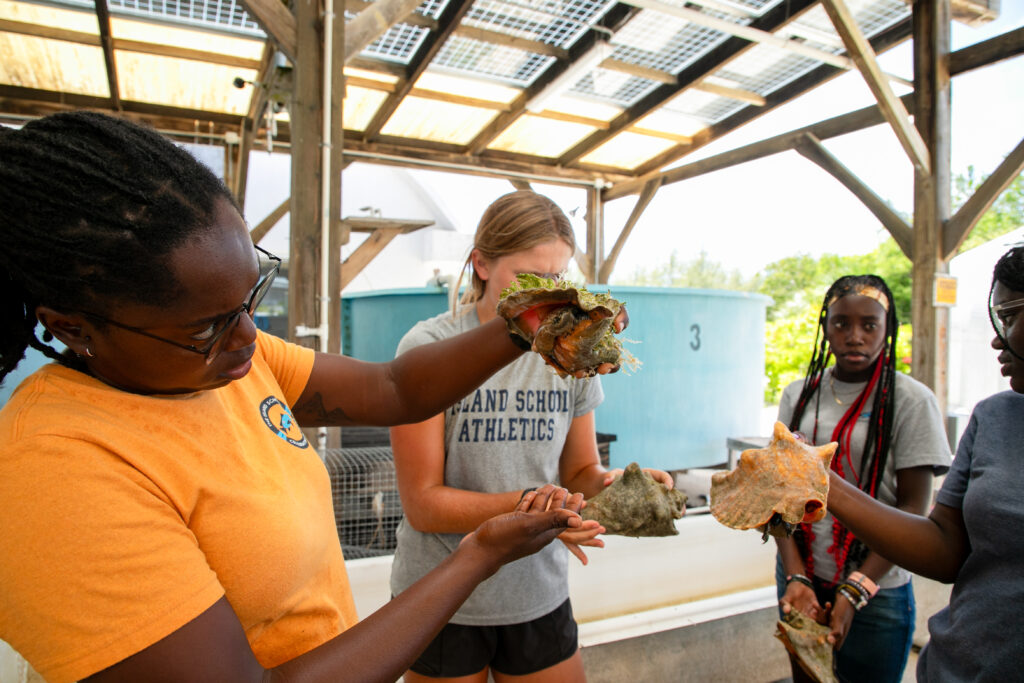
After spending six-weeks working at CEI, they’ve had the opportunity to not only handle a live conch for the first time, but to construct and support conch aquaculture. They’ve identified veligers (conch larvae) under microscopes, helped build sanctuary pens, and got to know this species from egg to adult. From spotting live adults off boats in a sustainable systems class to watching newly-laid egg masses release veligers into the water, they’ve followed the conch lifecycle from start to finish. And, in doing so, they have had the chance to connect more closely with their community, culture, and appreciation for conch!
Follow the conch trail and you’ll also find Augusta Halle, a summer research intern whose work bridges the lab and the field. From collecting seagrass and surveying conch fisherman to supporting broodstock management and helping prepare algal turf scrubbers, Augusta has gained hands-on experience across CEI’s aquaculture efforts. Through these opportunities, CEI equips emerging scientists with the tools to connect with local ecosystems and communities, fostering the next generation of conservation leaders committed to the future of the Queen Conch and beyond! Together, this crew of scientists and students blends sweat, science, and stories to celebrate milestones like CEI’s first successful conch hatch!
We are eager to launch the Cape Eleuthera Queen Conch Conservancy later this year and continue to do important work to protect Bahamian conch populations.