Eleuthera is known for its natural beauty—quiet mangrove creeks, pink-sand beaches, and shallow turquoise waters where families fish, swim, and grow up connected to the sea.
To anyone standing on the shoreline, the island still looks like a paradise untouched by time. But beneath the water, the story is changing, and the first signs of trouble are appearing in a place most people would never expect: inside the bodies of Eleuthera’s sharks.
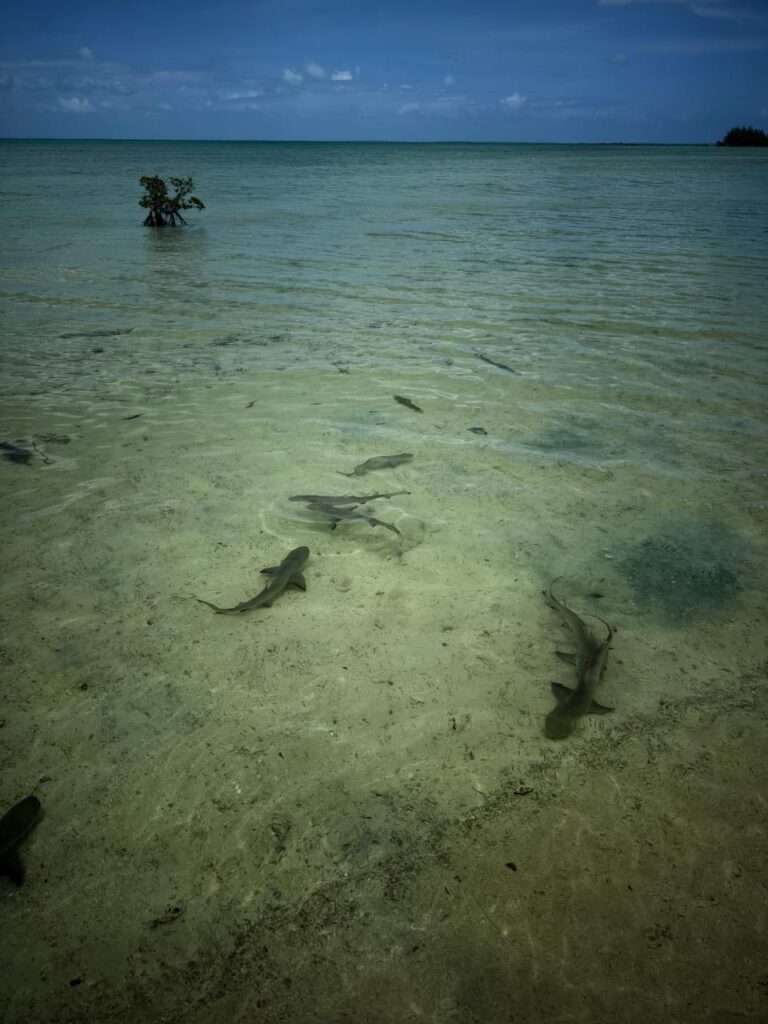
In the mangrove nurseries of Eleuthera, baby lemon sharks take shelter during the earliest, most vulnerable years of their lives. These creeks are usually calm, protected spaces that help young sharks grow strong before they venture out into open waters. But as development has increased and mangroves have been cut or altered, we began to notice a troubling pattern. In areas where construction, cleared land, and human activity are more intense, the young sharks are showing internal signs of stress. On the outside, they look the same, but their blood chemistry tells a different story: their bodies are working harder than normal to cope with changes in their environment.
The Effects of Improper Waste Management
What’s happening to these sharks isn’t just a wildlife issue. It reflects something much bigger that affects everyone who calls Eleuthera home. The same mangroves that shelter baby sharks also protect our communities from storm surge, support the fisheries many families depend on, and help preserve the freshwater lens beneath the island. When these habitats are damaged, polluted, or overwhelmed, the impacts ripple outwards, first through wildlife, and eventually through the people who rely on the same waters for food, income, and safety.
Pollution is also becoming a growing concern.
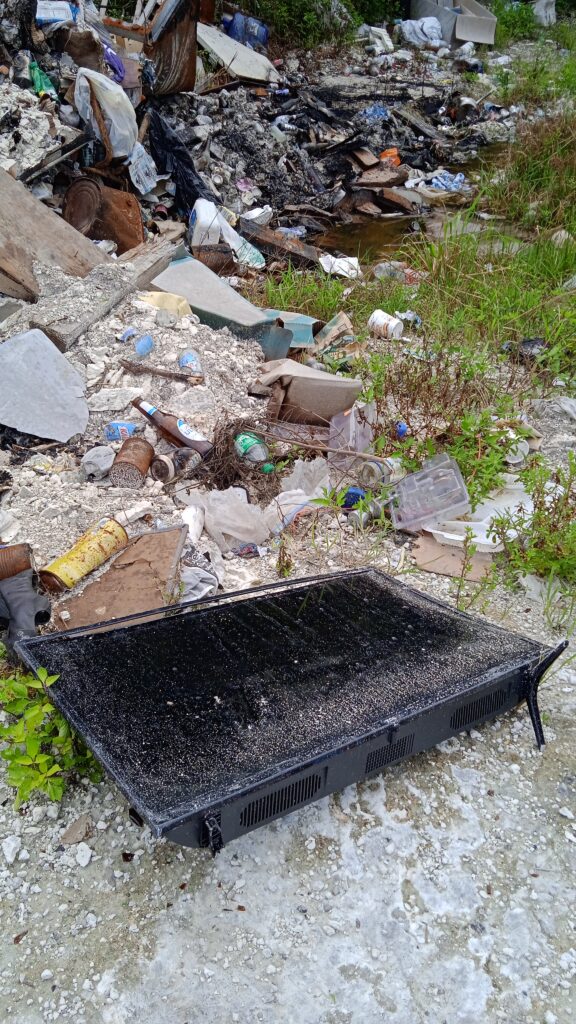
Like many family islands, Eleuthera struggles with waste management. Old electronics, batteries, appliances, and plastics accumulate faster than they can be processed. With limited recycling options and aging landfills, much of this waste ends up leaking into soil, groundwater, and eventually the ocean. What washes into the creeks does not stay there; tides and storms move it through the ecosystem, where it ends up in the places where our children swim, where fishers cast their lines, and where marine life feeds and breeds.
Is Marine Life Ingesting What We Use?
As part of our research, we also investigated something even more surprising: whether human pharmaceuticals and other chemicals were making their way into Eleuthera’s marine animals.
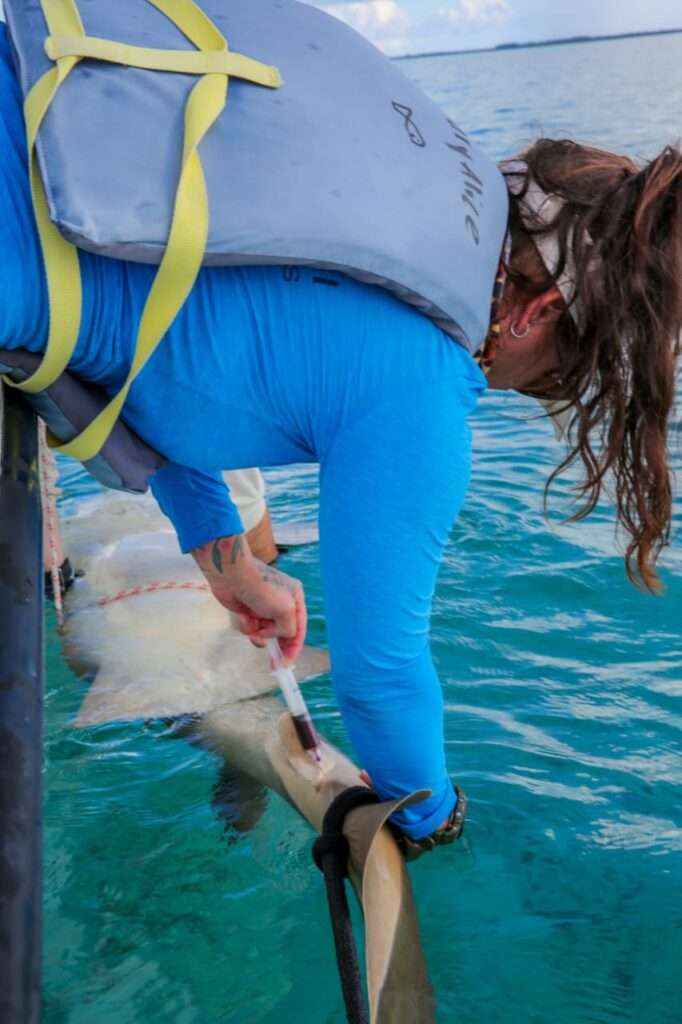
When we tested sharks from various nearshore habitats, we detected traces of common painkillers, caffeine, and even the breakdown products of illicit drugs in Caribbean reef sharks, nurse sharks, and lemon sharks. Sharks carrying these compounds showed changes in important health indicators, suggesting that the contaminants in our coastal waters are affecting their well-being. These substances don’t reach the ocean through dramatic events; they seep in quietly through household wastewater, leaking septic systems, stormwater runoff, and improper disposal of medications.
Importance of Finding Waste Management Solutions
The important point is this: if these chemicals are inside the sharks, they are already in the surrounding waters. Sharks are simply the first to reveal their presence. And because sharks live long lives and spend so much time in nearshore habitats, they act like living “health reports” for the environment we all share. When they begin showing signs of stress and contamination, it is a warning that the ecosystem supporting both marine life and human communities is being stretched beyond its limits.
These changes have real consequences. Pollution and habitat degradation can weaken fish populations, increase erosion, strain the freshwater lens, and reduce the health of the beaches that attract visitors and sustain local businesses. A decline in coastal health is not just an environmental loss; it affects tourism, livelihoods, property, and the well-being of the island’s families. The issues showing up in sharks today often show up in people tomorrow, whether through water quality, food sources, or increased vulnerability to storms and climate impacts.
But this story is not one without hope. Eleuthera’s natural systems are resilient when given the chance. Protecting mangroves, improving waste management, updating environmental regulations, and investing in better wastewater solutions would benefit not only marine species but also the entire community. Cleaner creeks mean safer swimming areas, stronger fisheries, healthier groundwater, and a coastline that continues to draw visitors from around the world. The steps we take to protect wildlife are the same steps that protect our own future on the island.
The sharks are not just suffering in silence; they are signaling that something in our waters is changing. Their health is tied to our health, their environment is tied to our environment, and their future is tied to the future of Eleuthera itself.
By paying attention now, we have the chance to protect the island we love, not just for the sharks, but for ourselves, our children, and the generations still to come.