Fall 2025 Student Research Project: Blue Economy
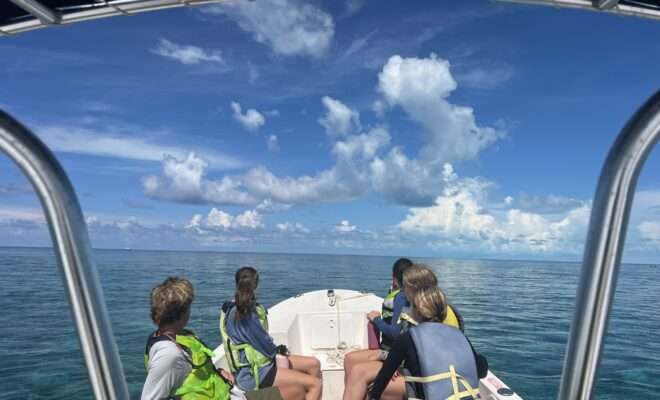
Each semester, Island School students dive into hands-on research alongside scientists from the Cape Eleuthera Institute, contributing to meaningful, place-based studies that explore the unique ecosystems of The Bahamas. These Fall 2025 research groups—focused on conch, corals, lobsters, sharks, blue economy, marine mammals, food security, and sustainable energy—are tackling real-world questions with curiosity, collaboration, and care.
In this blog series, students share their experiences, challenges, and discoveries as they navigate the research process and deepen their understanding of both science and self.
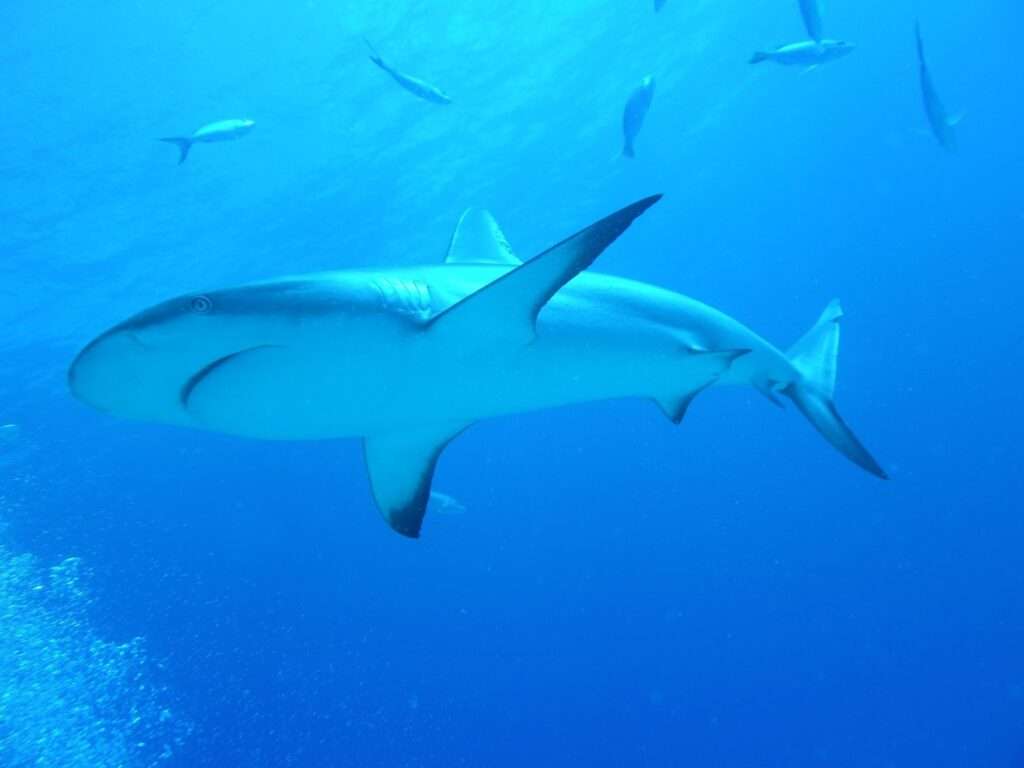
Island School Fall 25 Blue Economy: Caribbean Reef Sharks and Queen Conch
Written by the Blue Economy Semester Research Project Group
Each semester, students at The Island School take on research projects alongside world class researchers from all over the globe that come to study at the Cape Eleuthera Institute. Some examples of these research groups are blue economy (our group), sustainable energy, aquaponics, coral restoration and many more. The Island School focuses on “living well in a place” and “being where your feet are”, two common values practiced throughout campus. One way students practice this is by immersing themselves in the ecosystem and communities surrounding them.
Blue Economy refers to all of the money and economic benefits that the ocean provides for humans while simultaneously protecting marine ecosystems.1 Our goal for these research projects is to find solutions to small problems that if left to sit, could have catastrophic impacts later on in the future. Our project this semester focuses on two main species, the Caribbean reef shark and queen conch. Both of these animals are keystone species in The Bahamas and contribute millions of dollars towards the Bahamian economy.2
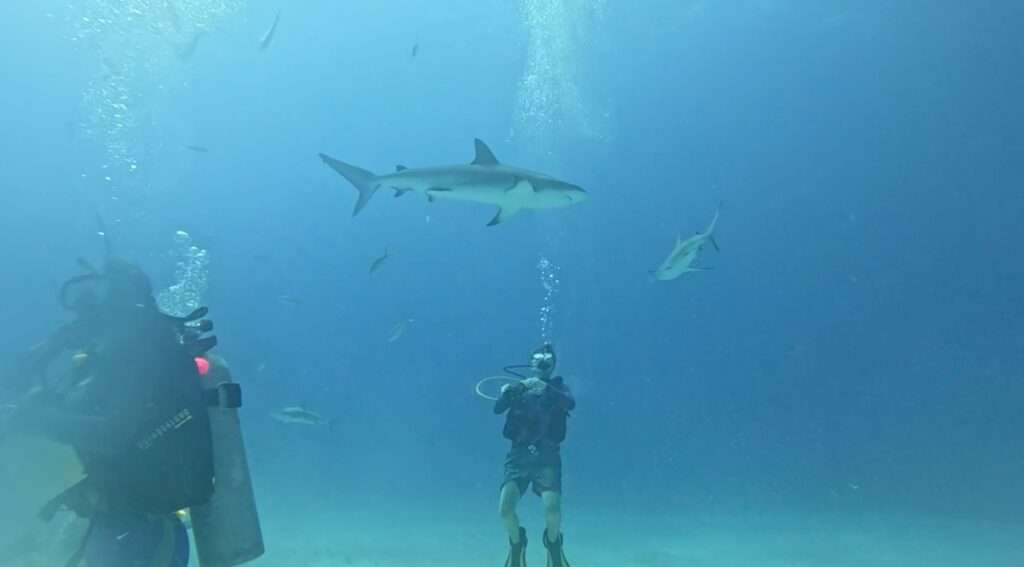
The Bahamas is a shark sanctuary, which means that any sort of fishing for or harvesting of sharks is illegal. Additionally, a study in 2007 showed that shark tourism is one of the largest sources of income into the Bahamian economy generating close to 80 million dollars in one year.3 Without sharks the ocean ecosystems would fall apart and The Bahamas would lose a lot of the tourism revenue from the people coming to see sharks and other popular species.
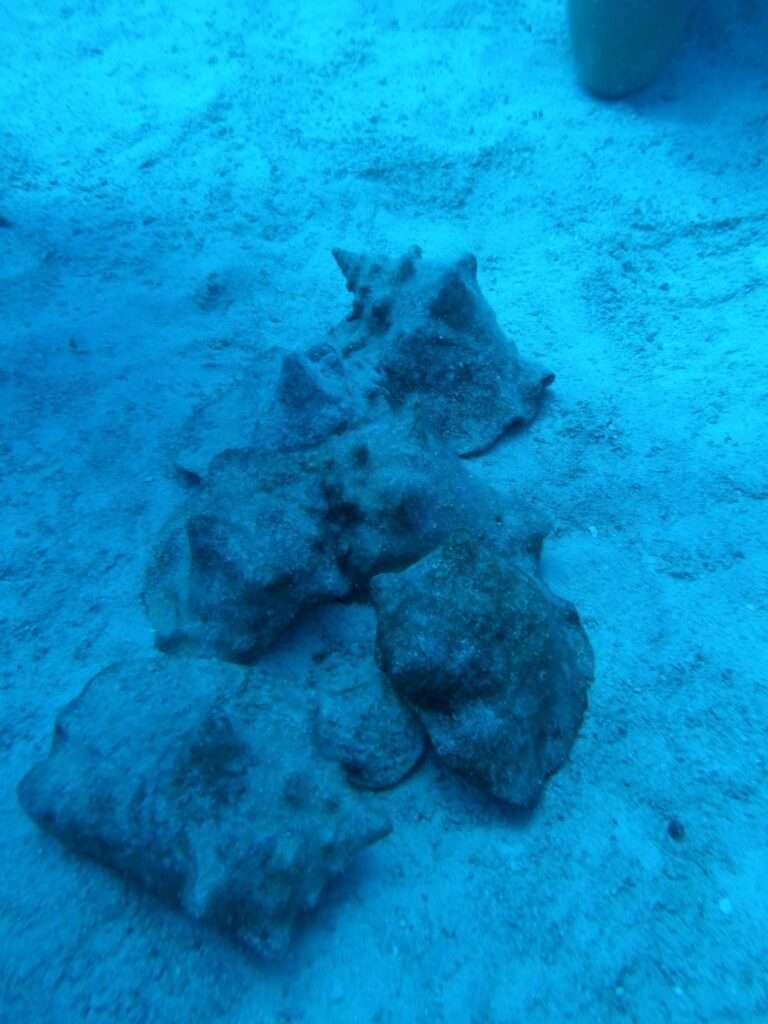
Another keystone species that is vulnerable in The Bahamas is the queen conch.4 The queen conch is a large part of Bahamian culture and economy, and is even featured in the official Bahamian coat of arms. Each year, selling queen conch brings in millions of dollars to the Bahamian economy. However, queen conch populations are currently struggling due to overfishing.5 Specifically the harvest of juvenile queen conch is preventing the species from reproducing. With the decreasing conch populations, fishermen livelihoods and ecosystems are at risk.5
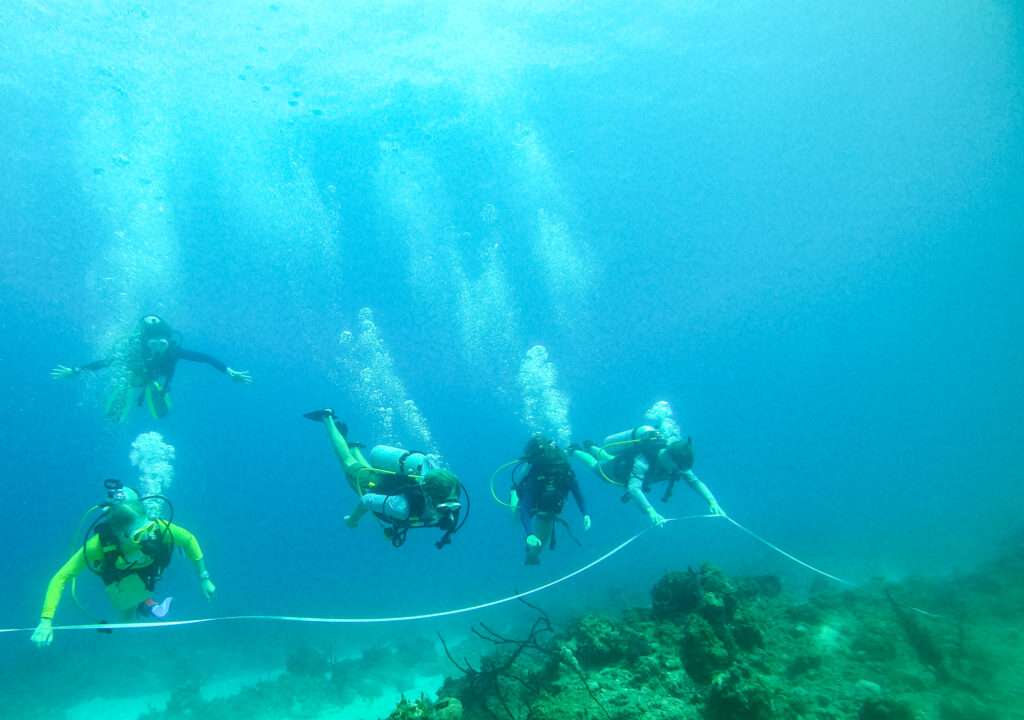
The Blue Economy research team has spent several days observing sharks and their behavior. We went to a dive site in Eleuthera, called Splithead, to monitor the presence of sharks over several dives. We conducted roving diver surveys to count the number of sharks present on each dive. With this data, we will be able to track when sharks are coming and going from the dive site over time.
We also conducted basic underwater surveys of areas to assess queen conch populations. We perform these by scuba diving down to a select area, and establishing a 10-meter radius transect to locate conch. We then record certain details about each conch, such as sexual maturity and size. Then repeat this process at multiple points within each dive site. The goal from collecting this data is to start to see trends in conch size and population density from one dive site to another. With this evidence, we hope to provide recommendations to improve conservation efforts and tourism opportunities for these two vital species.
References
- Bethel, B. J., Buravleva, Y., & Tang, D. (2021). Blue Economy and Blue Activities: Opportunities, Challenges, and Recommendations for The Bahamas. Water, 13(10), 1399. https://doi.org/10.3390/w13101399
- Haas, A. R., Fedler, T., & Brooks, E. J. (2017). The contemporary economic value of elasmobranchs in The Bahamas: Reaping the rewards of 25 years of stewardship and conservation. Biological Conservation, 207, 55–63. https://doi.org/10.1016/j.biocon.2017.01.007
- Maljković, A., & Côté, I. M. (2011). Effects of tourism-related provisioning on the trophic signatures and movement patterns of an apex predator, the Caribbean reef shark. Biological Conservation, 144(2), 859–865. https://doi.org/10.1016/j.biocon.2010.11.019
- Kough, A. S., Belak, C. A., Paris, C. B., Lundy, A., Cronin, H., Gnanalingam, G., Hagedorn, S., Skubel, R., Weiler, A. C., & Stoner, A. W. (2019). Ecological spillover from a marine protected area replenishes an over‐exploited population across an island chain. Conservation Science and Practice, 1(3), e17. https://doi.org/10.1111/csp2.17
- Sherman, K. D., Shultz, A. D., Dahlgren, C. P., Thomas, C., Brooks, E., Brooks, A., … & Murchie, K. J. (2018). Contemporary and emerging fisheries in The Bahamas—Conservation and management challenges, achievements and future directions. Fisheries Management and Ecology, 25(5), 319-331.