Fall 2025 Student Research Project: Conch
Each semester, Island School students dive into hands-on research alongside scientists from the Cape Eleuthera Institute, contributing to meaningful, place-based studies that explore the unique ecosystems of The Bahamas. These Fall 2025 research groups—focused on conch, corals, lobsters, sharks, blue economy, marine mammals, food security, and sustainable energy—are tackling real-world questions with curiosity, collaboration, and care.
In this blog series, students share their experiences, challenges, and discoveries as they navigate the research process and deepen their understanding of both science and self.
Algal Turf Scrubber Systems are the Future for our Conch
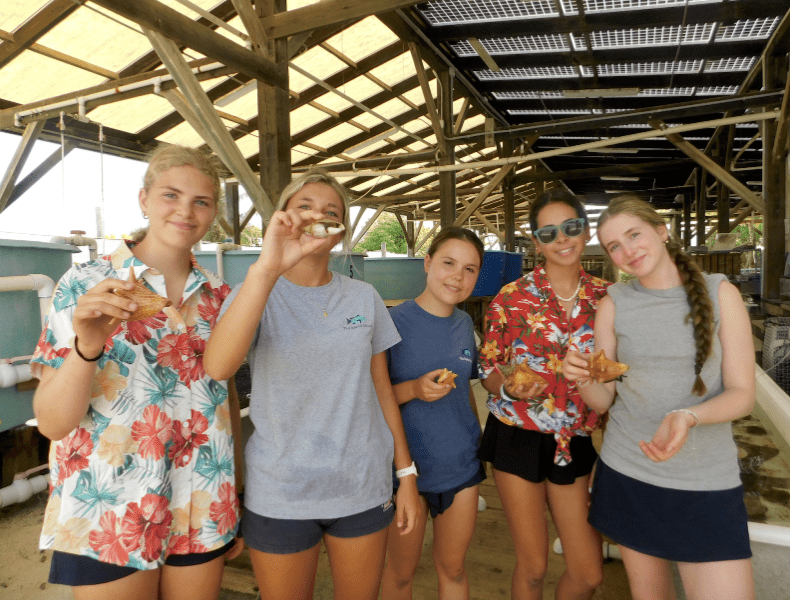
Written by Phoebe Stoesser, Zinnia Schepps, Anabella Williamson, Camille Hintz, Jayden Adderley, and Tabor Houghtaling
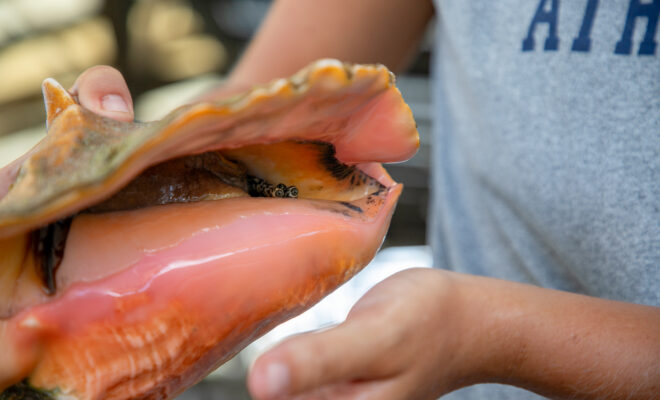
The queen conch is a keystone species in Bahamian culture and a necessity for many Caribbean countries.
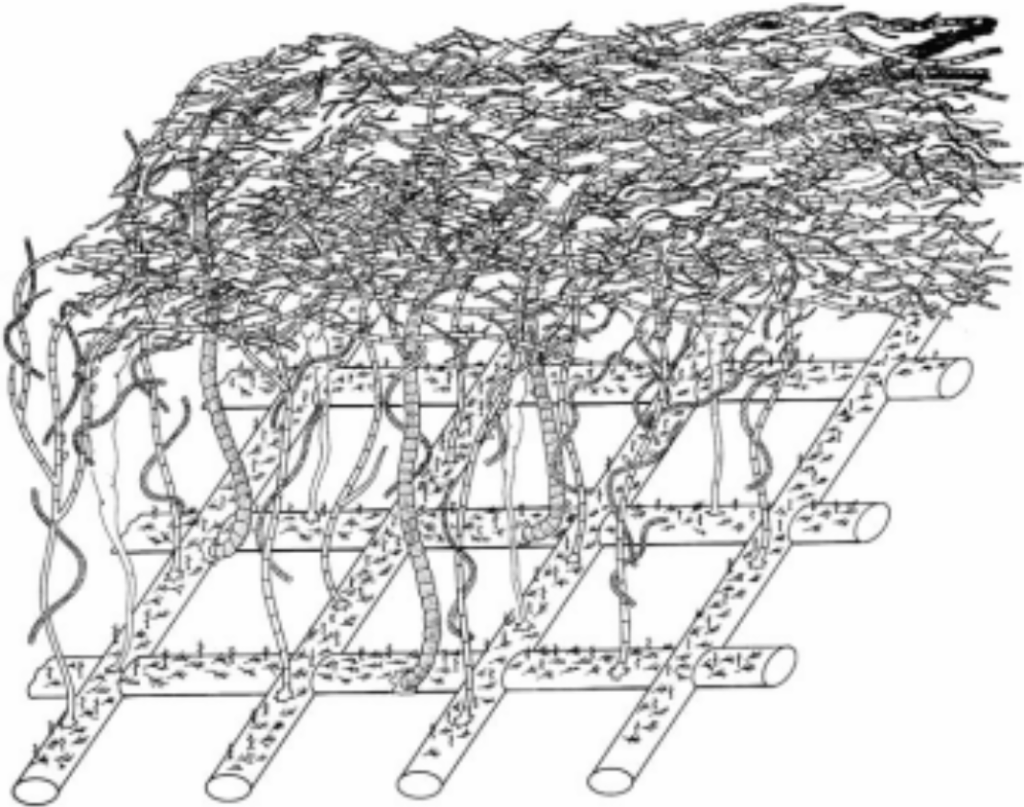
The queen conch provides food and jobs to many local Bahamians. You can turn the meat into conch fritters or a delicious salad to feed your family. The shell is also a beautiful decoration in any house, or can even be made into jewelry! In order to harvest conch, you have to fish for it. Since the species is endangered, the number of conch is declining, making it harder to harvest them. This means the job opportunities in conch fisheries are declining. Because conch numbers are slowly dwindling, an increase in research and restoration of queen conch is taking place. This has prompted us to actively research what they like to eat and how to grow it, all with the ultimate goal to preserve the conch species. In pursuit of this, we are investigating how to grow local algae species efficiently as a food source for the conch. Throughout this semester, our overall goal is to determine whether algae grows better on land or in the ocean. We are also attempting to examine what factors affect the algae growth. We went about this by tracking the growth of algae on an Algal Turf Scrubber (ATS), a system used to culture algae on a mesh substrate using flowing water. We will record how the ATS is affected by different factors, such as water velocity and light level in both the ocean and on land. Here at The Island School and CEI, we are investigating if algal turf scrubbers are worth using when raising conches.
Research:
To combat these struggles our research group is studying how to effectively create sufficient and healthy sources of food for conches both juvenile and adult. Our research question is “what is the best way to grow algae for conch consumption?” To answer this question we are comparing the effectiveness of land vs ocean based ATS systems. We are comparing various aquatic conditions to better understand where algae grows best. Specifically, we are testing how independent variables such as water velocity, light intensity, and location affect and encourage algae growth. The goal is to culture as much algae as possible in the ocean. This way there is an abundance of food for juvenile conch to safely grow to adulthood, and the algae would be grown more efficiently. Previous studies have proven wild algae communities have more nutrition than commercially available food sources. This is why we are focused on growing algae both in the ocean and on land.
Our methods:
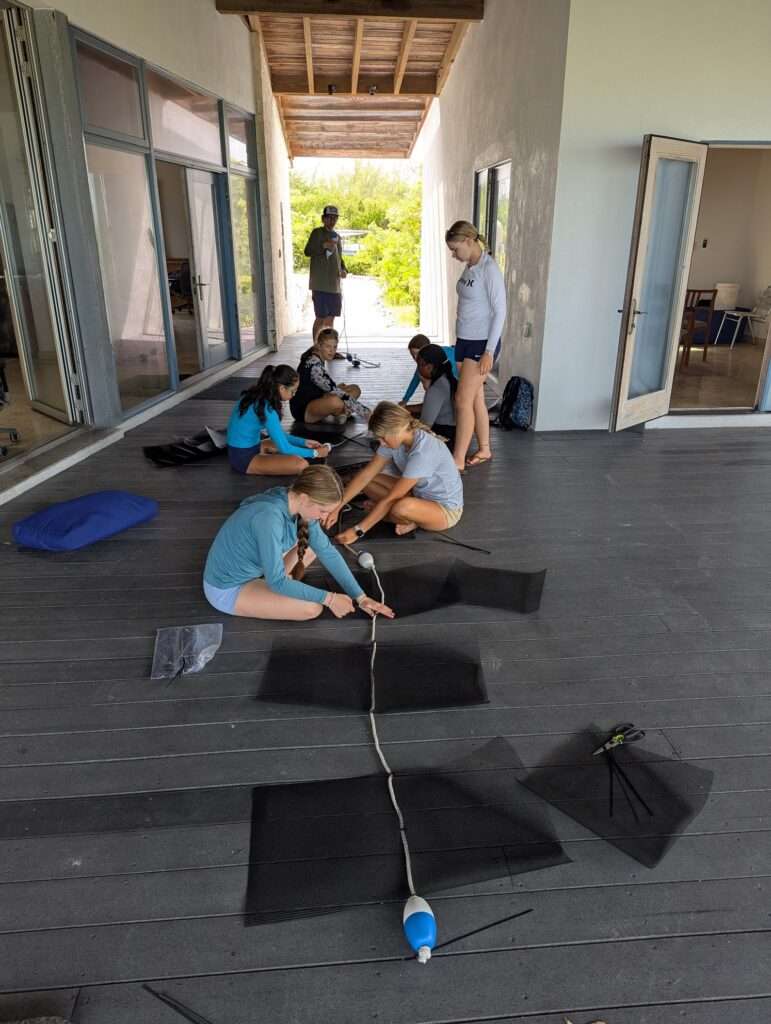
Our first step towards answering our research question: “What is the best way to grow algae for conch consumption?” was collecting baseline data at two ATS sites. Both sites are located in shallow water areas with a similar depth and sunlight exposure. However, there are differences among each. The bottom on site one is rocky and covered in algae. Additionally, site one has a high water velocity, which some algae historically grows better in. Site two is much more sandy and has lower water velocity. We took note of all these factors and moved on to building the ATS system. We cut out 32 even pieces of ATS mesh and laid out 15 meters of rope to connect the mesh to. Then we used cable ties to secure the mesh to the rope. Finally, we attached buoys to the rope to ensure the ATS system would float. This will act as our substrate (living surface) where algae can grow. Currently, we do not have any information on algal growth from our ATS system but we will soon start measuring growth by measuring biomass and percent coverage of the algae. We recognize our process and the ATS system will not be perfect and will most likely need adjustments, all of which we will touch on in a future blog post.
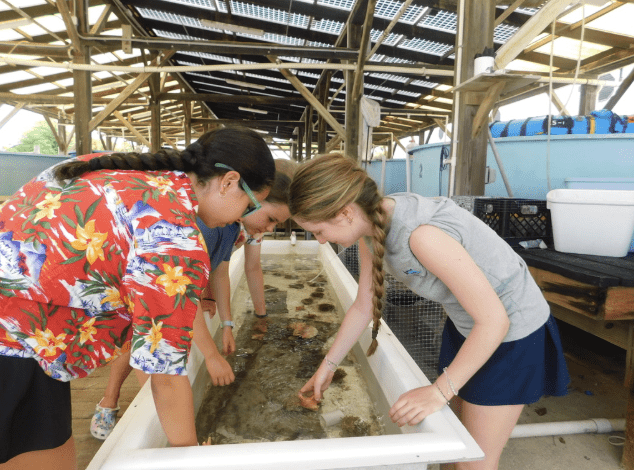
Finally, for our land-based ATS system. We placed ATS mats in raceways, which are long, thin tanks that water flows through, simulating tides and currents flowing in the ocean. We have a total of 6 raceways, 2 of which are devoted to juvenile conch, with the remaining 4 as part of our research trial. To create an authentic environment for the conch, we use saltwater in the raceways and replace the sand at the bottom of the raceways weekly. This not only keeps our conch’s environment clean and healthy but also effectively simulates the ocean floor. We also put 20 ATS meshes of two different mesh sizes in four raceways in the wet lab. The goal of this is to see if the algae grows better on a fine mesh or wider mesh.
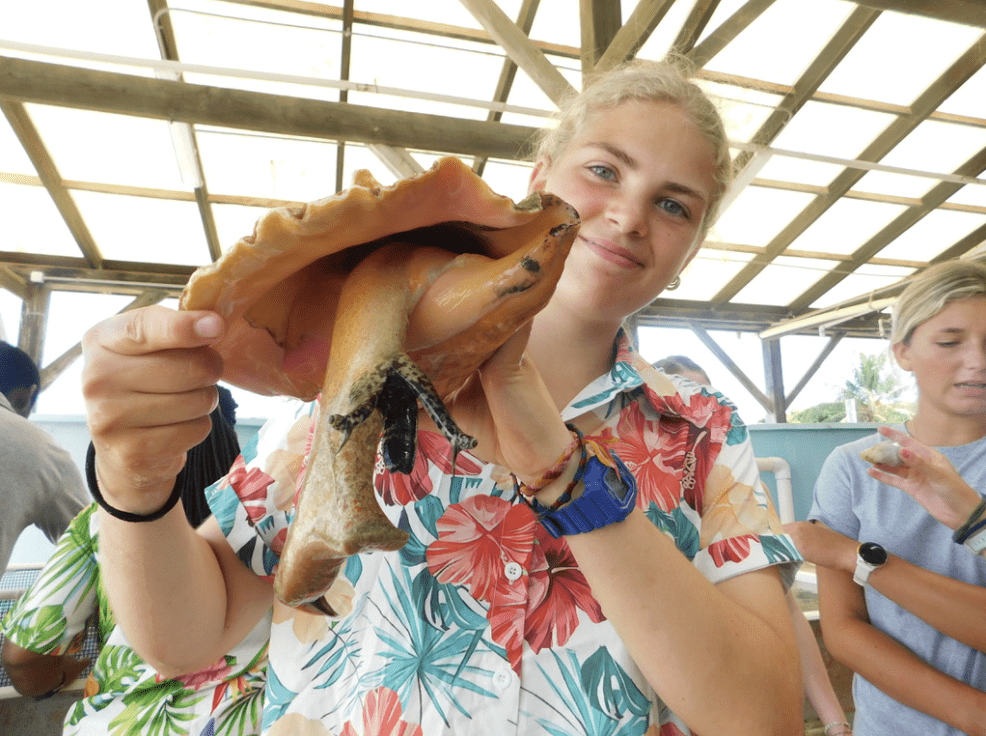
Additionally, We made a supplementary diet for our conch which was fed to them in their tanks. This way they could receive additional nutrients other than the ATS algae, which we are devoting to our research. This supplementary diet consisted of Ulva(algae), gelatine, fish food, and water. So far, the conch has responded well to these nutrients, evidence being they consumed the food very quickly.
Next Steps:
Over the course of the weeks to come, we will observe and collect data on the algae growth in our three ATS experiments. We will analyze our data and see which method of growing algae is most effective. Based off our findings from this research, we may be able to create a much larger ATS system. Being able to grow large amounts of algae will improve the sustainability of our campus. We won’t need to pump water or use any electricity to grow algae for conch. Our overarching goal is to make conch aquaculture more accessible to local fishermen in the Bahamas. This would greatly benefit local economies while sustainably protecting a cultural keystone species.
References
- Adey H. Walter, Kangas C. Patrick, Mulbry Walter. ( June 2011). Algal Turf Scrubbing: Cleaning Surface Waters with Solar Energy while Producing Biofuel.Vol. 61 No. 6. Page 344-441. www.biosciencemag.org.
- E. Hamed, E.-S. A., Al-Amgad, Z., Rashedy, S. H., & Ahmed, H. O. (2023, December). Marine Algae Based-Meal as Substitute Ingredient Feeds for the Fighting Conch Strombus tricornis L. (Mollusca, Gastropoda): Body Weights and Histomorphological Studies. Research Gate. https://www.researchgate.net/publication/376414558
- Krever M, Tzanis Kosta, Sauls D, Gerald R, Lowery M, Gavem H, Siccardi A (January 21 2025) Utilization of Algal Turf Scrubber Bio Mass in Sea Urchin Diets Aquaculture Research, 2025, 1-7, doi.org/10.1155/are/7950801
- Moore, C., Garner, J., Yen, A., Sioson, M., Miele, B., Levy, N., Kangas, P., May, P., (2018) Algal Turf Scrubber Algae as a Soil Amendment Fertilizer