Fall 2025 Student Research Project: Marine Mammals
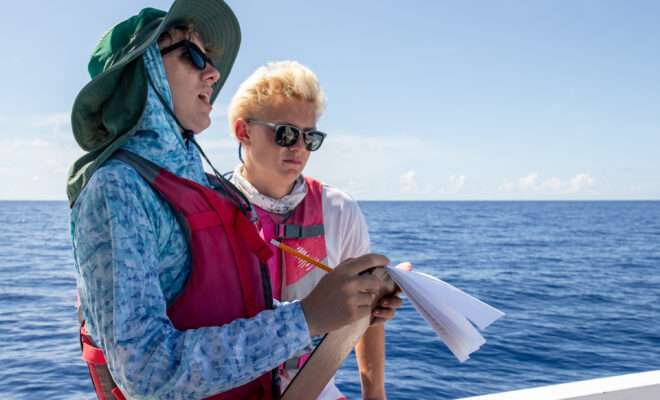
Each semester, Island School students dive into hands-on research alongside scientists from the Cape Eleuthera Institute, contributing to meaningful, place-based studies that explore the unique ecosystems of The Bahamas. These Fall 2025 research groups—focused on conch, corals, lobsters, sharks, blue economy, marine mammals, food security, and sustainable energy—are tackling real-world questions with curiosity, collaboration, and care.
In this blog series, students share their experiences, challenges, and discoveries as they navigate the research process and deepen their understanding of both science and self.
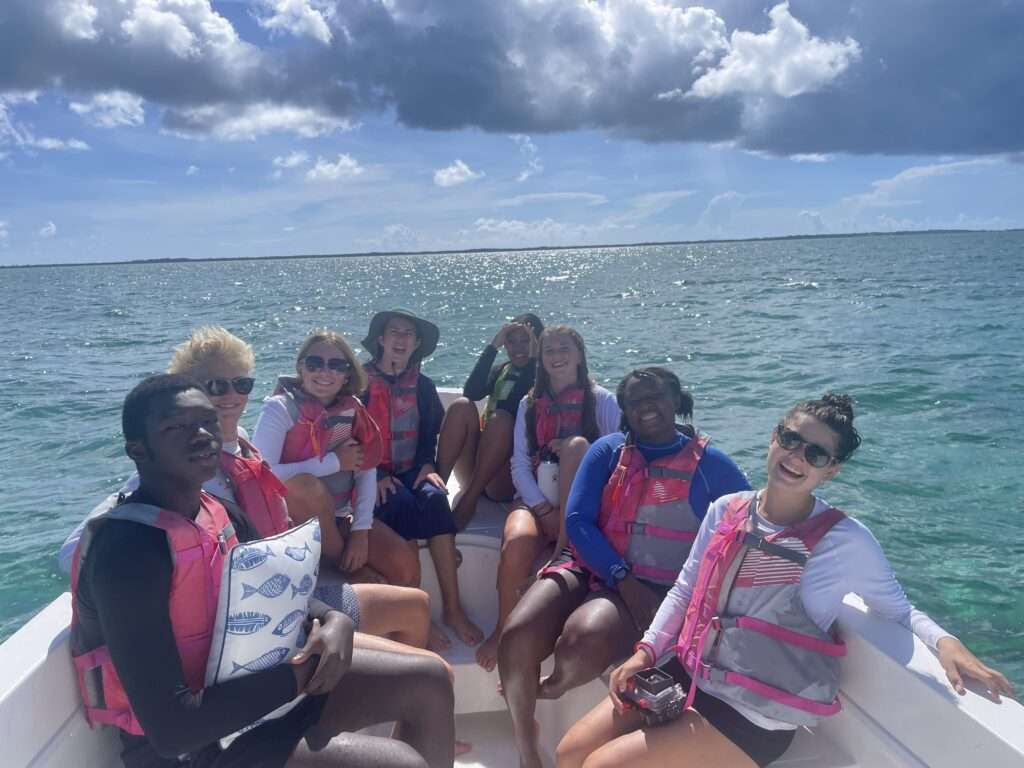
Beaked Whales: An Exuma Sound Survey
Written by Alice Lewin, Dymonde Lundy, Effie Dunn, Joanne Zhao, Henry Brand, Madison Fledderjohn, Soren Scoville, and Chukwuka Okoli
The Cape Eleuthera Institute (CEI), located in Eleuthera, The Bahamas, is “an institute devoted to research, education, and conservation, seeking to create a connection between people and the environment as a path toward a more sustainable future.”1 The Island School semester students at CEI, led by researcher Natalie Hodges, are conducting Marine Mammals Research focusing on Beaked Whales, more specifically, the Cuvier’s, Blanville’s, and Gervais’ Species in the Exuma Sound Area. The research is conducted through record and analysis of the species’ habitat and abundance, to ultimately identify and prevent any threats.
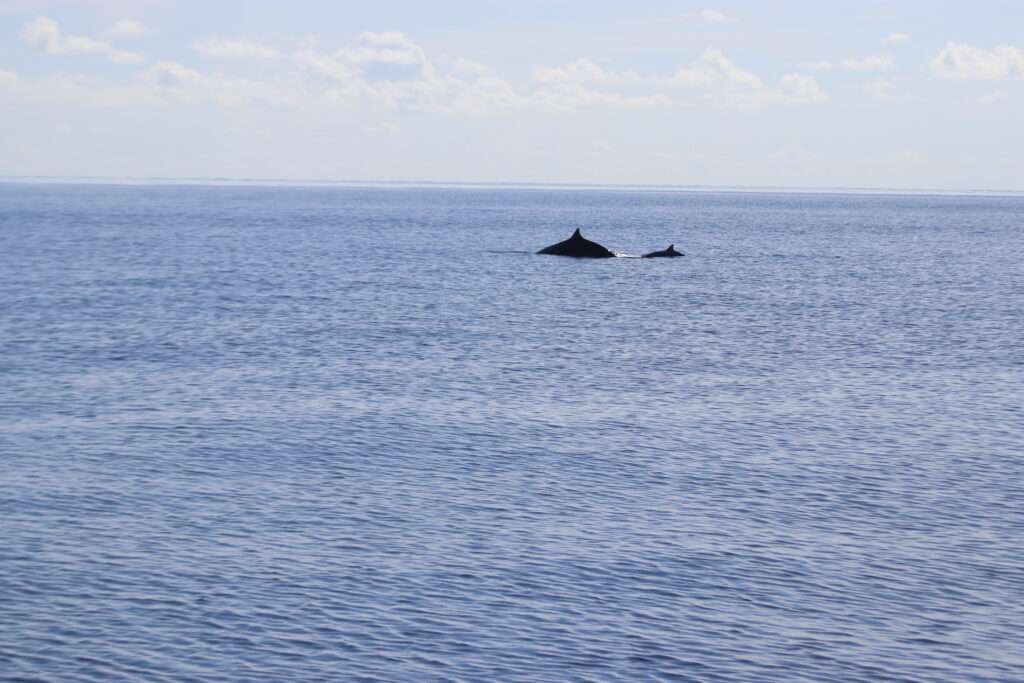
The information deficiency in relevance to beaked whales makes it a valuable target of study. Beaked whales’ primary source of nutrition is deep sea squid. Deep sea squid live in the great depths of around 1200 meters, and remain in confined areas.2 Unfortunately, these whales can’t afford to spend so much energy diving for food, especially when prey populations are low. Beaked whales’ food supply is not their only threat. In certain places, such as Southern California, the habitat of the deep sea squid overlaps with military sonar zones. Since this is one of the only places the whales can find food, they have to enter the area with sonars. Sonars are high-energy sound waves made from advanced technology.3 Their high frequency disturbs the whales so much that the whales can be startled while underwater, and shoot 1200 meters to the surface. When descending in the water, the further down one goes, the more the pressure increases, and the more time they need for nitrogen bubbles to dissolve from their blood as they’re ascending. When these whales rapidly ascend from the sonar shock, the nitrogen bubbles expand and tear holes in their tissue – killing them.4 Other human activities near beaked whale habitats, such as shipping traffic, offshore oil, and gas development also contribute to the disruption of these species’ natural habitats.5 Beaked whales have to risk – and potentially sacrifice – their life to merely survive hunger, demonstrating the danger from inconsiderate human activities.
Objectives
Driven by the motivation to protect and conserve Beaked Whales, the Marine Mammals Fall 2025 Research Team at The Island School intend to do so through amending for the data deficiency around the species by observing and thus estimating its abundance in specifically Exuma Sounds; by supplementing knowledge of the population, it marks the first step of many in the prevention of human activity interference.
Through implementing the Photo Identification technique, it grants direct insight into the understanding of Beaked Whales’ social structure. Tracking family groups over time provides data of how long the calves stay with their mother. By capturing high quality photos of each whale from multiple angles, it can be used for an extended period of time to more accurately track and recognize specific whales and thus monitor their behavior, creating a more thorough comprehension of data.
Collecting environmentals, on the other hand, allows researchers to identify patterns in the whales natural and hunting habitats through exact depth and location, and thus plan on the protection and conservation of the specific areas. By incorporating a wide selection of data collection methods, such as distance sampling and photo-id, researchers would be able to gain reliable and objective understanding of beaked whales behavior, and through such human activity, reverse previous human activity.
Methods
Beaked whales are difficult to study because they spend lots of their time diving for food, making them inaccessible to humans. They can dive for over two hours and up to 9,800 feet deep, which is the majority of the reason that very little data has been collected on them.
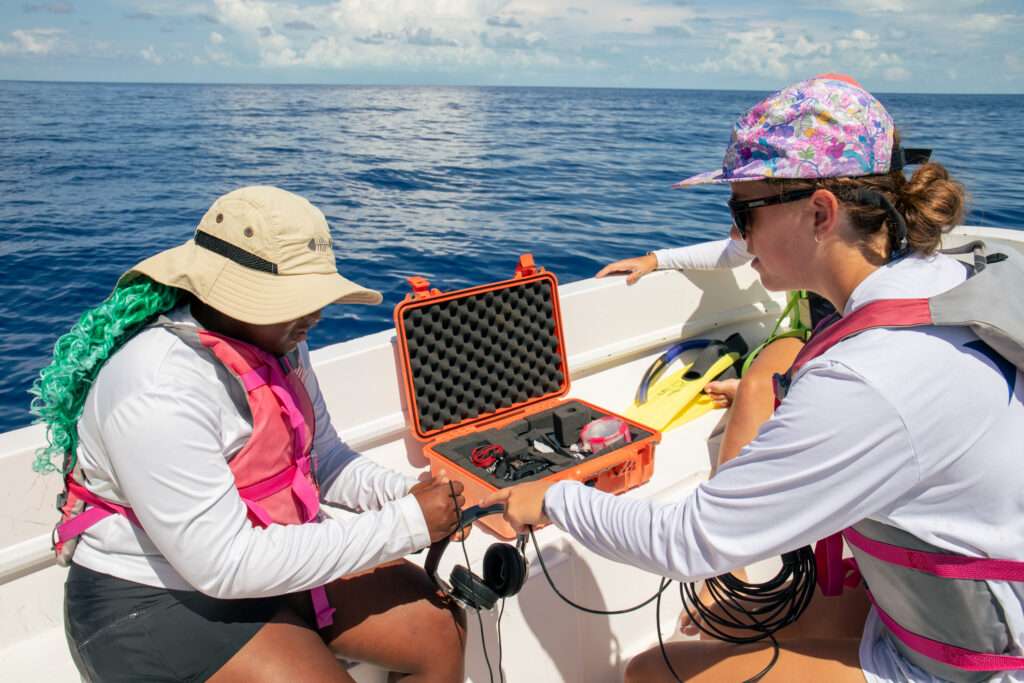
A way to study these deep sea marine mammals is to gather data with acoustic monitoring, using a hydrophone to record echolocation clicks made by the whales. The issue with this is that “Beaked Whales produce echolocation clicks with peak frequencies ranging from 16 to 66 kHZ”6 which are much higher sound waves than humans can hear. We won’t actually know if there are whales in the area until we go back to the lab and analyze the recording.
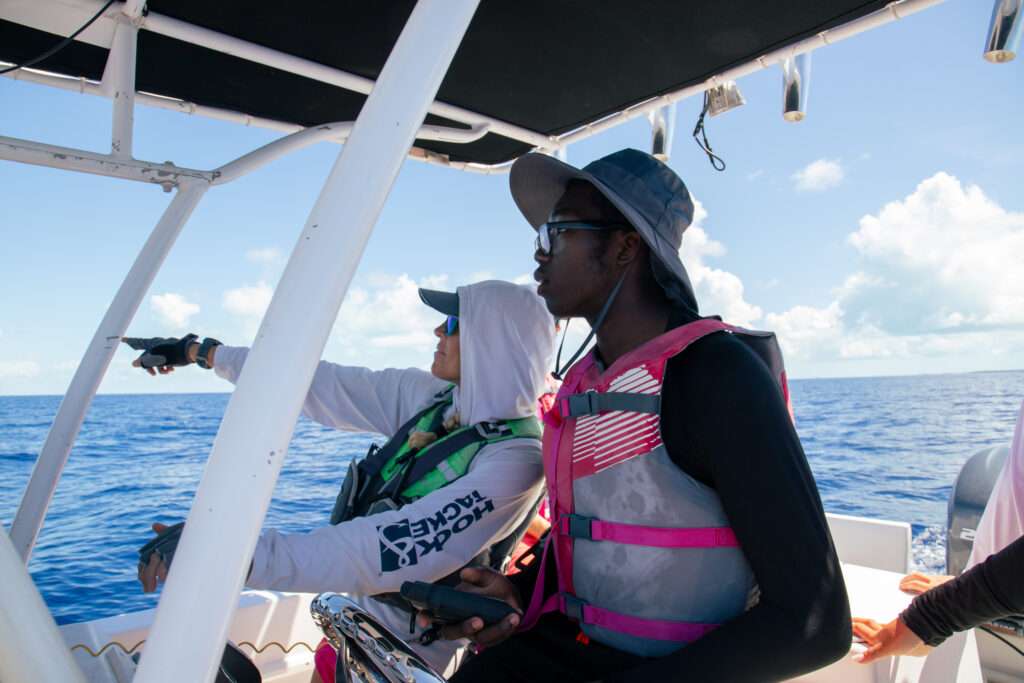
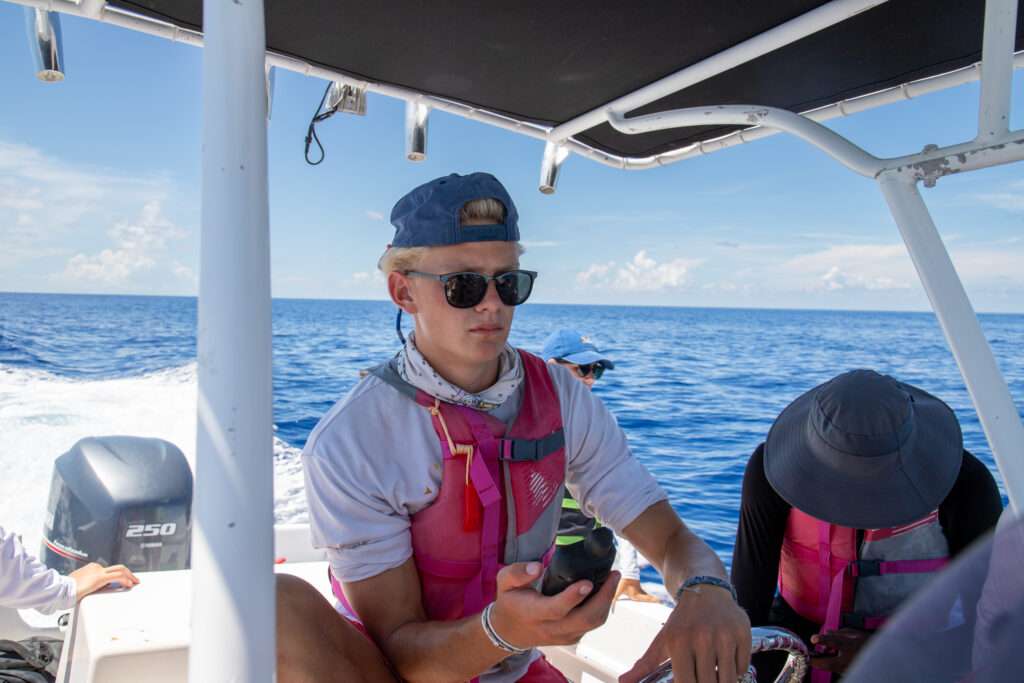
To make sure our data from this experiment is valid, we follow a transect. Transects are when you select a smaller area from the total area and survey that smaller as to later extrapolate the data collected in the smaller to the greater. To ensure that your data is not biased, you survey the selected area in a zigzagging pattern known as the transect line to give all of the area equal coverage during survey time. This means we are not just going to places where we expect to find these whales. Going to the same spots can be helpful for photo ID, but generally we are surveying the whole area.
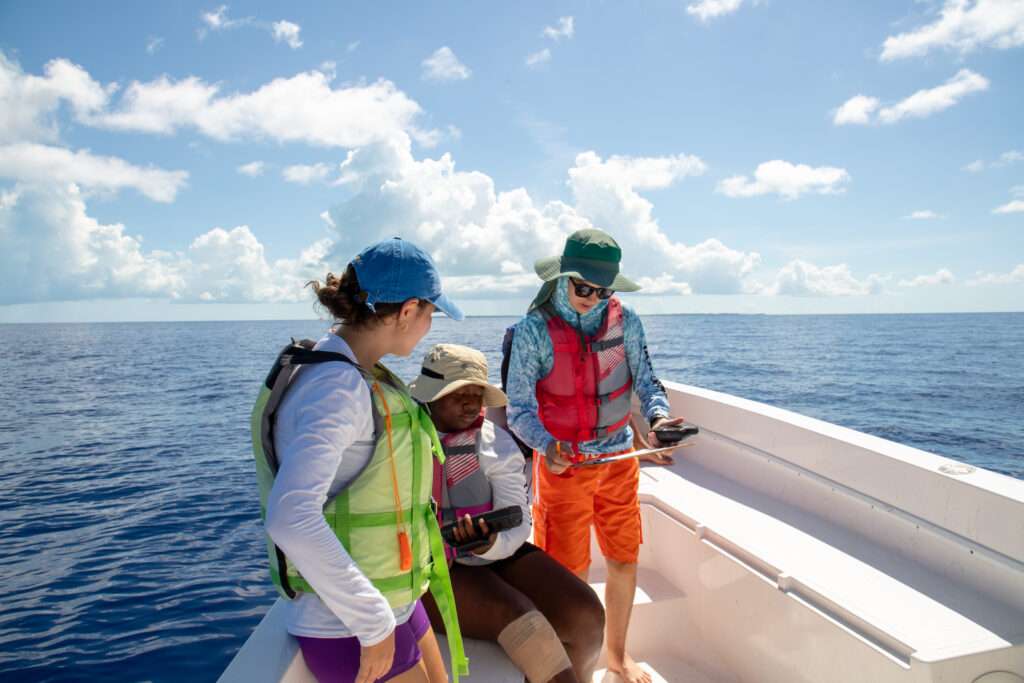
When spotting whales, it’s important to gather data such as surface temperature, dissolved oxygen, salinity, cloud cover, ocean condition, time of day, GPS coordinates, tidal phase, bathymetry (depth), and photos will help us identify patterns of surfacing and population. As well as providing us with evidence on why a certain group of beaked whales are staying in the same area.
Conclusion
The study holds the intention of gaining an understanding of the beaked whale species in the Exuma Sound and the greater Eleuthera area. Through the incorporation of ranging data collection methods, including distance sampling and photo-ID, we hope to gain a reliable and objective understanding of beaked whales’ behavior, including age of maturity and reproduction. In years from now, we hope this study will have a lasting beneficial impact on the beaked whale population.
References
- https://islandschool.org/cape-eleuthera-institute/about-us-cei/
- Hammond, P. S., Francis, T. B., Heinemann, D., Long, K. J., Moore, J. E., Punt, A. E., … & Zerbini, A. N. (2021). Estimating the abundance of marine mammal populations. Frontiers in Marine Science, 8, 735770.
- Fulton-Bennet, K., & Cullen, H. (2019). Why do beaked whales return to a Navy sonar range despite frequent disturbance? It’s the food. Monterey Bay Aquarium Research Institute. Retrieved from: https://www.mbari.org/news/why-do-beaked-whales-return-to-a-navy-sonar-range-despite-frequent-disturbance-its-the-food/
- Balcomb III, K. C., & Claridge, D. E. (2001). A mass stranding of cetaceans caused by naval sonar in the Bahamas. Bahamas journal of science, 8(2), 2-12.
- Feyrer, L. J., Stanistreet, J. E., & Moors-Murphy, H. B. (2024). Navigating the unknown: assessing anthropogenic threats to beaked whales, family Ziphiidae. Royal Society Open Science, 11(4), 240058.
- Sidenko, E., Parnum, I., Gavrilov, A., McCauley, R., & Erbe, C. (2025). Year-Round Acoustic Presence of Beaked Whales (Ziphiidae) Far Offshore off Australia’s Northwest Shelf. Journal of Marine Science and Engineering, 13(5), 927.
- https://docs.google.com/presentation/d/1yYsk-kt0SEG8ELXh4p3qCf3SGYjgu6QyldKM8RB3HnQ/edit?slide=id.g366172ae316_0_159#slide=id.g366172ae316_0_159