Sharks: To feed or Not to Feed? The Impact of Tourism on Sharks in The Bahamas
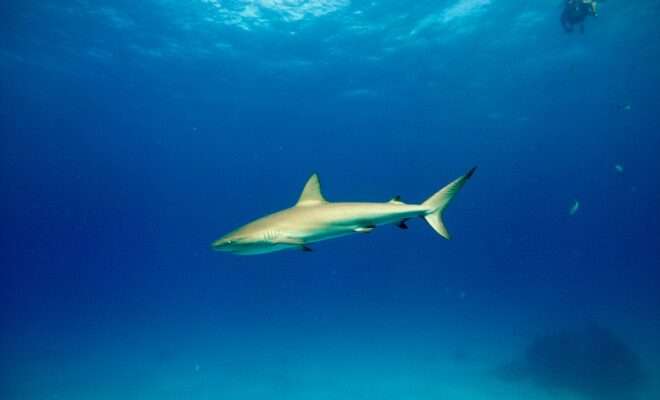
Tourism that revolves around sharks can provide job opportunities, aid in education, and help with the conservation of these creatures in The Bahamas.
In an attempt to protect these often misunderstood animals, The Bahamas prohibited longlining—a type of commercial fishing technique that deploys hundreds of hooks off of a single line—in 1993. Then, in 2011, The Bahamas established the first shark sanctuary in the Atlantic Ocean, creating a safe haven for sharks.
While The Bahamas are home to healthy shark populations, globally, one third of shark species are threatened with extinction, mostly due to targeted fisheries and bycatch. Luckily, this is a non-issue here, letting these protectors of the marine environment thrive, preserving healthy fish populations and ecosystems. This has not gone unnoticed, attracting shark and marine life enthusiasts from around the world, but most notably from the USA. Places like Florida, USA are known for their shark populations, but they also have strict regulations for human interactions with these animals. Practices like baiting and feeding sharks during scuba diving excursions are prohibited, which may be an essential part of shark diving for some people. The Bahamas on the other hand have no regulations for shark related tourism, thereby attracting Floridian shark tourism operators that take advantage of the short distance between the Bahamian islands and the US mainland.
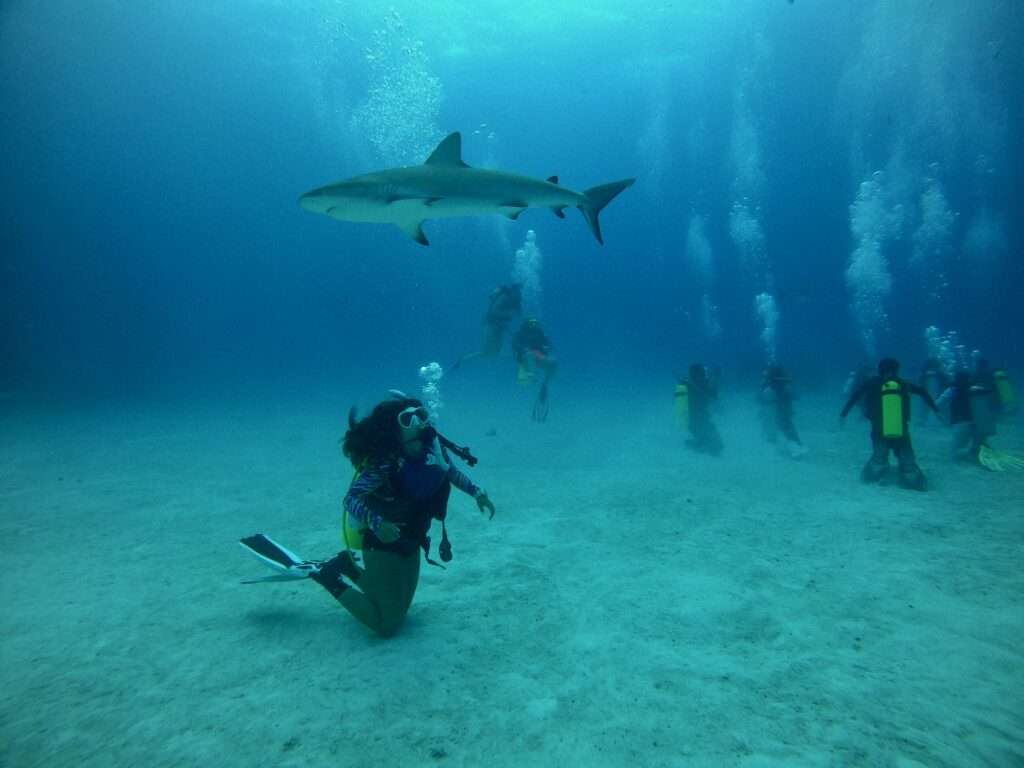
Money matters: the Value of Shark Tourism in The Bahamas
All tourism can be beneficial for the local economy, but shark tourism in particular is a major addition to The Bahamas.
In 2008, shark diving added around $78 million to the Bahamian economy, and this number continues to climb. Today, shark tourism brings in more than $114 million dollars every year. In fact, approximately 43% of all dive tourists who visit The Bahamas come to see sharks.
It’s clear that shark tourism is immensely valuable to The Bahamas. Unfortunately, foreign charters that provide multi-day dive tours often bring people to The Bahamas to benefit from Bahamian shark populations without providing monetary benefit to the country. However, such excursions may introduce visitors to the natural beauty of The Bahamas and inspire them to return and dive deeper into the nation’s rich culture.
The Species and Shark Tourism
Shark tourism isn’t just about scuba diving—it also includes research and filming for movies and television shows; as well as feeding activities, which can happen both naturally at fish cleaning stations and artificially at dive sites to attract animals.
While the waters of The Bahamas are home to more than 40 species of shark, there are six major species that are targeted for tourism: Caribbean reef, nurse, bull, tiger, great hammerhead, and oceanic whitetip sharks. However, not all sharks are targeted equally. While a majority of tourism operators target oceanic whitetip sharks around Cat Island, the great hammerhead is mostly encountered around Bimini, and Caribbean reef sharks are found across most islands.
To a lesser extent, stingray tourism also adds to this umbrella. Rays are often caught in the wild and kept in closures in coastal waters to be pet and fed by tourists. These kinds of activities are often organized by cruise lines and only accessible to their customers.
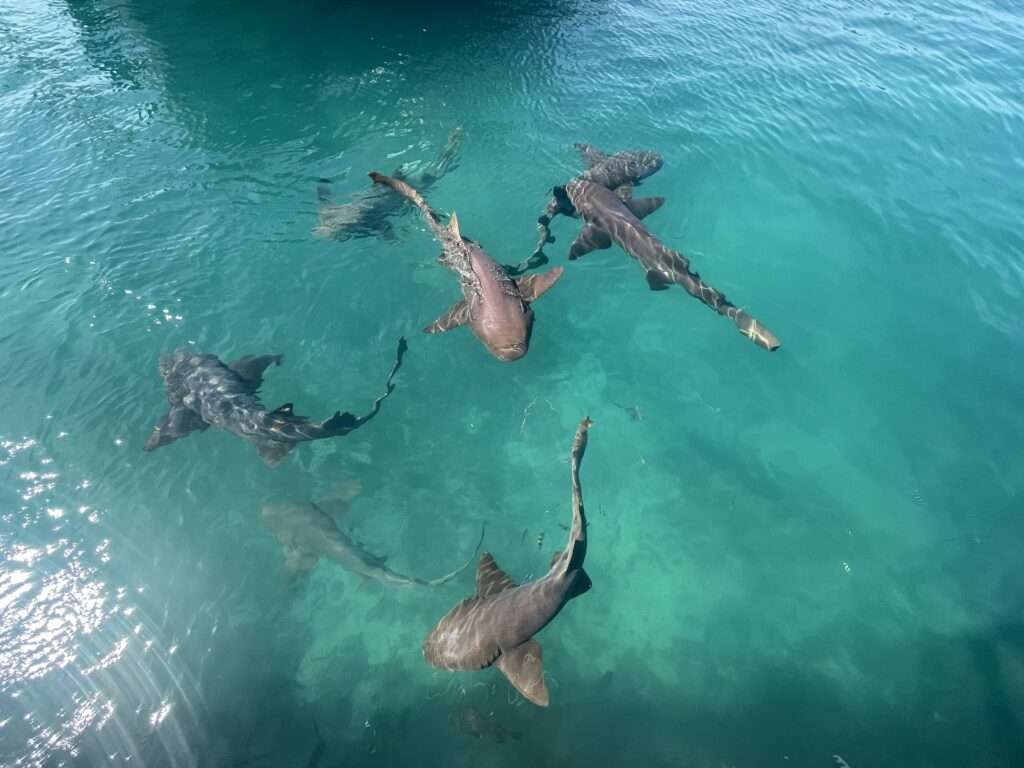
Safely Interacting with Sharks in The Bahamas
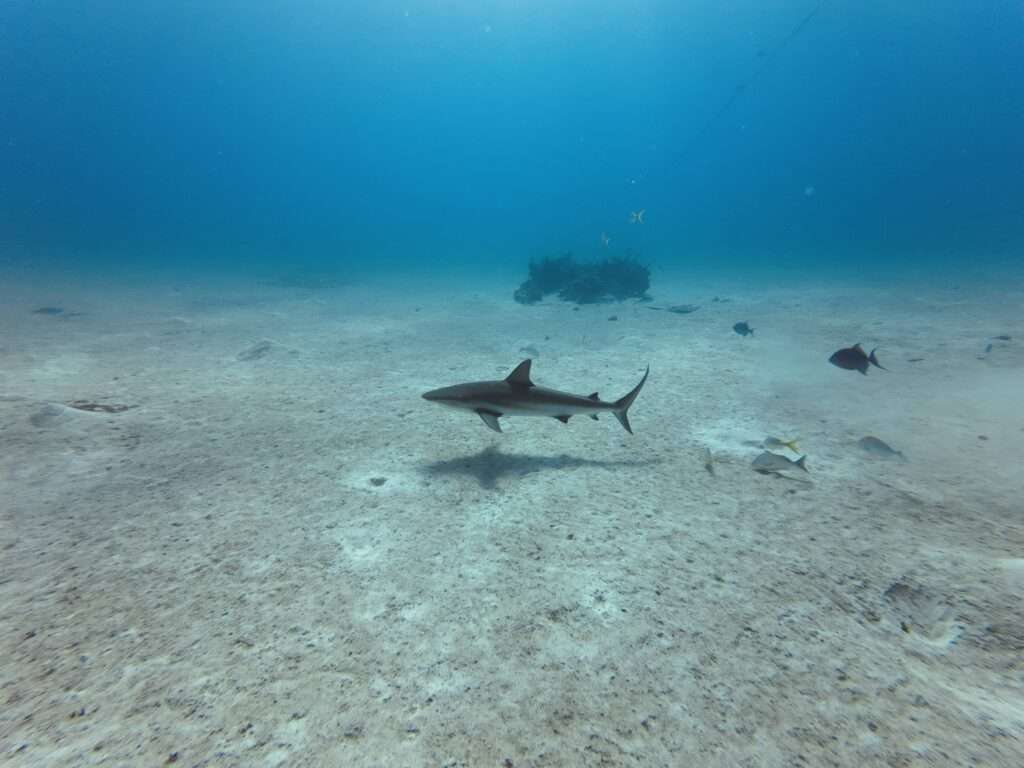
There is the risk of bodily harm with shark interactions, and it is more likely to happen if sharks are being fed during these activities. When thinking about safe shark tourism, we need to consider the difference between managed and unmanaged activities.
Managed activities are led by either binding agreements like laws or voluntary agreements such as best practices and codes of conduct. These types of agreements may prohibit divers from touching animals and require them to keep their arms close to their bodies if an animal approaches, to avoid giving the impression that they are holding out bait.
Unmanaged activities lack such guidelines, which are put in place to keep the animals, the environment, and the participants safe. Taking part in unmanaged activities increases the risk of unsafe conditions, like encountering more aggressive sharks, which may result in bodily injury to participants. A lot of data is needed to fully understand how to best manage shark-related activities, especially considering that they are site and species dependent. Unfortunately this may not be considered a research priority, as tourism doesn’t present as immediate of a threat as for instance fisheries do. This means that even when tourism providers want to manage their activities as best as they can, critical information and advice could be lacking.
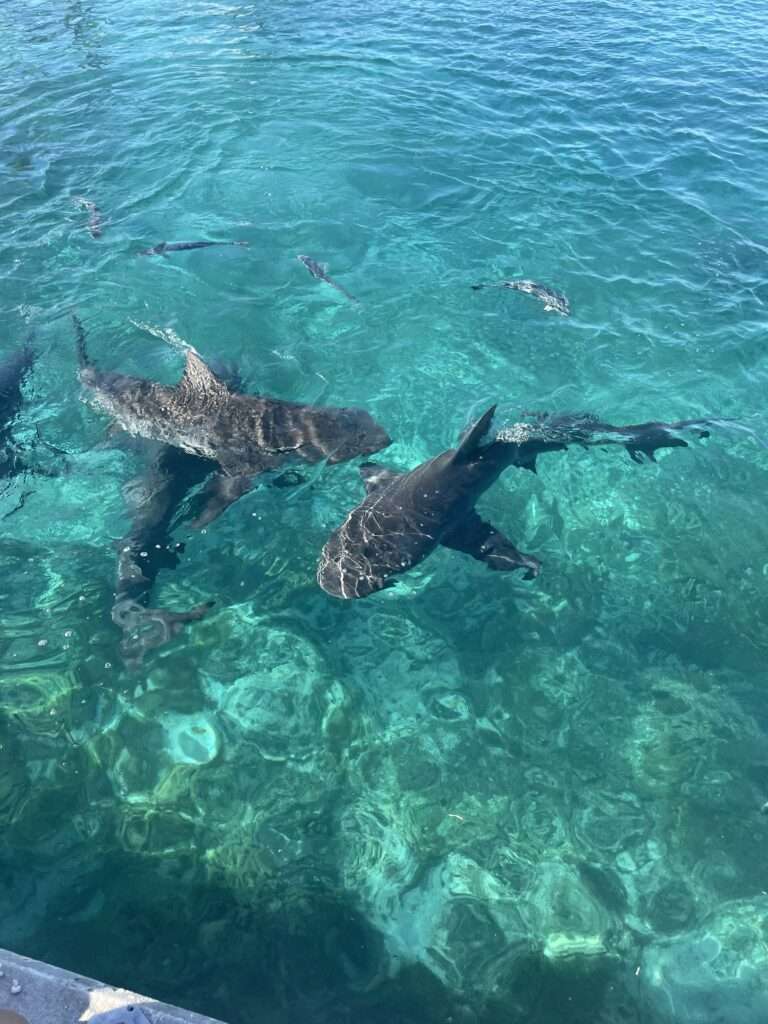
However, feeding sharks can be just as exhilarating from the surface as it can be below the waves. When feeding from fish cleaning stations, for example, there is very little risk involved for participants who still get to experience sharks in their—more or less—natural environment. But there are still risks for the targeted sharks themselves.
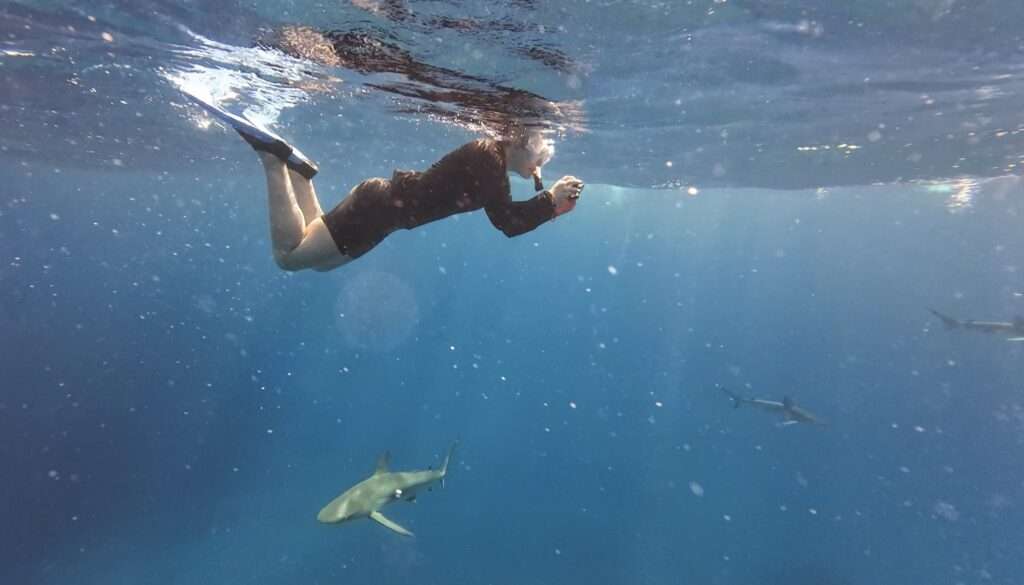
Sharks need safety, too
Scuba diving that does not include simultaneous feeding activities has shown to have very few negative effects on the sharks involved or on the broader ecosystem.
Unfortunately, this story changes once food is added into the equation. Scientists have investigated the impacts of human-led feeding events across various species and have found that different species react differently to these feedings. Lemon sharks, for instance, displayed increased aggression towards each other and humans at feeding sites, while southern stingrays showed increase in the number of injuries and parasites, as well as decreased overall health. Both of these species are common in The Bahamas and are both targeted for tourism activities.
The health of Caribbean reef sharks may not be affected by feeding activities but if these animals mostly feed on food scraps provided by humans, it could affect the entire ecosystem, including fish, coral reefs, and seagrasses. However, some species, like tiger sharks and bull sharks, are unlikely to feel strong negative impacts from such activities. This is likely due to provisioning making up a small percentage of their overall diet. From this we can see that having information on feeding activities is really important to shark health and establishing healthy limits for how often and how much to feed can ensure that Bahamian shark populations continue to thrive.
Future direction
At the Cape Eleuthera Institute (CEI), we aim to better understand human-shark interactions.
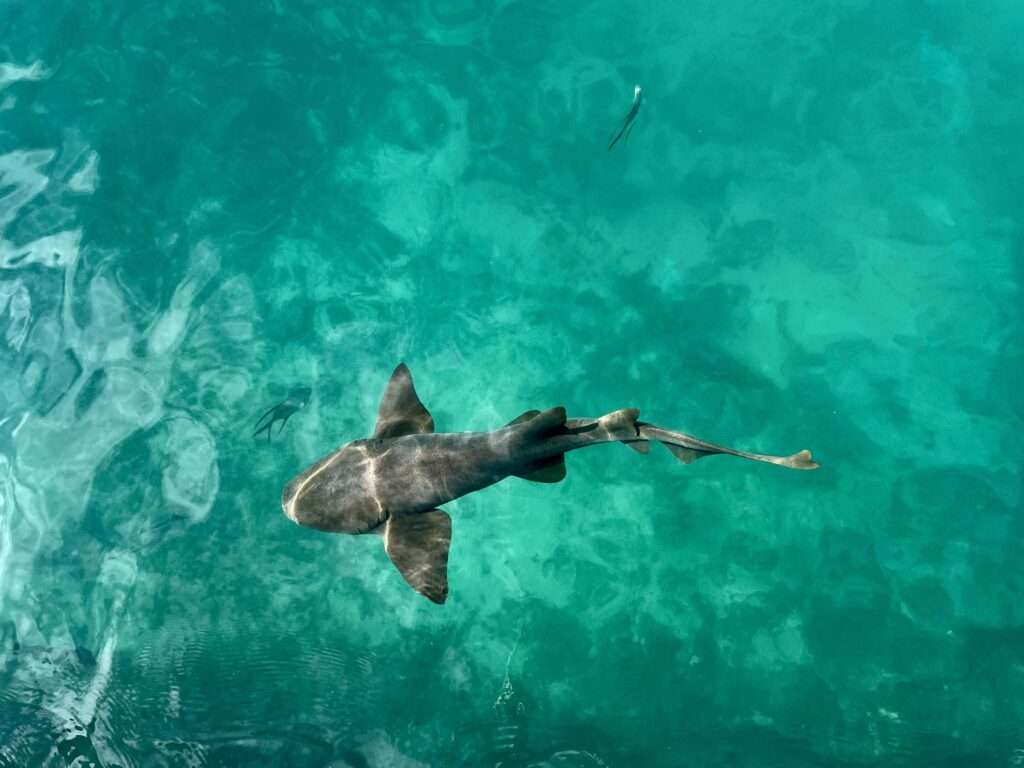
In particular, we are looking into how nurse sharks react to regular feeding and how feeding may or may not impact their behaviour. We have been observing nurse sharks at the Cape Eleuthera Resort and Marina for several years and are hoping to create a better understanding of how much these animals depend on the scraps being given to them at a fish cleaning station on the grounds. This project aims to establish best practice guidelines, making such activities sustainable, and to empower local Bahamians, especially fishers, to directly benefit from the global interest in their thriving shark populations.