Each semester, Island School students dive into hands-on research alongside scientists from the Cape Eleuthera Institute, contributing to meaningful, place-based studies that explore the unique ecosystems of The Bahamas. These Spring 2025 research groups—focused on conch, stingrays, coral grazers, corals, lobsters, sharks, and sustainable energy—are tackling real-world questions with curiosity, collaboration, and care.
In this blog series, students share their experiences, challenges, and discoveries as they navigate the research process and deepen their understanding of both science and self.
Monitoring the Health and Resilience of Coral Juveniles Along Southern Eleuthera
Alexandra Rao, Scout Olney, Hattie Chang, Mia Zilian, Ani Griffiths & Chase Hatfield
What do we know? Coral reefs, specifically coral species, along southern Eleuthera are consistently diminishing. There are consistent patterns of deterioration among the reefs due to bleaching, rising sea temperatures, increased algae coverage, higher exposure to disease, increased mortality rates, and a decrease in coral grazers to help maintain a healthy reef. (Francis et al, 2019). Rising sea temperatures cause an increase in diseases, such as Black Band Disease, Dark Spot disease, or white plague disease (Weiler et al., 2013). Coral bleaching also takes out a significant amount of coral. Coral bleaching is caused by rising sea temperatures which leads to corals expelling their algae due to stress of changing sea temperatures, leading to corals turning white and becoming more susceptible to disease and mortality (Bradley et al., 2018). However, corals are showing signs of resilience, like staghorn coral, and new coral growth can be observed throughout the cape (Hanes, 2023). Additionally, we know how to control the growth of macroalgae along reefs to minimize disruption by relying on grazers. The herbivorous urchin, Diadema, “caused the decline in macroalgae and initiated a change in community structure” (Edmunds & Carpenter, 2001), meaning there is hope for a reduction in macroalgae cover on coral reefs. Furthermore, we know that collecting data on coral juveniles and grazers will help guide further projects and help build up knowledge to counteract the deterioration of coral.
What don’t we know? As of now we don’t fully know the long-term effects of the decrease in coral coverage and the effect it will have on Eleuthera and the ecosystem. We don’t know any long-term solutions yet to recover the coral that has been lost. We don’t know the long-term effects of human intervention on coral. Additionally, we don’t know how to control the growth of macroalgal along the reefs, to minimize disruption in the ecosystem. Ultimately, there are lots of remaining questions that cannot be answered yet?
Importance: Coral is an incredibly important species and reefs are even more important ecosystems that are an integral part of the ocean and the overall health of our planet (Hanes, 2023). The loss of coral will not only affect grazers and fish that inhabit the reefs but the entire ocean ecosystem and our whole planet. Furthermore, the loss of coral will drastically affect the lives of humans. Fisherman’s livelihoods are at stake as fish populations start to dwindle. Healthy reefs support the livelihoods of half a billion people worldwide (Hanes, 2023). Economies rely on the money coral reefs bring in for both tourist, diving, and fishing industries. Coral also protects shorelines and local infrastructure by functioning as essential coastal protection from hurricanes and coastal storms. Reefs bring economic stability for many parts of the world including Eleuthera. Ultimately the loss of coral would have detrimental effects across the board and could be devastating, which is why it is important to actively protect and make efforts to conserve coral not just in southern Eleuthera but across the globe.
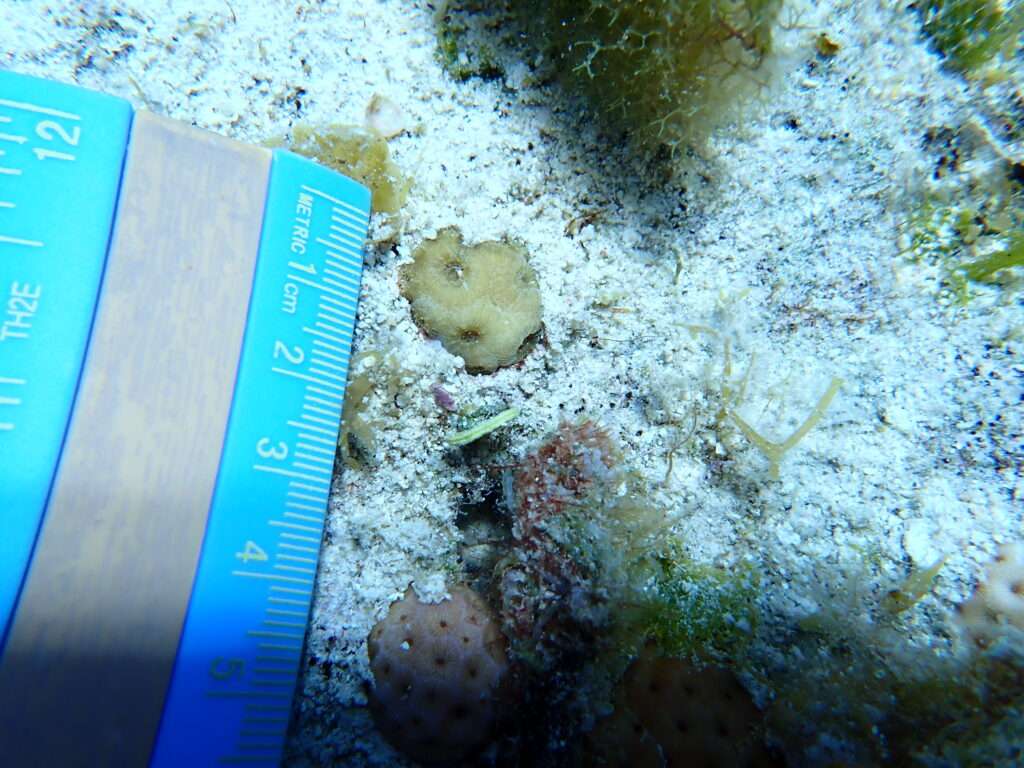
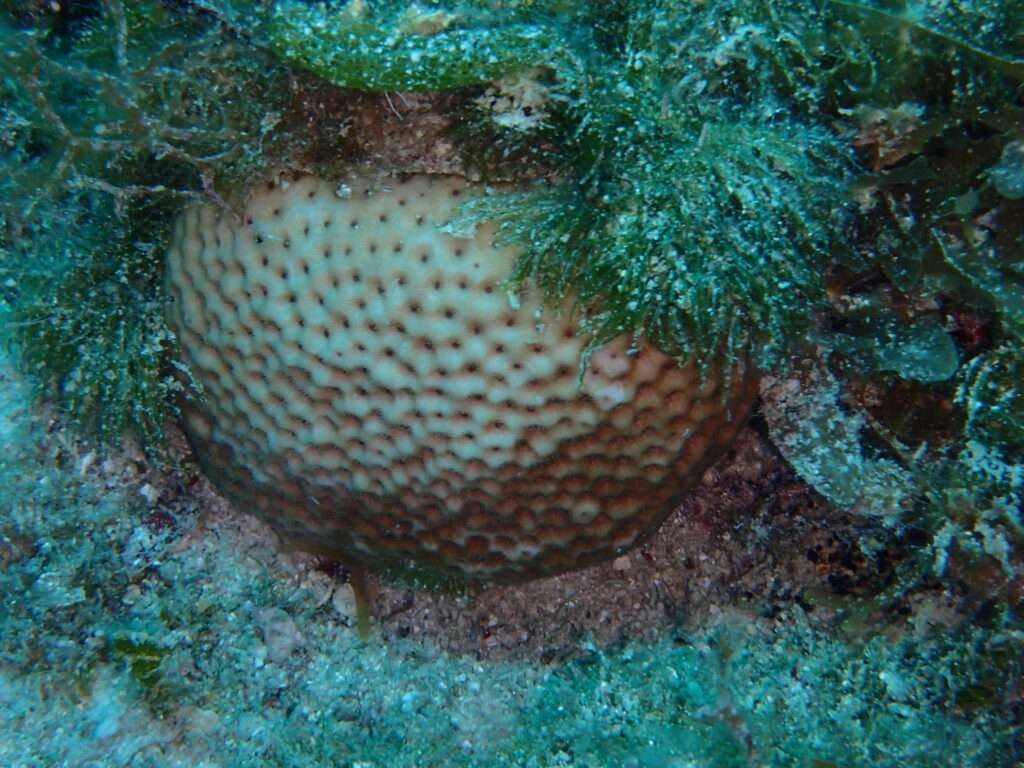
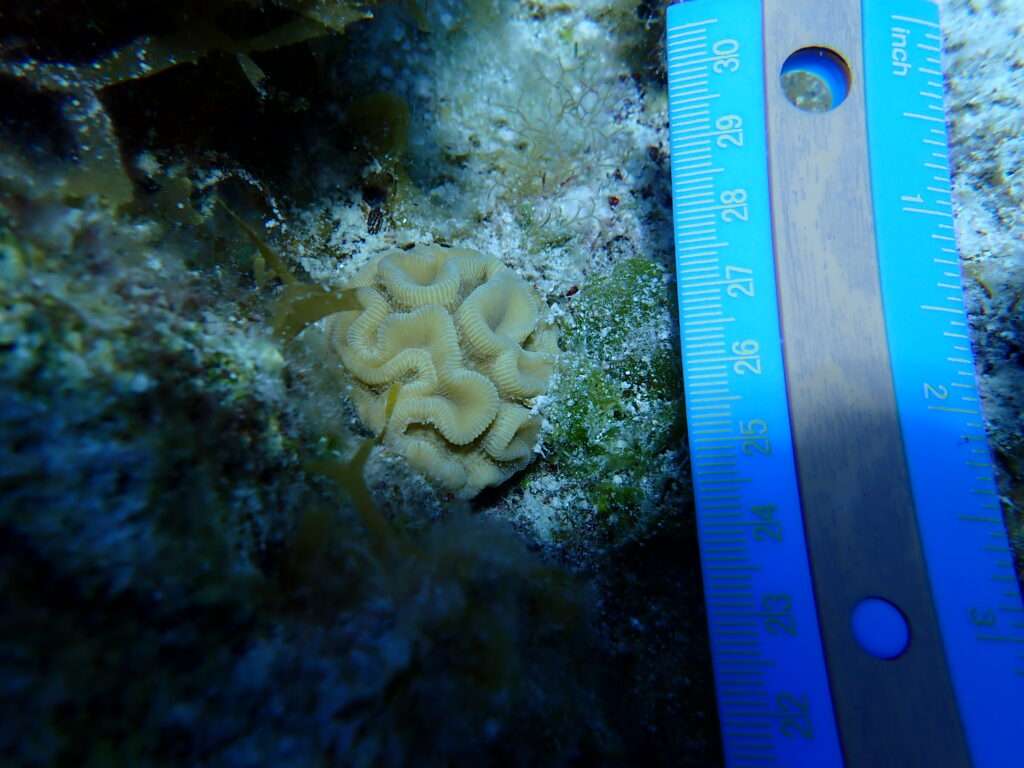
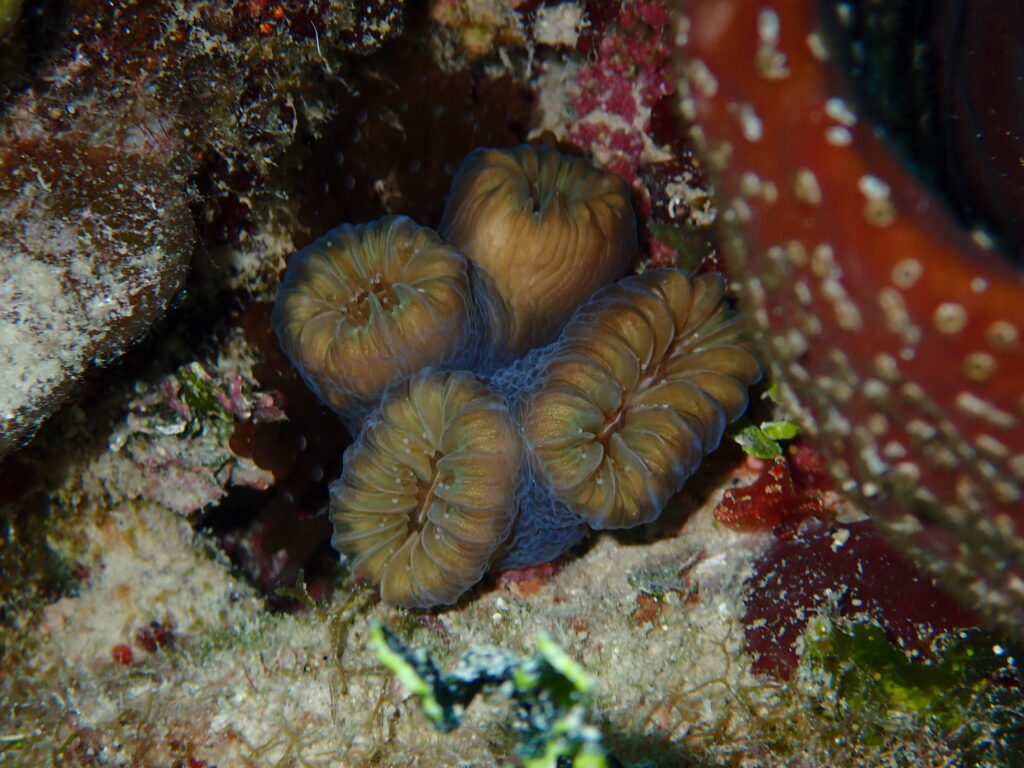
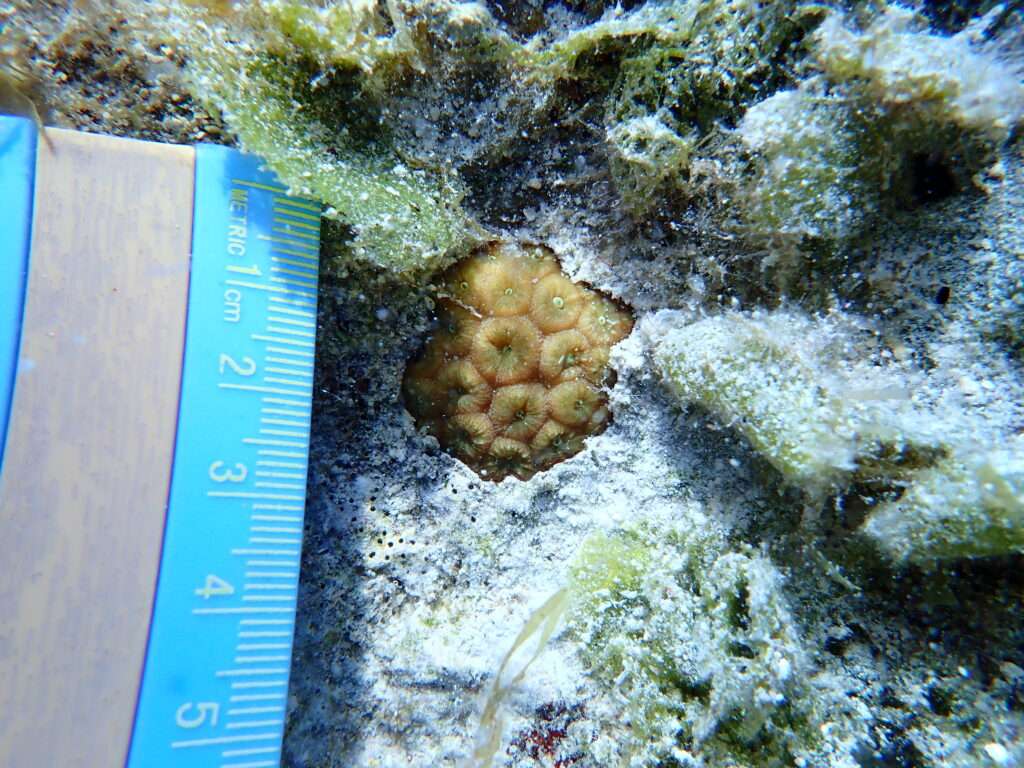
Figures 4, 5, and 6 are all examples of coral juveniles the research group observed on dives.
Relevance: Conservation and research efforts around coral juveniles are pertinent because the effects of coral have already shown to have devastating effects on ecosystems worldwide. This problem can be observed locally as coral is such an integral part of The Bahamas. A key motivator for coral research is the looming risk that coral will destroy the economies of small island developing states like Eleuthera, leaving locals without jobs and marine life without a habitat. However, this issue goes beyond Eleuthera. This research is applicable across the board as coral has a global importance. While taking up only 1% of the ocean, coral reefs support roughly 25% of all marine life making them an extremely important keystone species (Weiler, et al., 2018). The loss of coral would seriously impact Eleuthera in a drastic way. Being able to observe and learn more about coral before it is too late, is crucial to conservation efforts to avoid the disastrous effects the demise of coral would bring.
History: Prior to the industrial revolution and the use of fossil fuels coral thrived for centuries. Coral was healthy and abundant. However, the rise of sea temperatures and climate change contributed to changes in the ocean’s ecosystems including coral. The rising sea temperatures led to a significant spike in coral bleaching and with that an increase in coral mortality and proneness to disease. The 2014-2017 global bleaching event also significantly contributed to the death of coral, including coral in Eleuthera. (Bradley et al., 2018). Since then, researchers have seen a consistent pattern in a quick decline of coral causing an abundance of problems in the ocean (Hanes, 2023). Nevertheless, signs of coral resilience have been observed as species are trying to overcome the modern world problems of rising sea temperatures and pollution.
Addressing the Problem: This study is addressing the problem of the rapid decline in coral coverage and species throughout Southern Eleuthera. While aiming to help find a solution and provide data to help replenish the growth of coral juveniles and explore the resilience coral is starting to show. The ultimate goal is to assist the growth of coral juveniles without making them dependent on humans.
What is needed to address the problem? To address the problem, we need access to varying coral reef sights. This way we can gather data on different coral juveniles to evaluate the overall health, diversity, and resilience of these principal species. The coral must be part of a prosperous ecosystem with active coral grazers and other species that depend on it so we can observe increases or decreases in coral cover. The goal is to observe juvenile diversity and abundance and in order to accomplish that data needs to be collected to get a general understanding of the different trends within the coral juveniles here in Eleuthera.
Potential Solutions: Some potential solutions that will need to be investigated more long term are creating coral juvenile breeding areas with coral trees. Another potential solution could be to continue to measure and analyze existing coral prevalence to identify trends in coral growth, mortality, and resilience. An important type of coral to our research group are corals with high resilience. This means that they have a high resistance to disturbances like climate change and still be able to function; they can typically recover or adapt to pressures and demands. By identifying resilient corals, we can begin to make propagations of resilient corals and place them in specific sites that have low amounts of coral in order to heighten the coral population and recover environments where organisms are in need of coral. Ensuring the abundance and health of coral grazers could also be a potential solution to regulate the growth of algae coverage that is increasingly taking over. (Carpenter & Edmunds, 2021). We can also look to coral recruitment hotspots, where coral is reproduced at high rates allowing for healthy and diverse reefs to grow (Edmunds, 2021). Additionally, we can work on fragmentation. Putting coral fragments near other coral of the same colony will allow coral to grow at a faster rate once they bond together, they will piece together a larger section of coral. In general, providing help during coral reproduction will also help ensure new healthy populations every year.
Looking to the Future: When we look to the future, we are still uncertain of the effects of the loss of coral. There are some possible solutions regarding coral reef restoration. The overarching question is if we can save certain coral species, by making them more resilient to climate change. However, with the limited time frame we have due to climate change the issue becomes more and more imperative. One of the keyways we can start to help coral is by educating the public on this prevalent issue to gain support. In the future, by teaching fellow divers how to properly monitor coral cover and share their findings, we could increase the amount of data being collected globally. Additionally spreading awareness globally through community events and social media is an easy and beneficial way to keep people in the know about what is being done to prevent the deterioration of coral. Nothing can be achieved unless we have everyone on board.
Objectives
- Conduct coral reef surveys to assess the current status of coral juveniles located in southern Eleuthera
- Evaluate the health of coral juveniles
- Identify resilient coral species (specific species along with signs of resilience)
Hypothesis: As corals are under increasing levels of stress due to changing environmental factors, they are more prone to disease and mortality leaving less opportunities for coral juveniles to grow. However, by conducting reef surveys and assessing the status and overall health of coral juveniles we will be able to identify coral species that are resilient and are able to recover.
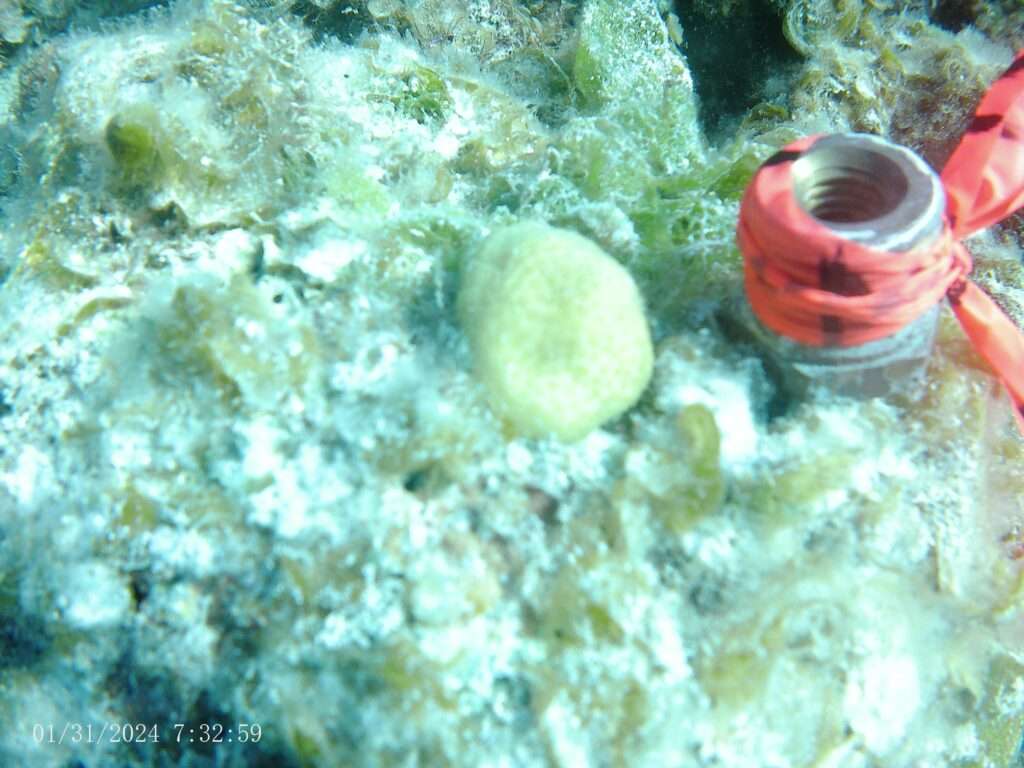
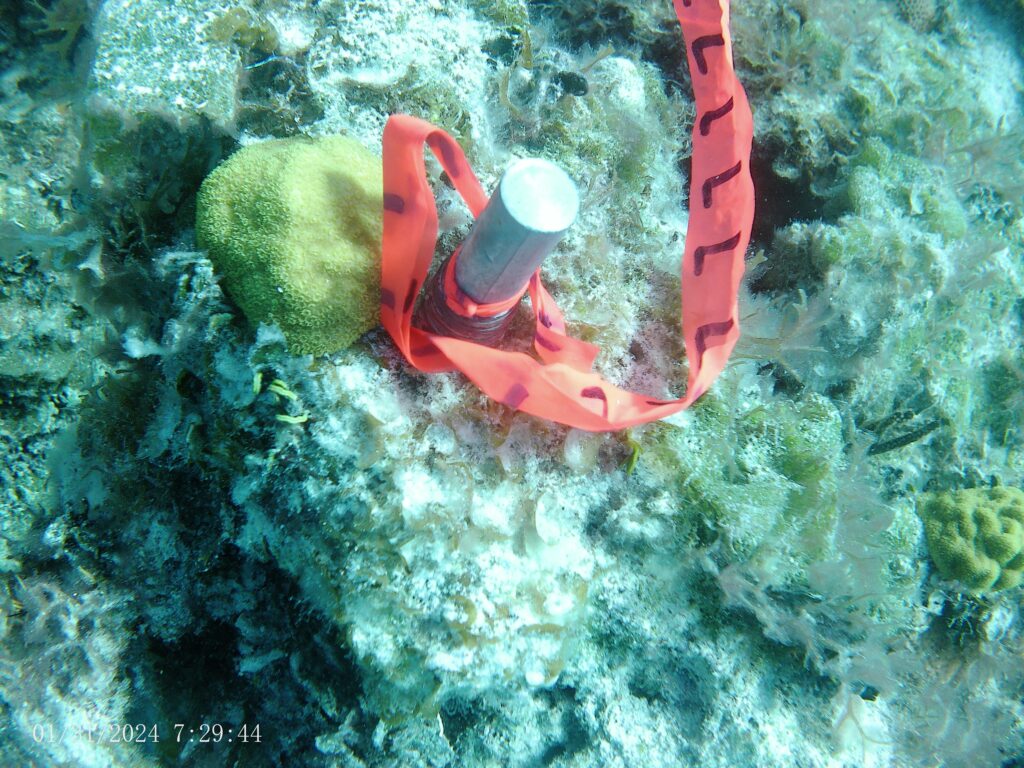
Figure 8 and figure 9 show tagged coral juveniles at the dive site Tunnel Rock. Picture taken by Scout Olney.
Research Methods
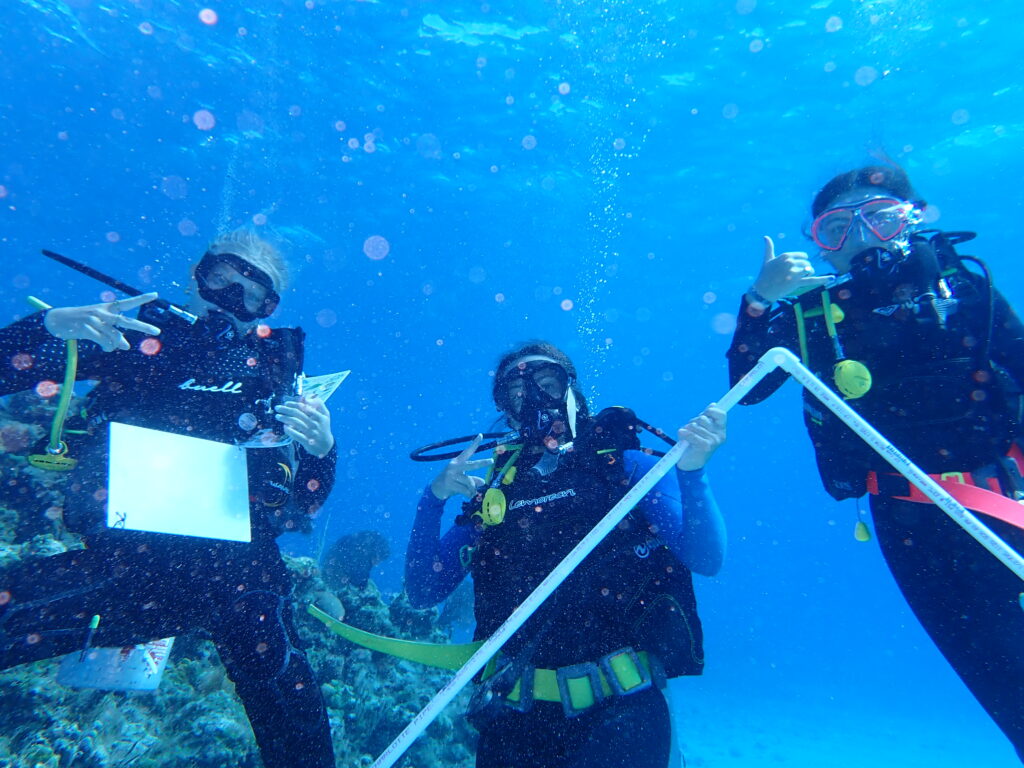
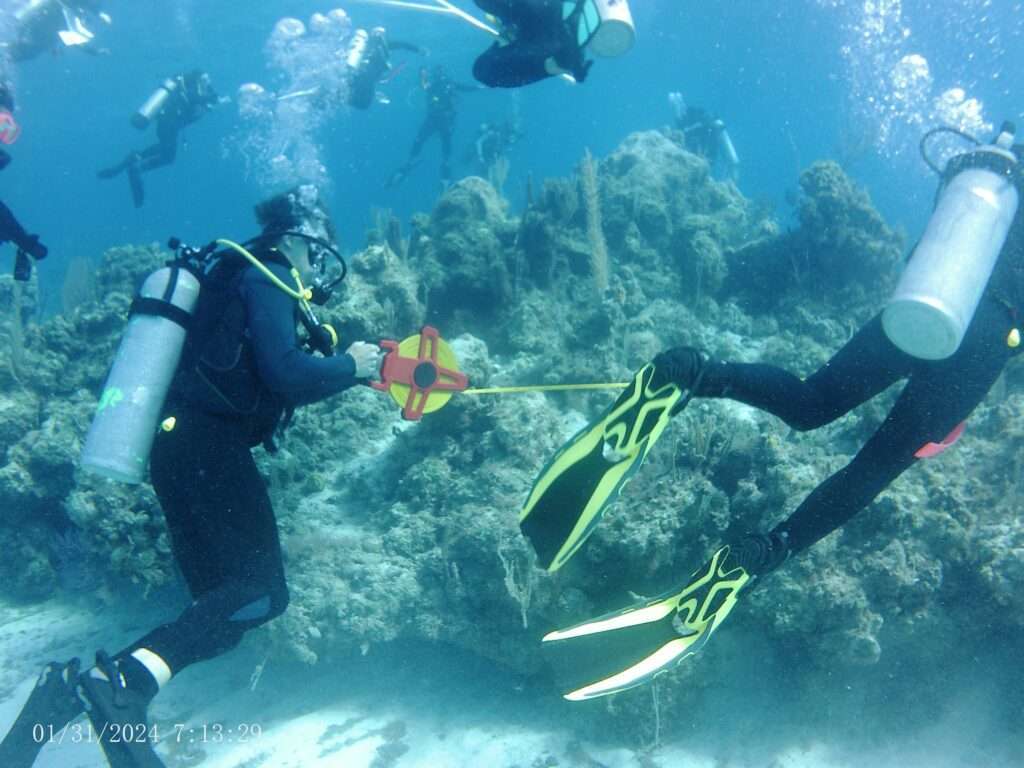
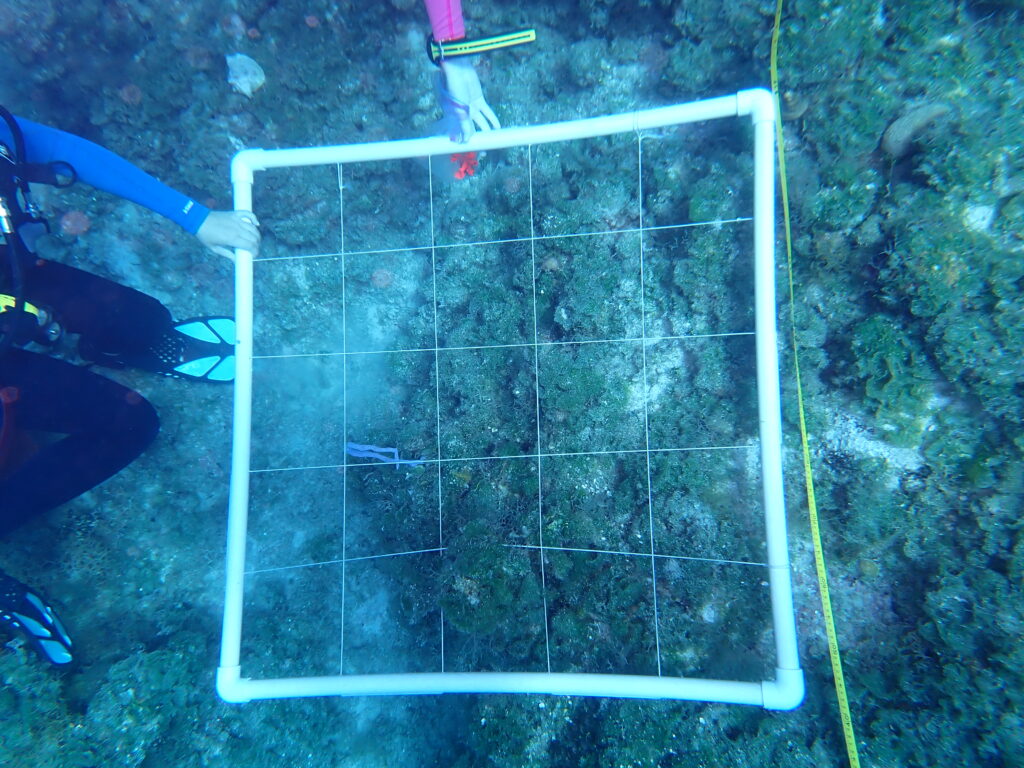
To conduct surveys on the status of coral juveniles located in southern Eleuthera, we collect data on weekly scuba dives. This is done by laying out 30 feet of a transect, which are guiding lines, and placing a 1m x 1m quadrant, small squares used to capture smaller parts of the reef, along the tape for the section laid down. If coral juveniles are found in an area, they are marked with a tag so that a member of our group can photograph the juvenile to allow us to create a generalized conclusion about the type, abundance, diversity of coral species, and see the amount of coral juveniles present. Based on the info from different reefs, we can analyze the data and infer certain conclusions about coral in Southern Eleuthera.
Expected Results
Based on the objectives of the research project, we expect that the data will support our hypothesis because often in ecosystems it is common to see a greater abundance of one species thriving. By gathering the data to prove or disprove our expected findings, further researchers will be able to use that information to conduct future research to expand on whether resilient coral species will be a potential solution to restoring coral reefs.
References:
Edmunds, J Peter., Carpenter, C. Robert., (2001). Recovery of diadema antillarum reduces macroalgal cover and increases abundance of juvenile corals on a Caribbean reef. Pnas. Pg. 1-4. www.pnas.org/cgi/doi/10.1073/pnas.071524598
Edmunds, J. Peter. (2021). Recruitment hotspots and bottlenecks mediate the distribution of corals on a Caribbean reef. Biology Letters. Pg. 1-6. Royalsocietypublishing.org/journal/rsbl
Francis, FT., Filbee-Dexter, K., Yan HF., Cote, IM., (2019). Invertebrate herbivores: overlooked allies in the recovery of degraded coral reefs?. Elsiver. Pg. 1-11. http://www.elsevier.com/locate/gecco
Hanes, Stephanie., (2023). Reefs are in trouble. Can scientist nature more resilient coral? Pop Press. Pg. 1-18.
Weiler, Bradley., Van Leevwen, Travis., Stump, Kristine. (2018). The extent of coral bleaching, disease and mortality for data deficient reefs in Eleuthera, The Bahamas after the 2014-2017 global bleaching event. Springer Nature. Pg. 1-6. https://doi.org/10.1007/s00338-019-01789-5