CEI Supports Ocean Glider Study with University of Miami
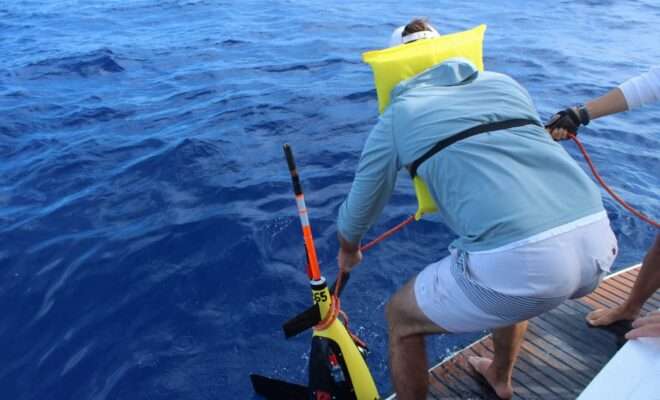
Earlier this month, the research team at the Cape Eleuthera Institute (CEI) supported the recovery of an ocean glider as part of an ongoing partnership with the University of Miami Rosenstiel School of Marine, Atmospheric, and Earth Science.
CEI has been operating as a base for the deployment and recovery of these deep-sea autonomous underwater vehicles (AUVs) for more than 5 years.
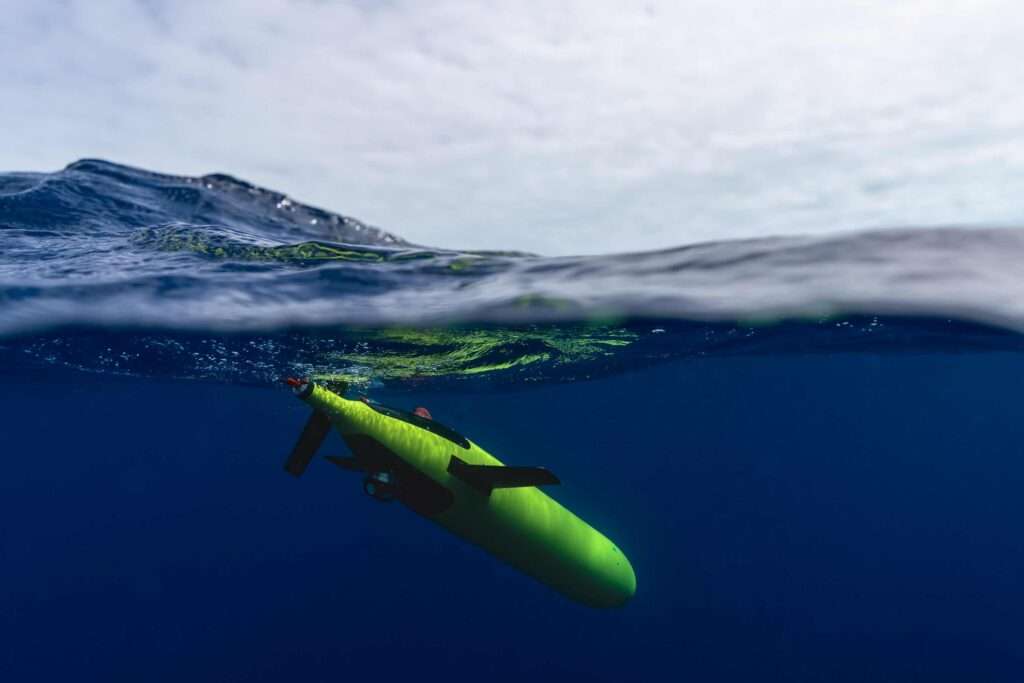
Gliders have no internal propulsion system; they rely entirely on adjustments to their buoyancy and center of gravity to navigate as they collect oceanographic data. They dive to approximately 1,000 meters approximately four times per day for missions that can last up to one year.
The glider, which was recovered in May off the north of Eleuthera, is fitted with an acoustic doppler current profiler (ADCP), which measures the velocity of ocean currents. Data collected by this glider is used to study the flow of the Antilles Current east of Abaco Island and contribute to our understanding of the system of currents known as the Atlantic Meridional Overturning Circulation (AMOC).
Studies Show Atlantic Meridional Overturning Circulation is Changing
The AMOC made international news recently, as it plays a critical role in heat distribution and global climate control, and ongoing monitoring suggests it may be slowing.
PRESS:
- A vital system of Atlantic Ocean currents is weakening and closer to collapse than thought, new studies find by Laura Paddison, CNN
- 2 studies warn ‘Day After Tomorrow’ ocean current is in trouble by Doyle Rice, USA Today
In April, the journal Science Advances published a study by scientists at the University of Miami that illustrated the slowing of the AMOC. One of the authors, Dr. Shane Elipot, has spent time with us on our campus in South Eleuthera and took time to talk with students at The Island School to explain how his glider works.
We are proud to support this project in collaboration with the University of Miami, the US National Oceanic and Atmospheric Administration (NOAA), and the UK National Oceanography Centre, as well as our contribution to the data collection that will facilitate a deeper understanding of the dynamics of global climate change.
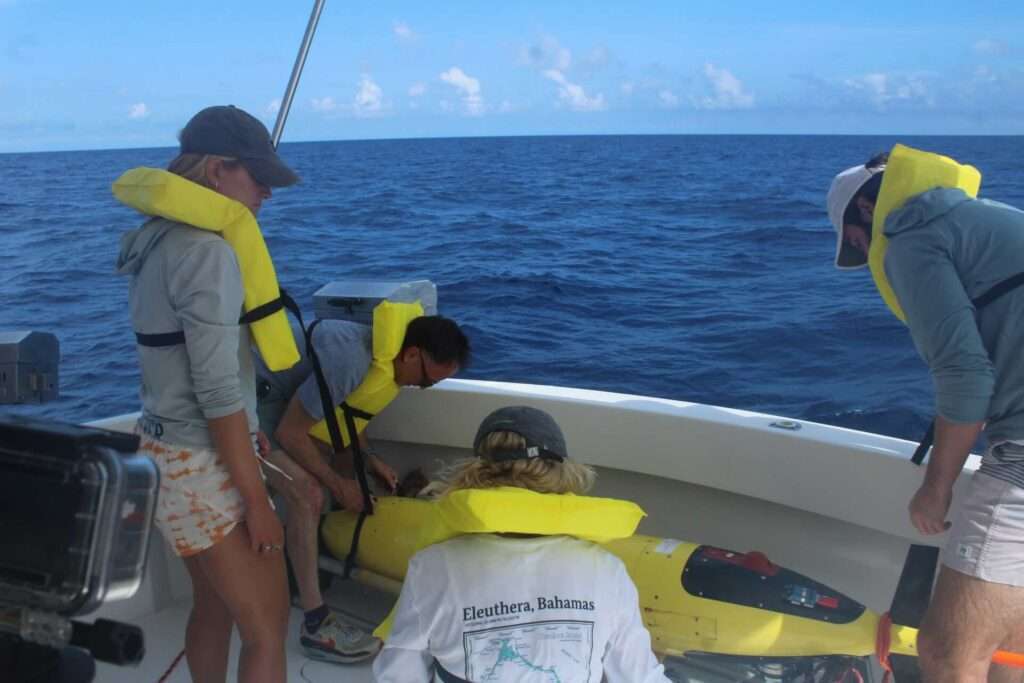
We would also like to thank Captain Sheldon and Sasha from Exotic Excursions in Spanish Wells, The Bahamas, for their collaboration on this successful recovery mission.