Spring 2025 Student Research Project: Queen Conch
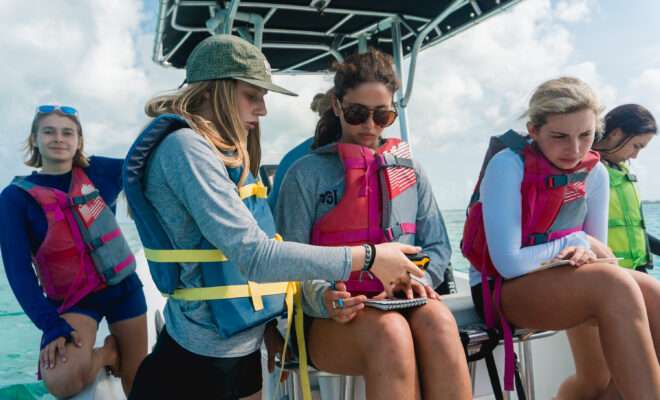
Each semester, Island School students dive into hands-on research alongside scientists from the Cape Eleuthera Institute, contributing to meaningful, place-based studies that explore the unique ecosystems of The Bahamas. These Spring 2025 research groups—focused on conch, stingrays, coral grazers, corals, lobsters, sharks, and sustainable energy—are tackling real-world questions with curiosity, collaboration, and care.
In this blog series, students share their experiences, challenges, and discoveries as they navigate the research process and deepen their understanding of both science and self.
Assessing population densities of Queen Conch, Aliger gigas, in Eleuthera, The Bahamas
Lucy Lawson, Kateri Cordasco, Eliana Ormeño, Keagan Roye, Stasia Spurling, Sophia Kendall, Winston Ochs, Sofia Spellman, Ja’Mar White
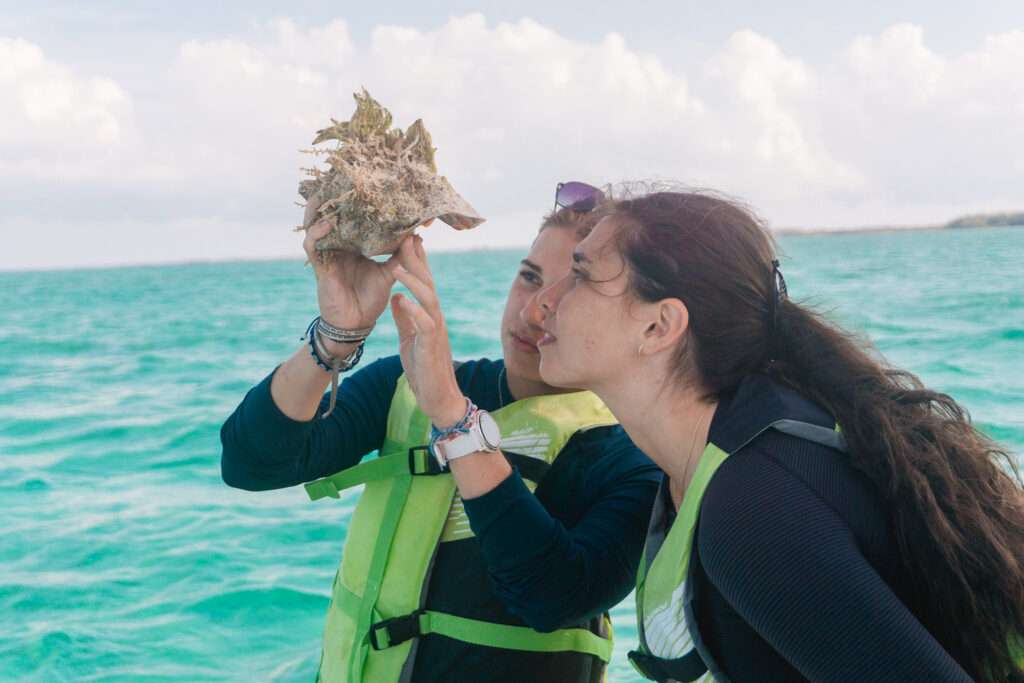
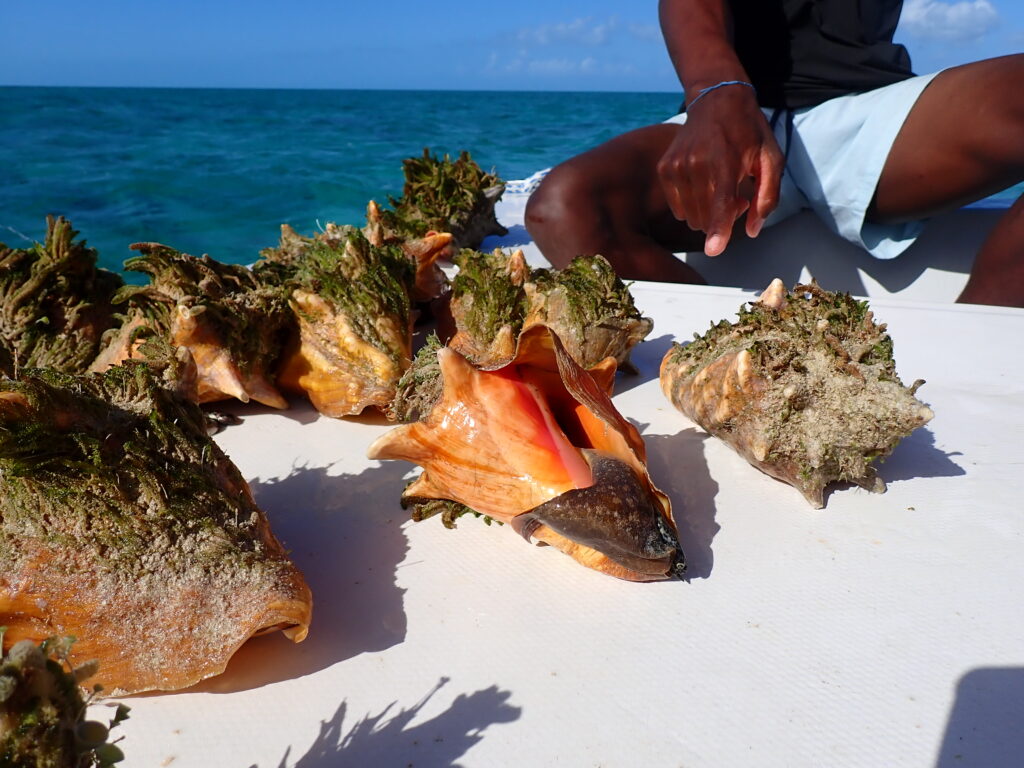
The Bahamas is known for its pristine turquoise waters and aesthetic palm trees. With over 5,000 square miles of cays, The Bahamas also has an abundance of reefs thriving with diverse marine life. Queen conch (Aliger gigas) is a species of mollusc with a spiral shell, flared lip, and vibrant pink interior. Conch are fundamental to The Bahamas’ culture, economy, and ecology. Additionally, they are bottom feeders and provide for the marine ecosystem by regulating algae populations. In recent years, overfishing, insufficient regulations, and habitat destruction have contributed to the decline of queen conch populations across the Caribbean.
Research Methods
This semester, our project focuses on assessing long-term population densities of queen conch in the South Eleuthera area and potentially propose stricter regulations for a marine protected area (MPA). A MPA is a section of the ocean with rules and regulations in place to protect marine species and habitats. Areas like St. Croix, USVI have instituted MPAs for conch preservation and seen spikes in conch populations and general densities of the species depending on our results. Due to increasing fishing pressures in Cape Eleuthera, we expect to discover declining conch populations. The current regulation surrounding the harvesting of queen conch in The Bahamas states that conch being harvested must have a “well-formed (thick and flared) lip”. This regulation is extremely unclear and up for interpretation by fishers. Unfortunately, previous data has shown that only 14% of locally harvested conch in this area were harvested as adults2, and even fewer had reached sexual maturity. This illegal harvesting of juveniles is causing a significant decline in conch populations as queen conch can’t reproduce as quickly as they are being harvested. Creating clearer regulations and implementing an MPA could help keep conch populations thriving in South Eleuthera.
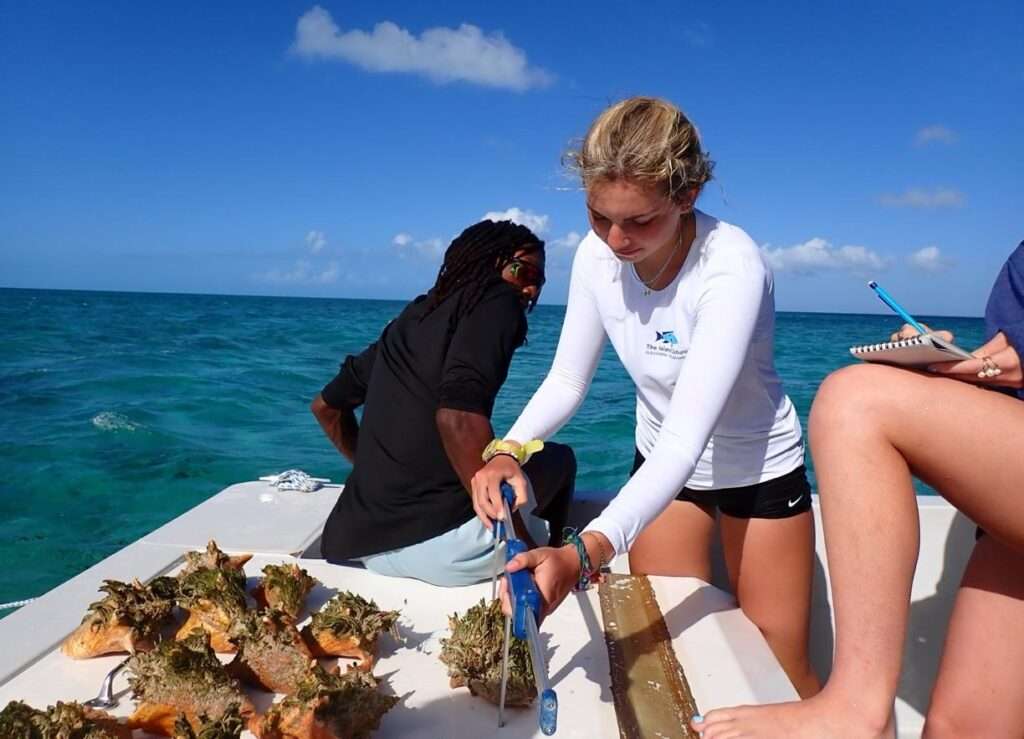
For this project, we are collecting data about the current population levels of queen conch from Cape Eleuthera through belt transect surveys (via manta tow), and radial surveys. We based the belt transects surveys and radial surveys on methods from previous surveys we researched. We are recording data on densities of conch, size of conch (lip thickness and shell length), approximate age category (juvenile, subadult, adult), and bottom type (sandy, seagrass, coral, etc.). Juveniles are classified as significantly smaller than adults and subadults (≤100mm shell length), subadults have a more full-sized shell, but they do not have a fully formed lip, and adults have a fully formed, thick and flared lip (≥ 10 mm thick). To conduct the radial surveys, we used stratified random sampling across an area thought to be a potential breeding ground for queen conch. We collected all conch within 10-meter radius circles and measured their shell length and lip thickness to successfully categorize them by age.
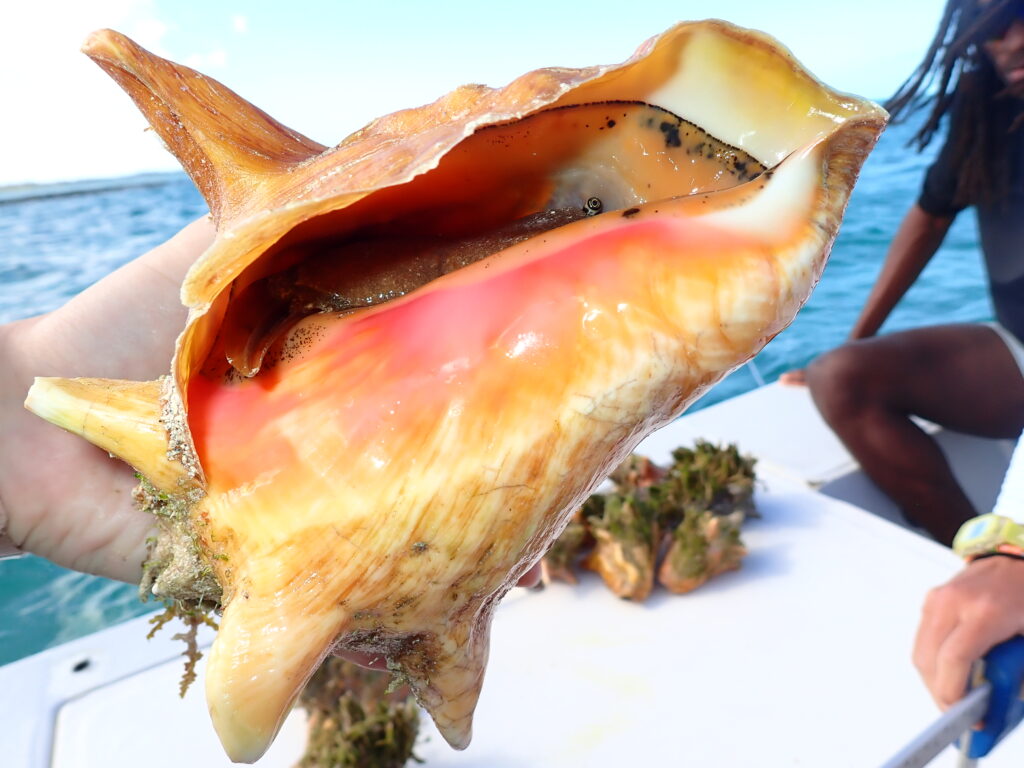
Through our assessment of data and its comparison to the Cape Eleuthera Institute’s data from ten years ago, we will assess the changes in population density and age distribution of queen conch. Our hypothesis is that the population density of queen conch off the coast of South Eleuthera has decreased over the last decade due to over harvesting of sexually immature individuals organisms. By collecting data and gauging the trends of density we hope to further influence the institution of marine protection areas and clearer, direct parameters for fishers.
Citations:
1 Doerr, J. C. & Hill, R. L. (2018). Spatial distribution, Diversity, and Habitat associations of a queen conch (Strombus gigas) in St Croix, US Virgin Islands. Marine Ecology Progress Series, 594, pp. 119 – 193.
2 Thomas, C., Auscavitch, S., Brooks, A., & Stoner, A. (2015). Assessing Essential Queen Conch (Strombus gigas) Habitat in Eleuthera, The Bahamas: Population Declines Suggest the Urgent Need for Changes in Management. 67.