Spring 2026 Student Research Project: Queen Conch
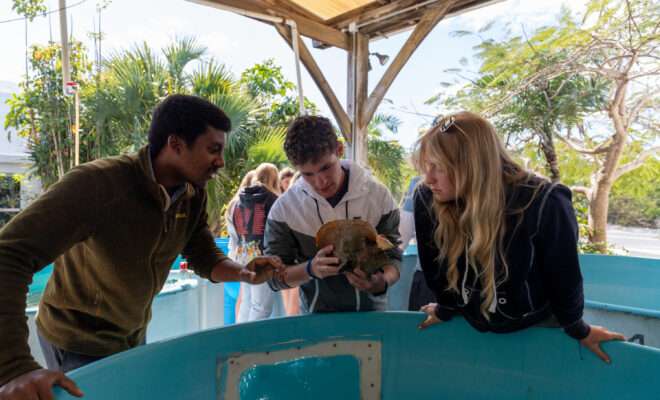
Each semester, Island School students dive into hands-on research alongside scientists from the Cape Eleuthera Institute, contributing to meaningful, place-based studies that explore the unique ecosystems of The Bahamas. These Spring 2026 research groups—focused on queen conch, Marine Protected Areas (MPA), corals, sharks, marine mammals, black land crabs, agroforestry, and sustainable systems—are tackling real-world questions with curiosity, collaboration, and care.
In this blog series, students share their experiences, challenges, and discoveries as they navigate the research process and deepen their understanding of both science and self.
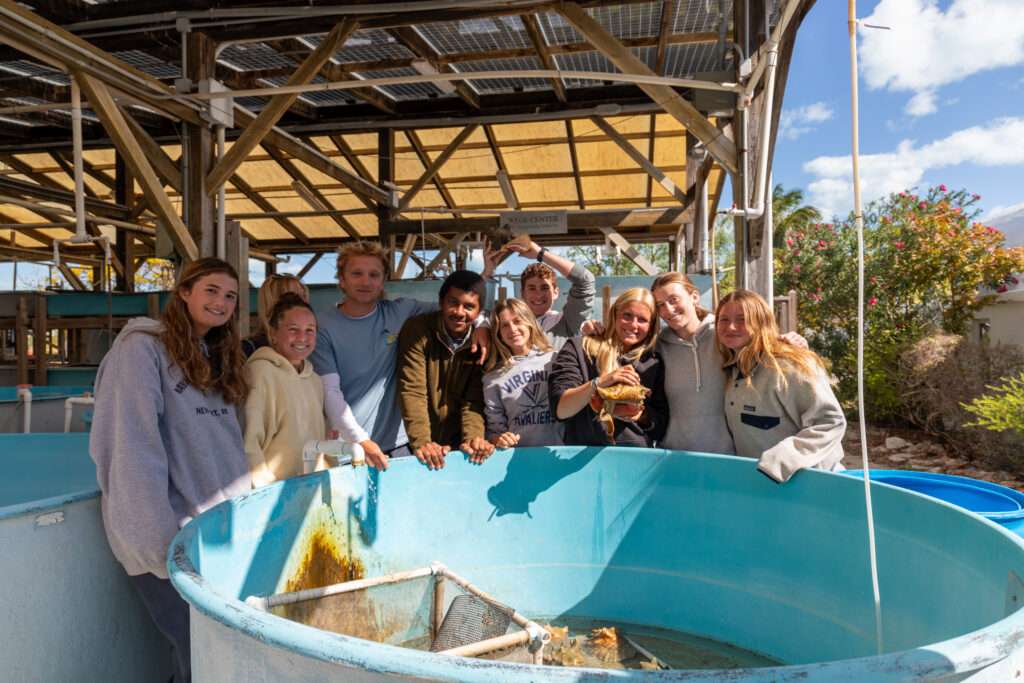
Conch-sider the Queen Conch
Written by the queen conch research team: Amelia Flynn, CC Leahy, Rylah Zises, Alexis Hunt, Adeline Willumson, Tess Brensilver, Lucas Rodriguez, led by Tereno Johnson, Mackenzie Dyche-Brooks, Courtney McLeod
What is a queen conch? What importance does it have, and why are we attempting to research ways to benefit them?
The queen conch (Strombus gigas) is a type of sea snail or mollusc that grows up to 12 inches long and mainly lives in seagrass beds in tropical and subtropical waters (NOAA Fisheries, 2026). Conch prefer water temperatures ranging from 24 to 28 degrees Celsius. During reproduction, they lay eggs in string, gel-like masses that can contain between 300,000 and 500,000 eggs. Only a small number of eggs successfully hatch, and only 1% survive long enough to reach maturity (The Bahamas National Trust, 2003, 1). Although queen conch can live up to 35 years, most live around 5 to 7 years. When conch are young, they are pelagic, meaning they drift and swim freely in the open ocean. As they mature, conch become benthic as they settle on the seafloor. At this stage, they predominantly inhabit seagrass meadows and other soft-substrate environments, where sediment composition and vegetation provide protection from predators and reliable access to detritus and algal food sources (NOAA Fisheries, 2026).
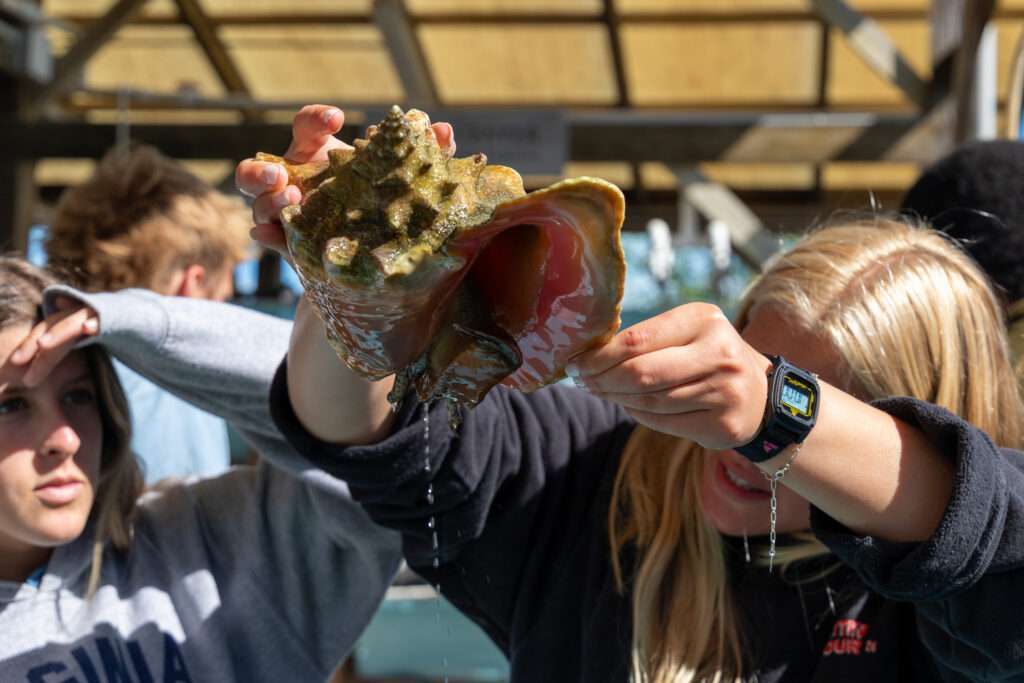
Over the past few decades, the population of queen conch in the Caribbean has drastically declined, forcing us to take measures to prevent the species from becoming extinct. Our mission here at The Island School is to determine the best way to support juvenile queen conch to maturity in an attempt to revitalize the population.
The hope is to hold the conch in either a nearshore enclosure or in a lab through the early juvenile stage and release them when they are around one year old. The juvenile mortality rate of the species is very high, so by holding the conch in a controlled environment, we can protect them for long enough to increase their chances of survival in the wild. Queen conch are especially susceptible to overfishing due to their slow growth rate. It takes the species about 3.5 to 4 years to reach maturity (NOAA Fisheries, 2026). This is why it is so important for us to offer protection to the conch so they can reproduce and help revitalize their population.
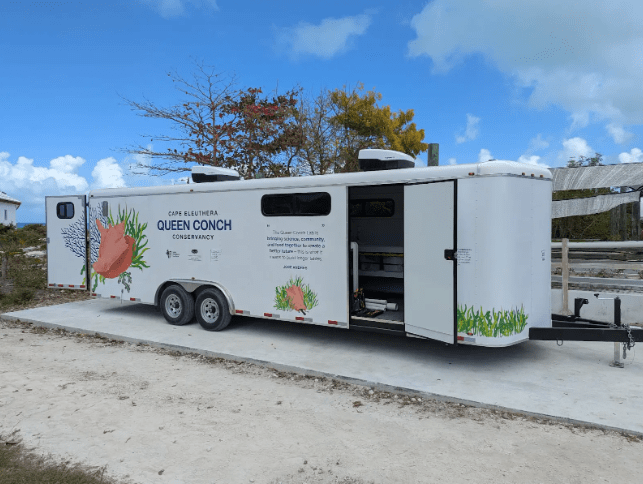
This semester, the Cape Eleuthera Institute (CEI) is partnering with Florida Atlantic University and the Longer Tables Fund to install a conch mobile lab where we can support the conch in a controlled environment for around one year. This is the third and largest hatchery to be installed in The Bahamas, and it will hopefully make a significant improvement to not only our campus, but to The Bahamas as a whole (Waycott, 2021).
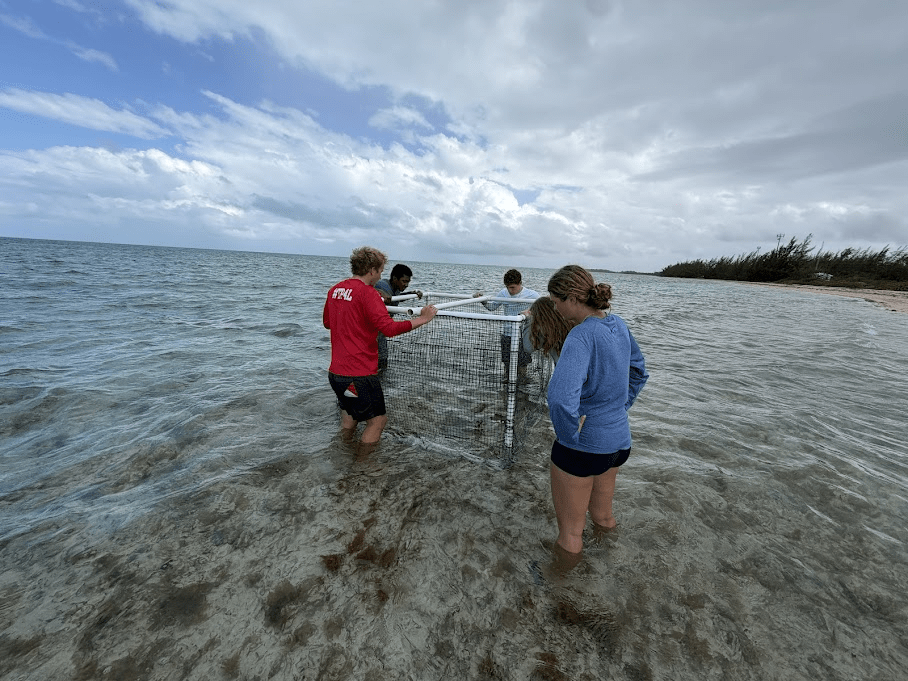
We are comparing the effectiveness of this conch hatchery to conch enclosures that we are installing near the shore. Over the past few weeks, we have gone to the ocean just off our campus in South Eleuthera to identify a location for the two enclosures we are installing. They are 4-foot cubes made of PVC and mesh. The ideal locations for these near-shore enclosures are in shallow waters without a very strong current and in a rocky area, because Queen Conch diets consist of algal epiphytes that grow on the surfaces of rocks.
Alongside the study of the best way to protect the conch population, we are working to determine the best diet for the queen conch by comparing the growth of different species of algae nearshore versus in a controlled lab environment.
As a research team, we placed an Algal Turf Scrubber (ATS) line in a spot near the conch in which the algae will grow over time, and we also placed mesh substrates in enclosed raceways. The nearshore site will use the natural minerals in the water to grow the algae, and we will pump nutrient-dense ocean water into the raceways. We will monitor algal growth in both environments to determine which location is best for the algae. We measured the initial weight (grams) of the mesh substrates, then put them into their new habitats. For each mesh substrate, we will take three separate weight measurements and calculate the average to minimize experimental error and ensure accuracy. This careful approach will allow us to reliably compare algal growth across different substrates and conditions. The ultimate objective of this study is to identify the most efficient location for cultivating algae as a food source for the queen conch. Because the same species of algae that naturally colonizes surfaces in the ocean is also growing within these controlled raceways (Stoner et al., 1992), we can ensure that the conch are provided with a natural food source while allowing us to assess which environments optimize algal growth optimally.
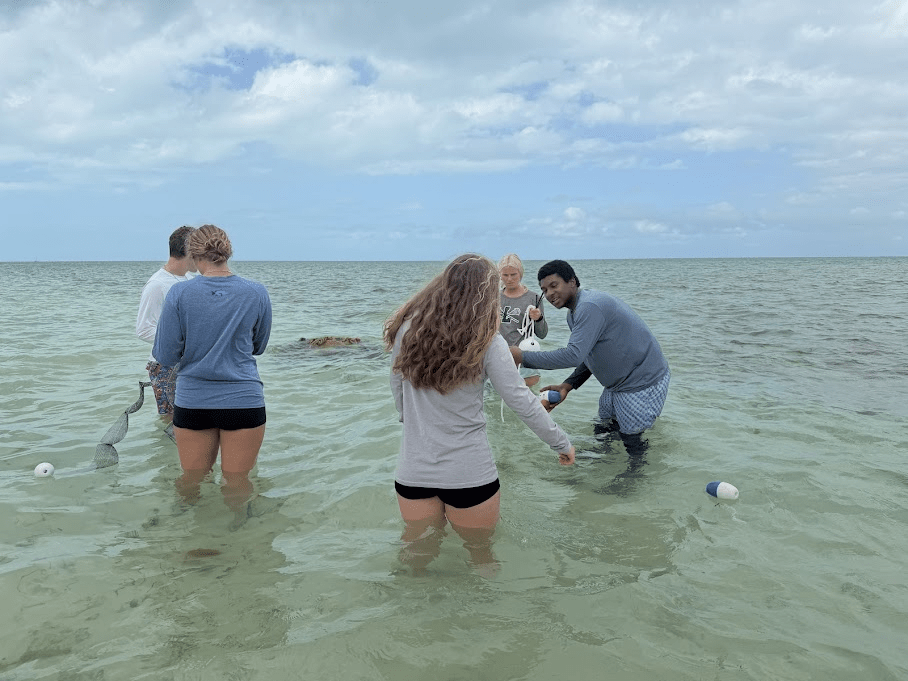
rate, diversity, and extent of algae colonization under natural conditions.
Additionally, we are currently feeding the conch an algal gel diet that consists of dried Ulva seaweed (a commonly grown green algae in the Caribbean), gelatin, and imported fish pellets. In an experiment run in Cairo, Egypt, to test whether macroalgae could replace food composed of expensive commercial protein, it was determined that seaweed can enhance body growth for the conch (Hamed et al., 2023, 687). By replacing the commercial fish meal diet with algae, we can reduce the cost of imports and reduce our carbon footprint because we will be able to grow their food instead of importing it. Using the microscopes from the mobile lab, we will be able to identify which species are growing and which species are more effective for conch growth.
This investigation focuses on identifying practical methods to improve the survival and development of juvenile queen conch in their earliest and most vulnerable life stages. By installing nearshore enclosures and deploying algal turf scrubber (ATS) mesh substrates, we are assessing both environmental conditions and food production that may influence conch growth. Algal accumulation and conch development are being monitored in two different settings: a natural coastal site and controlled raceway systems within the laboratory. Comparing these environments allows us to evaluate how nutrient availability, water movement, and habitat structure affect algal productivity and juvenile conch performance.
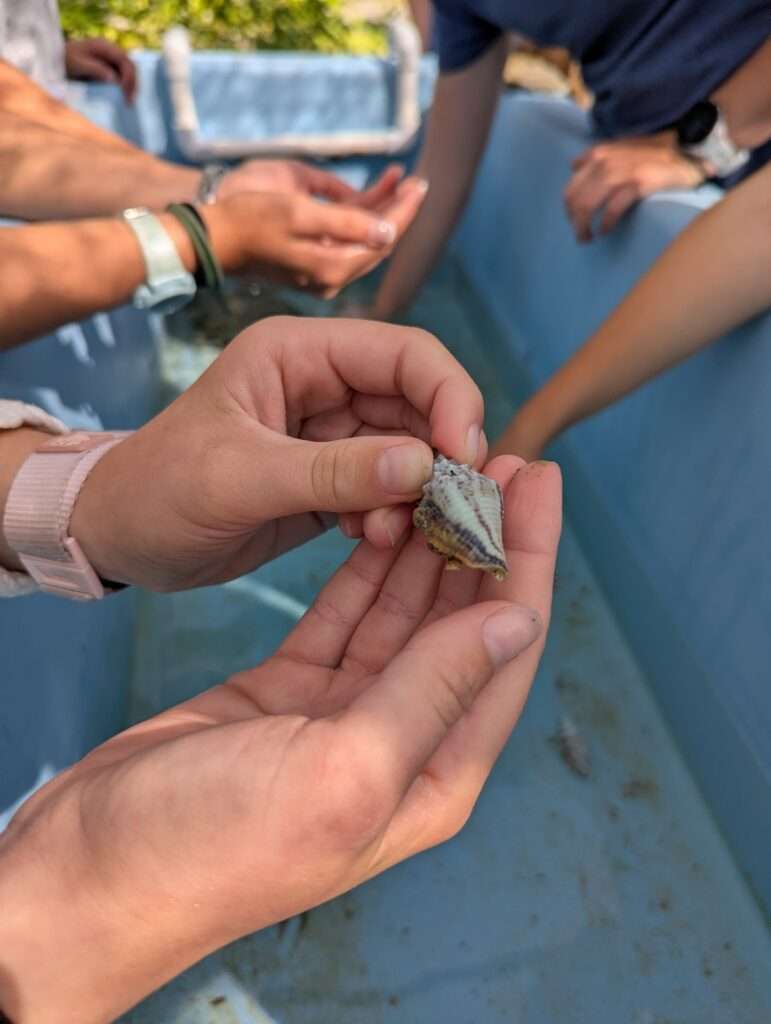
Understanding which conditions promote the most effective algal growth and healthiest conch development will allow us to refine rearing techniques within the mobile hatchery. Increasing early-stage survival before releasing individuals back into the ocean could significantly strengthen restoration efforts. Findings from this study may help guide future hatchery operations and conservation strategies, ultimately contributing to the recovery of queen conch populations throughout The Bahamas and the wider Caribbean region.
References
- The Bahamas National Trust. (2003). Marine Life of The Bahamas: Queen Conch.
- Hamed, E. S. A.E., Rashedy, S. H., Ahmed, H. O., & Al-Amgad, Z. (2023, December 11). Marine Algae Based-Meal as Substitute Ingredient Feeds for the Fighting Conch Strombus tricornis L. (Mollusca, Gastropoda): Body Weights and Histomorphological Studies. Egyptian Journal of Aquatic Biology & Fisheries, 27(6), 687-706.
- NOAA Fisheries. (2026, January 16). Queen Conch: ESA Conservation & Management. NOAA Fisheries.
- Stoner, A. W., & Sandt, V. J. (1992). Population structure, seasonal movements and feeding of queen conch, Strombus gigas, in deep-water habitats of the Bahamas. Bulletin of Marine Science, 51(3), 287-300.
- Waycott, B. (2021, June 21). Aquaculture aids the restoration of iconic Caribbean shellfish queen conch. Global Seafood Alliance.