Spring 2026 Student Research Project: Sustainable Systems
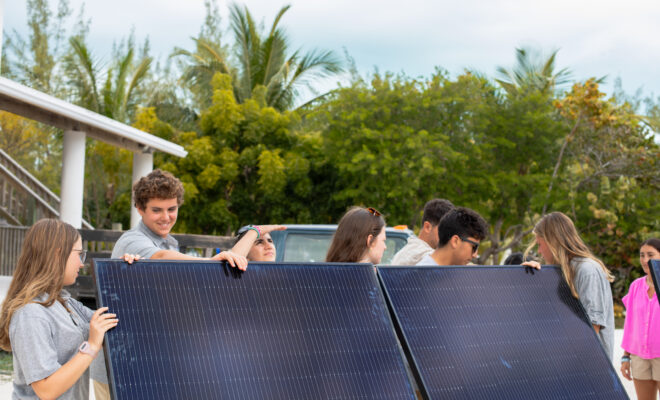
Each semester, Island School students dive into hands-on research alongside scientists from the Cape Eleuthera Institute, contributing to meaningful, place-based studies that explore the unique ecosystems of The Bahamas. These Spring 2026 research groups—focused on queen conch, Marine Protected Areas (MPA), corals, sharks, marine mammals, black land crabs, agroforestry, and sustainable systems—are tackling real-world questions with curiosity, collaboration, and care.
In this blog series, students share their experiences, challenges, and discoveries as they navigate the research process and deepen their understanding of both science and self.
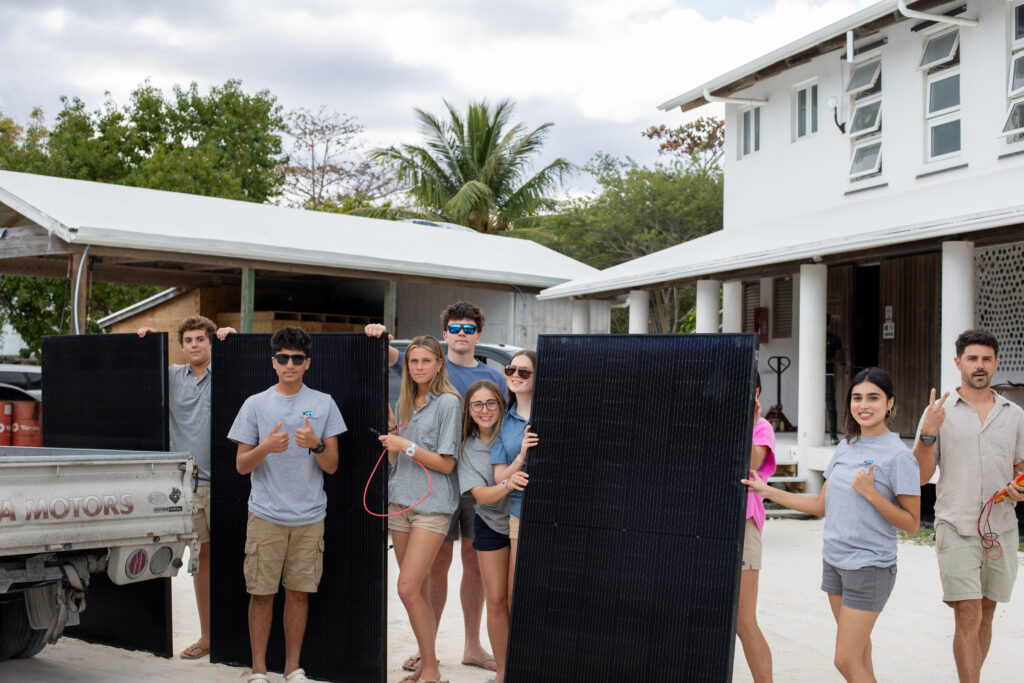
Solar-Powered Water Pumping At The Island School’s Agroforest
Written by the Sustainable Systems research team: Mina Holtzman, Ella Farnen, Nyle Patnaik, Landon Kratz, Charley Slayton, Sophie Kendrick, Simon Dellaert
As a society, we participate in many unsustainable practices, including the use of combustion vehicles, reliance on fossil fuels, and copious energy consumption. These practices produce Carbon Dioxide (CO2) emissions, which have a plethora of negative impacts on the environment.1 One major impact is global warming, which elevates water and air temperatures and leads to more frequent and more severe natural disasters. To mitigate negative climate impacts, we need a transition away from fossil fuel-based energy sources.
To tackle many of these climate challenges by 2030, the United Nations has adopted 17 Sustainable Development Goals (SDGs).2 For our project, we closely align with two main SDGs: Renewable and clean energy, and clean and affordable water.
The Bahamas is a Small Island Developing State (SIDS) and lacks the substantial infrastructure and operations found in large mainland countries. One example is its reliance on food imports from abroad. This is costly, can have negative environmental impacts (i.e., emissions from transportation), and creates food security concerns.3 Being a SIDS also hinders The Bahamas’ access to renewable energy. The country has a goal of achieving 30% renewable energy output by 2030.4 However, it currently relies on fossil fuels for at least 95% of its energy. Burning diesel and other fossil fuels produces large amounts of CO2, which, when emitted into the atmosphere, is one of the main contributors to global warming and climate change. Taking steps to mitigate climate change is important for SIDS, especially since they are susceptible to natural disasters such as sea-level rise, hurricanes, and coral bleaching, among others.3 Making sustainable choices is important on SIDS to ensure natural resources like food and water remain available for future generations.
Looking closer to our community, in 2024, it was estimated that 10.4% of annual food consumption was locally sourced and 89.6% was imported at The Island School.5 Given the state of The Bahamas and, more specifically, The Island School, we are looking to improve annual food consumption and continue implementing more sustainable practices. Implementing new ways for The Island School to grow our own food will be incredibly beneficial in the long run.6
In The Bahamas, water is a big obstacle to food security. The Bahamian islands are flat, and lakes and rivers are scarce. They are surrounded by seawater, but desalination infrastructure is energy-intensive and logistically difficult. The limestone geological structures of the islands can hold freshwater pockets or “lenses.” These lenses tend to be available under patches of young, porous limestone, but are limited under old, hard limestone. Fortunately, South Eleuthera sits on a lens where freshwater is available.7
After considering the problems faced by SIDS and The Island School, we needed a solution to sustainably grow food using groundwater. Close to campus is a new agroforestry site, where members of Cape Eleuthera Institute (CEI) are beginning to develop and grow crops within South Eleuthera’s natural coppice ecosystem. The site lacks access to electricity, so we need a solution that can be powered locally to draw water from the local freshwater lens. Our objective is to supply water to an off-grid site to sustainably solve food insecurity at The Island School, while serving as a model for Eleuthera and The Bahamas. To achieve this objective, we have decided to develop a solar-powered well-pumping system.
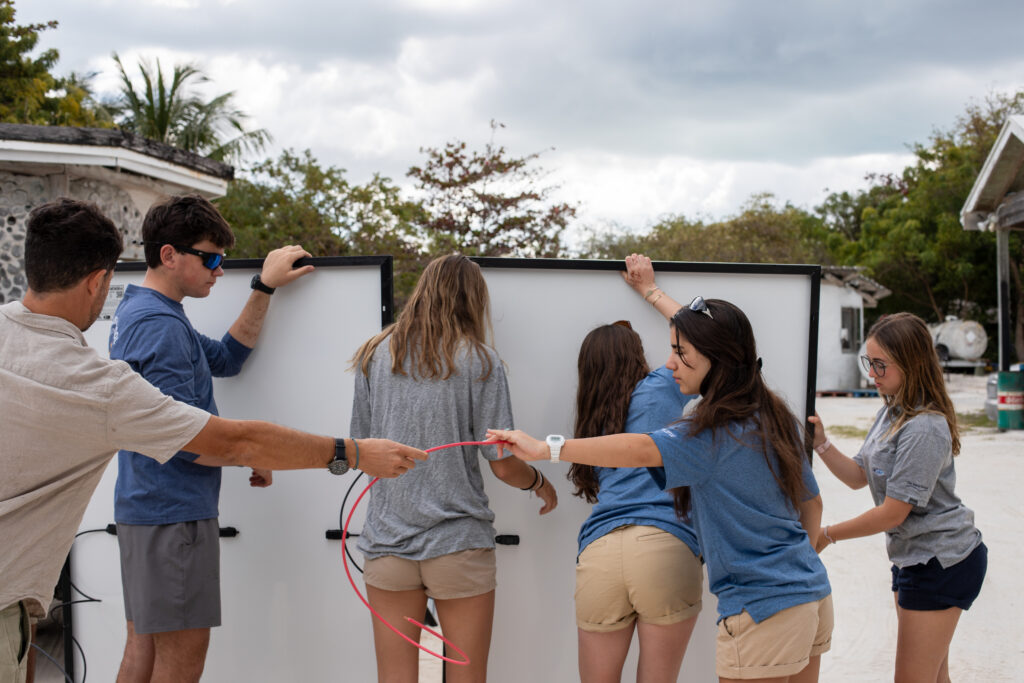
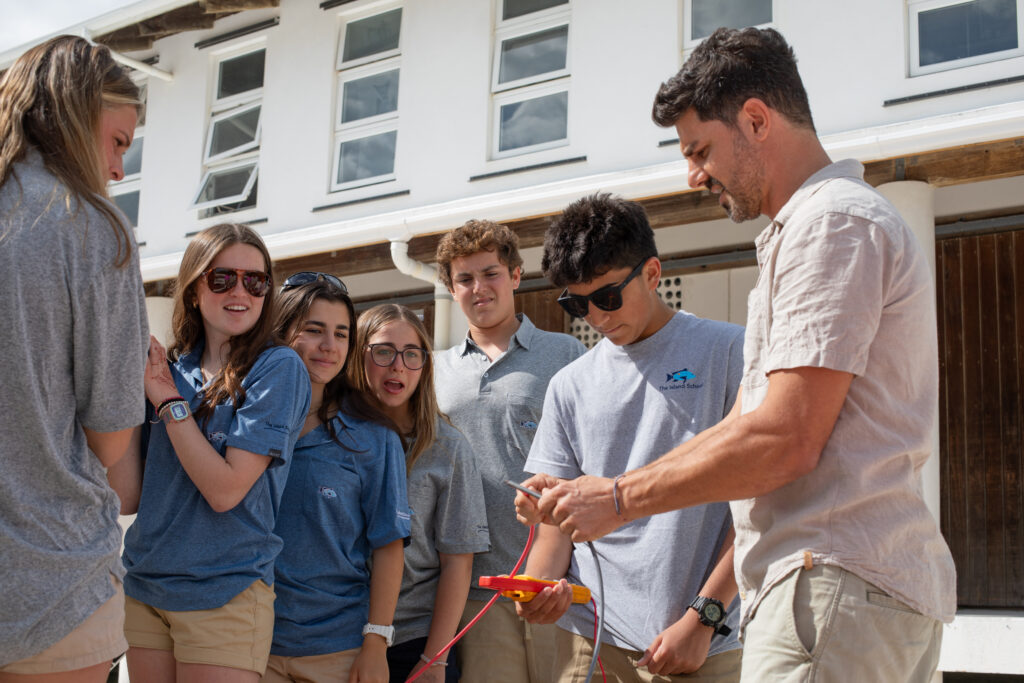
To accomplish this objective, we started by learning how solar panels and well pumps function, and how much energy we need to supply water at the agroforestry site. We learned about different aspects of solar panels: voltage and current, series versus parallel wiring, arrays, and how to measure energy produced8; and well pumps: efficiency, cost, reliability, and maintenance.9
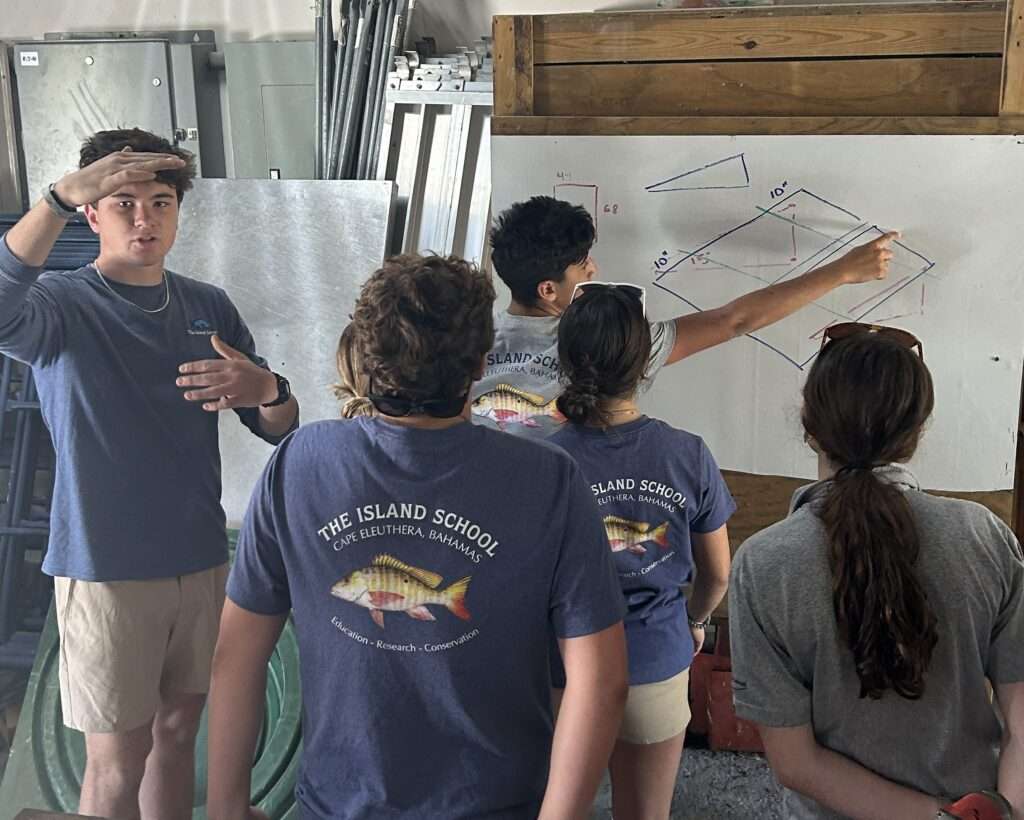
Next, we built ground-mounted A-frames to install our solar panels at a site with no existing buildings or structures. We made sure to measure and construct the A-frames so they could fit the two solar panels at an appropriate angle with minimal overhang.
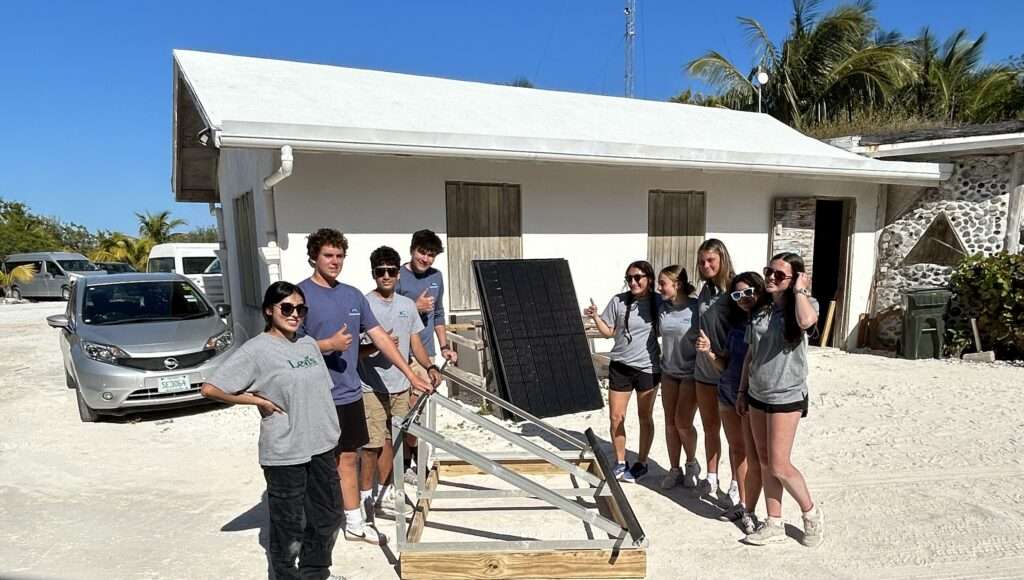
We then installed the solar panels and replicated this model to supply a total of four solar panels to the site.
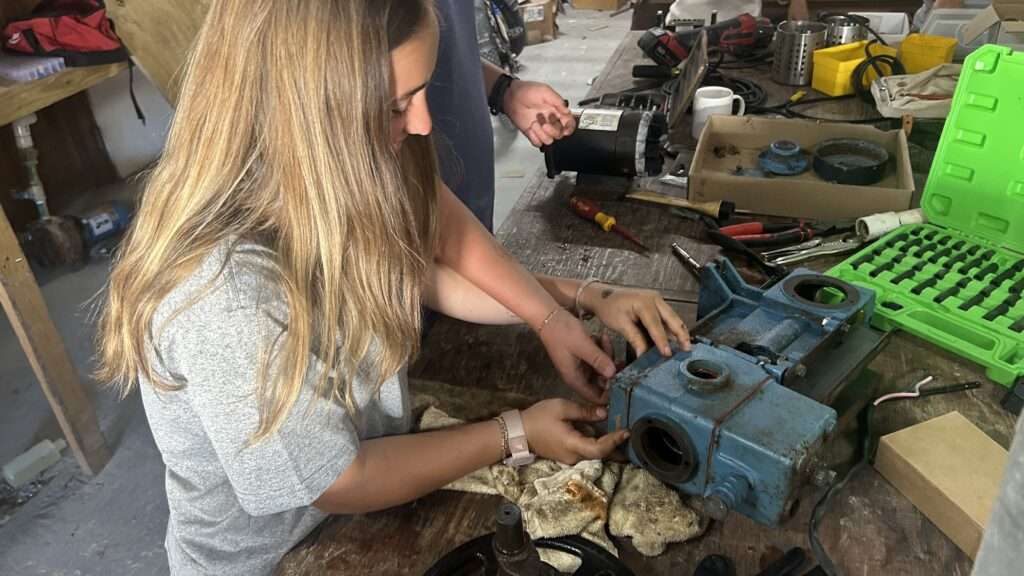
Next, we collected three old well pumps and used their parts to rebuild one working pump and wired an electrical box with a controller to connect and power our pump. We brought our materials to the agroforestry site and completed a site assessment to determine where to install our system.
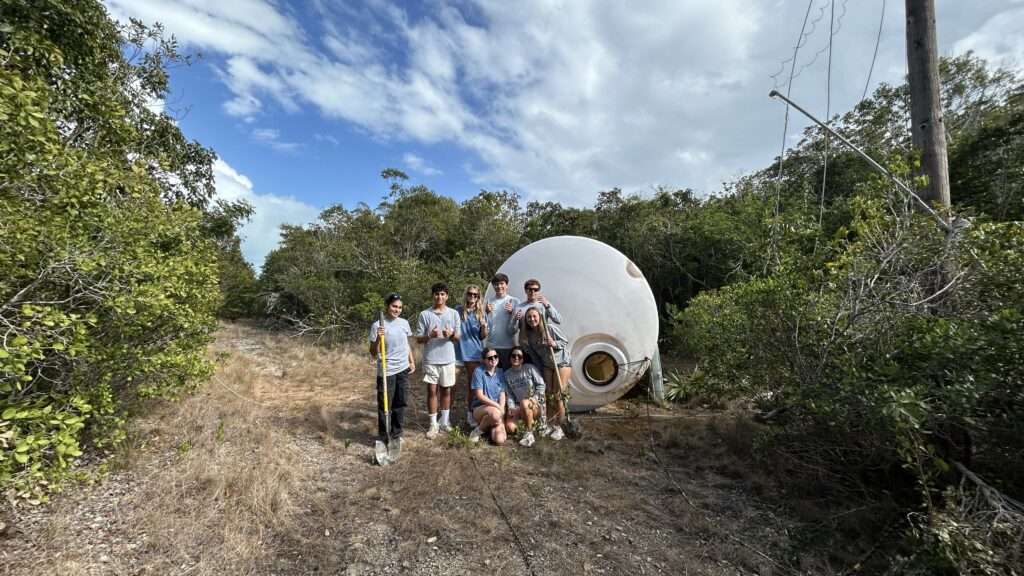
Nearby, there was an existing water tank that we needed to transport to the exact location of our agroforest for water storage. This tank is huge and can hold 5,000 gallons of water, which required considerable engineering to move.
So far, we have transported and set up the water tank, connected the solar panels to the control box, and practised running the well pump. We are not yet actively producing water, but we are far enough along that we can be confident that, with small adjustments, our system will work as designed.
This allows us to predict our expected results. Our solar panels will power our well pump, which will fill our water tank, which will provide water to plants, to grow food for The Island School. Young trees are already planted and awaiting water. They include citrus, avocado, breadfruit, banana, and mango.
We have the unique privilege of having the resources to model sustainable practices at The Island School, which Small Island Developing States need to address food insecurity. Our solar well pump will not only help lower emissions and import costs for produce that we incur at The Island School, but also serve as a model for other food insecure regions of SIDS. Although it could take a few years for the agroforestry site to produce large quantities of food, our well-pumping system will speed up the process, lower the cost, and make the entire process more sustainable.
References
- Global Carbon Budget (2023): Population Based on Various sources [Diagram] Per Capital CO2 emissions, 2022.
- Fong, C., & Roy, D.(2023, November 2nd). What Are the UN Sustainable Development Goals (SDGs)?
- Ziter, B. Sustainable Systems Research Group, Classroom Content (2026)
- Energy Snapshot Bahamas (2015, February) Energy Transition Initiative
- Kaeubler-Delong, Frida., & Lee, Bianca. Food for Thought: Holistic Approach to Food Security on Eleuthera
- Avril, Mia, Sustainable Systems Research Group, Food Insecurity Slide Show and Lecture (2026)
- Cant, Richard. The Water Resources of The Bahamas. PHD Dissertation slide deck
- An Introduction to Solar PV Systems. (2018). Solar Design Guide.
- Sinton. CW, Butler. R & Winette. R.Solar-Powered Water Pumped Systems in New York State