Marine Mammals
Marine Mammal Research
The Bahamas is home to at least 25 marine mammal species, including coastal dolphins, deep-diving toothed whales, and seasonal visitors.Research at CEI is focused on identifying drivers of distribution in these animals; what factors contribute towards making a particular area a desirable habitat for a given species?
Our work combines year-round surveys, photo-identification, drone technology, and passive acoustic monitoring. We collaborate with the Bahamas Marine Mammal Research Organisation (BMMRO), which has been monitoring marine mammals in The Bahamas for more than 35 years.
Year-Round Surveys and Photo-Identification
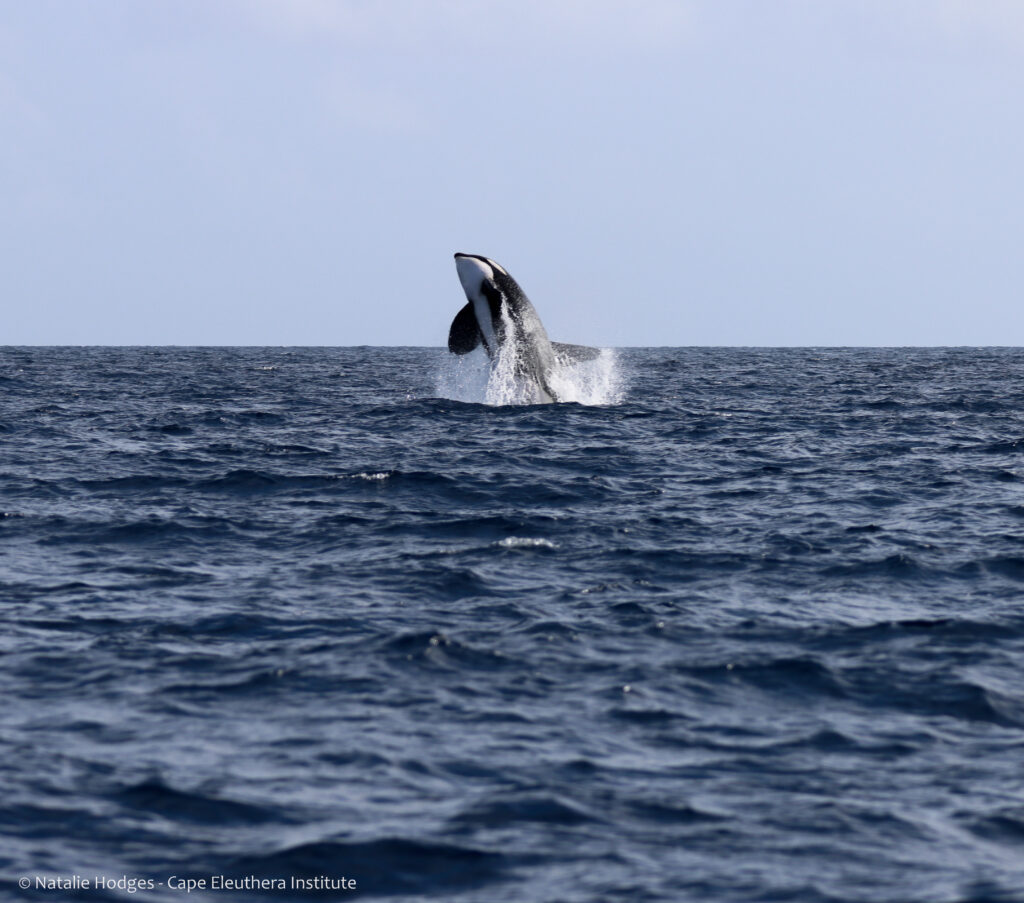
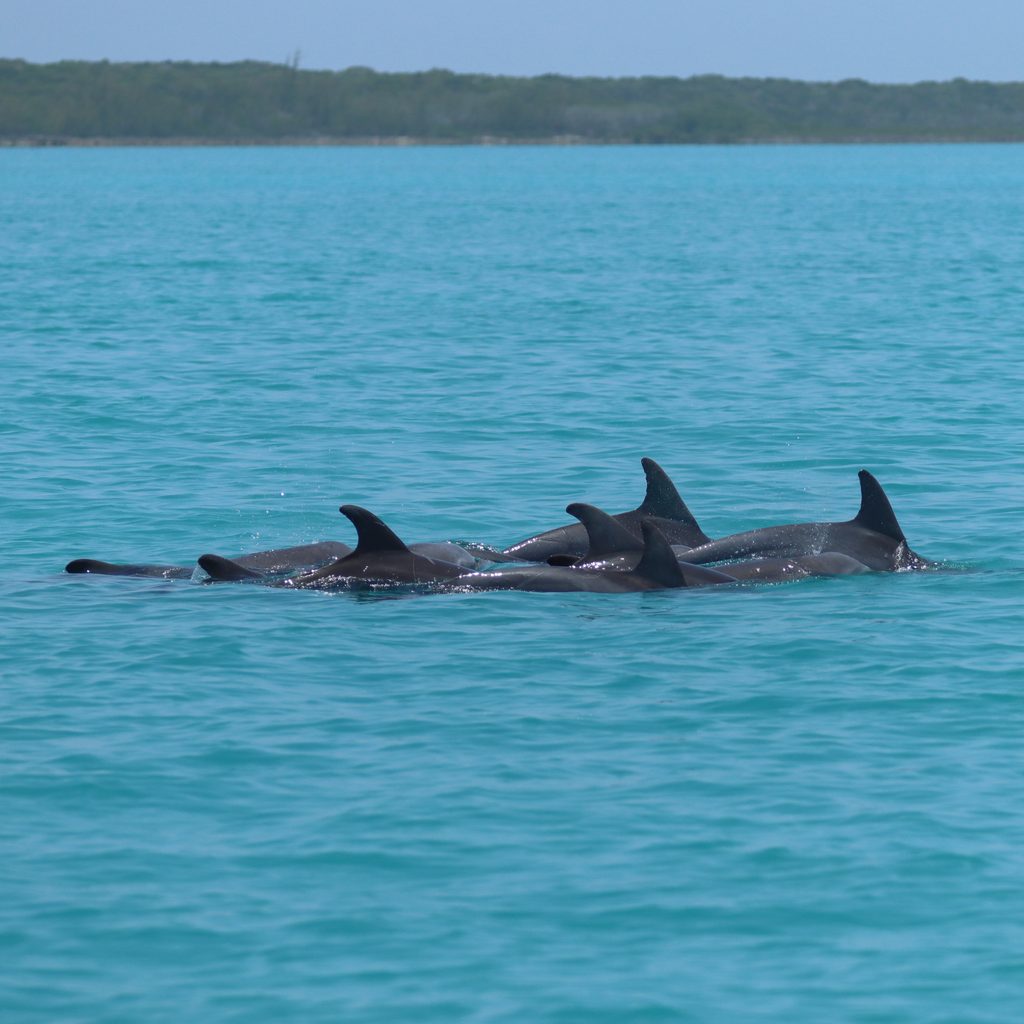
Marine mammal surveys are conducted year-round, with effort focused on periods of optimal sighting conditions when wind speeds are below 5 knots. Surveys target two key areas: northeastern Exuma Sound, where we focus on deep-diving beaked whales, and the western coast of Eleuthera, where we monitor coastal bottlenose dolphin populations.
We use photo-identification to recognise individual animals and monitor longer-term patterns in their distribution, movements and social associations.
Animals displaying distinctive identifying features, such as scars or missing tissue along the dorsal fin, are added to our photo-identification catalogue and assigned a unique ID. In 2026, we began transferring our catalogue to Flukebook, an online platform that facilitates collaboration between marine mammal research organisations through the sharing and management of species catalogues.
The CEI Flukebook account currently contains 305 individual animals representing five species.
Photo-ID has allowed researchers at CEI to identify re-sighting occurrences, which provide important evidence of individual whales returning to the Exuma Sound over multiple years.
Cetacean Diversity in the Exuma Sound
Surveys in Exuma Sound during 2026 documented seven cetacean species: six toothed whale species and one baleen whale species.
- Minke whale (Balaenoptera acutorostrata)
- Sperm whale (Physeter macrocephalus)
- Gervais’ beaked whale (Mesoplodon europaeus)
- Cuvier’s beaked whale (Ziphius cavirostris)
- Pantropical spotted dolphin (Stenella attenuata)
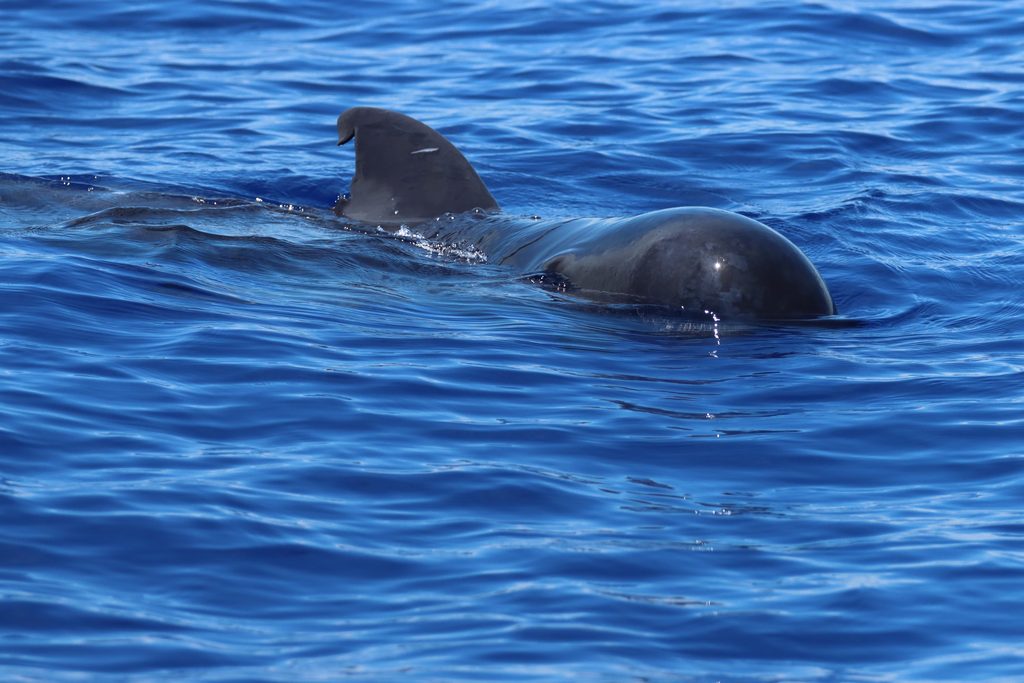
- Short-finned pilot whale (Globicephala macrorhynchus)
- Pygmy sperm whale (Kogia breviceps)
These observations highlight the diversity of cetaceans using Exuma Sound and the importance of continued surveys to understand its role as habitat for deep-diving whales and dolphins.
Exploring Drone Technology
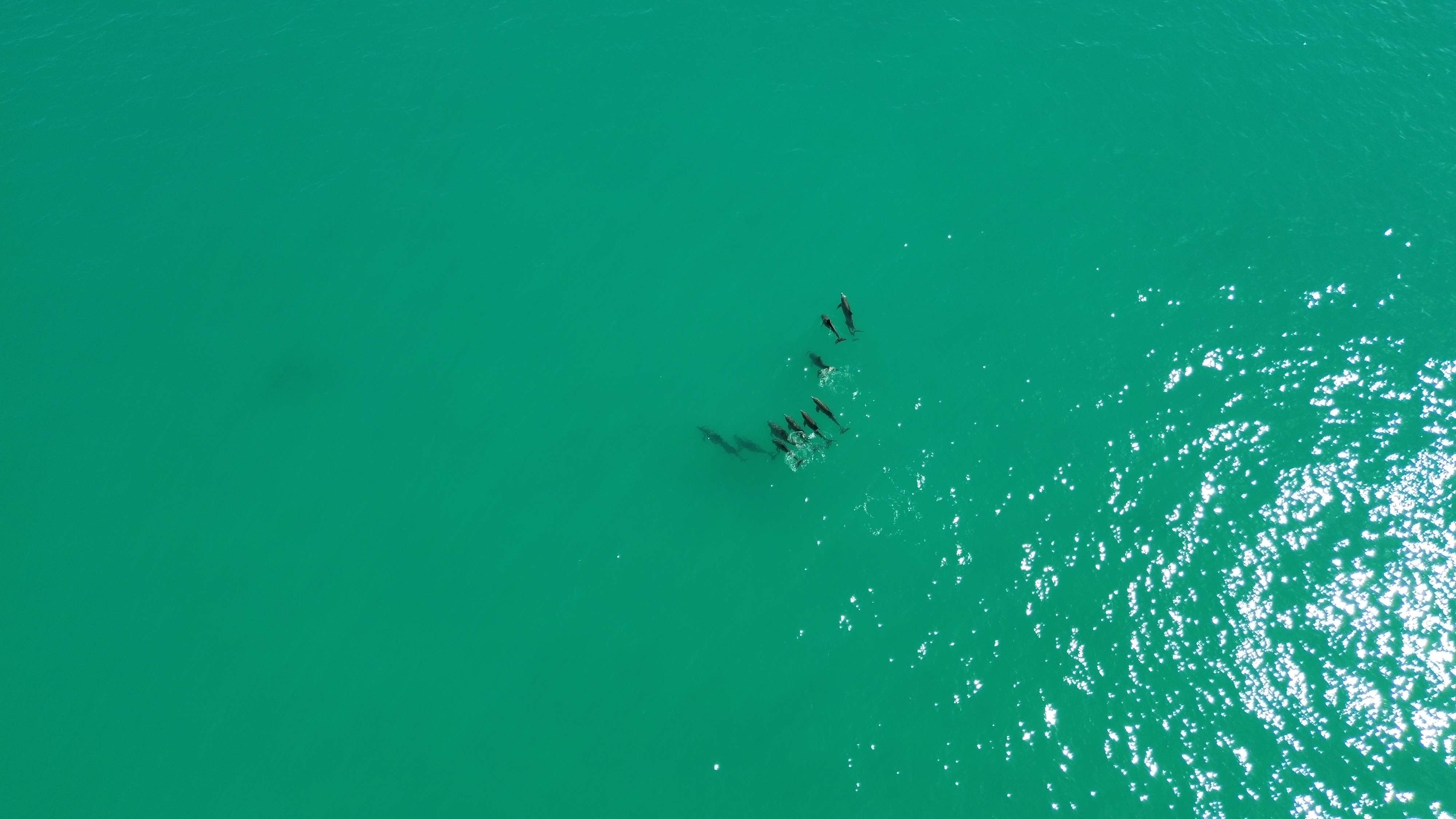
We are incorporating drones into boat-based surveys to complement photographs collected from vessels. Aerial footage provides additional viewing angles, revealing identifying features and behaviours that may not be visible from the surface.
Drone footage has already supported several research applications:
- Confirming sex: Footage revealed the visible tusks on the lower jaw of a male Gervais’ beaked whale, allowing us to confirm its sex.
- Improving photo-identification: Aerial footage captured the fluke of a sperm whale. Comparison with photographs from the same encounter suggests high-resolution drone imagery could potentially support individual identification, reducing the need for vessels to approach as closely.
- Documenting social behaviour: Footage captured sexual behaviour during an encounter with socialising bottlenose dolphins. We identified individuals from our catalogue using photographs from the same encounter and added the observation to their documented social associations.
These applications demonstrate how drone technology can expand the information collected during marine mammal encounters.
Methodology & Field Techniques
Cetacean research at CEI uses a combination of boat-based line-transect surveys, acoustic monitoring and photo-identification.
- Line transect surveys
Boat-based line-transect surveys are used to collect data on species presence throughout Exuma Sound, following distance-sampling protocols. Drone footage is used to confirm group size and composition. Data collected through these surveys is used for abundance estimates and density-surface modelling.
- Acoustic monitoring
Long-term passive acoustic recording via a moored hydrophone in Rock Sound is used to identify temporal patterns in bottlenose dolphin presence within this sheltered habitat. We are developing a catalogue of signature whistles for the resident Eleutheran population of coastal bottlenose dolphins.
Deep-sea hydrophones are suspended vertically beneath a drifting buoy fitted with a GPS beacon, at 800 metres depth. Data is extracted and analyzed following each field deployment.
We are working in partnership with Chelonia Ltd in Cornwall, England, to field test the new F-Pod Deep cetacean click detectors.
- Photo-identification.
Animals encountered during surveys are photographed, and their unique scarring patterns are used to build a catalogue of known individuals.
Photo-identification is used to identify long-term associations between individuals and multi-year site fidelity.
You can view our bottlenose dolphin catalogue online here. We encourage members of the public to submit their sightings; these citizen science contributions help us to monitor the Eleutheran dolphin population throughout their range, which spans the 180km length of the island.
- Thermocline profiling
Conductivity-temperature-depth loggers (CTDs) are deployed to a depth of 800 metres to measure the rate at which temperature and salinity change with depth. This data is used to calculate thermocline and halocline dimensions. This boundary layer plays a role in determining the vertical migration of lower trophic level organisms within the deep-sea food web.
Recent findings of interest
- Multi-year site fidelity of Gervais’ beaked whale in Exuma Sound
- Synchronized diving behaviour between a mother-calf pair
- Year-round presence of mother-calf pairs within Exuma Sound: potential habitat of value for calf-rearing
Marine mammal research at CEI is carried out in partnership with The Bahamas Marine Mammal Research Organisation (BMMRO). BMMRO have been monitoring marine mammal populations in The Bahamas for over 35 years.
At CEI, we value data-sharing practices to promote the conservation of Bahamian marine resources. Oceanographic data collected through our marine mammal survey work is shared with the University of The Bahamas and utilised for climate modelling.