Celebrating 20 Years of Research and Innovation at the Cape Eleuthera Institute
By Kennedy Bliss, Research Faculty at the Cape Eleuthera Institute
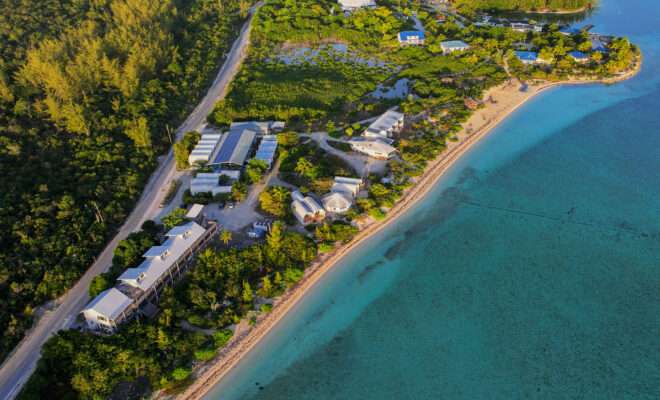
For the past 20 years, the Cape Eleuthera Institute (CEI) has worked at the intersection of science, sustainability, innovation, and education in South Eleuthera.
What originally began as an ambitious aquaculture project has since evolved into one of the Caribbean’s leading environmental research institutions. For the past two decades, CEI has developed a research program that supports a robust experiential learning curriculum for The Island School’s educational programs, while helping shape environmental policy and scientific understanding throughout The Bahamas and beyond.
Research Rooted in Place
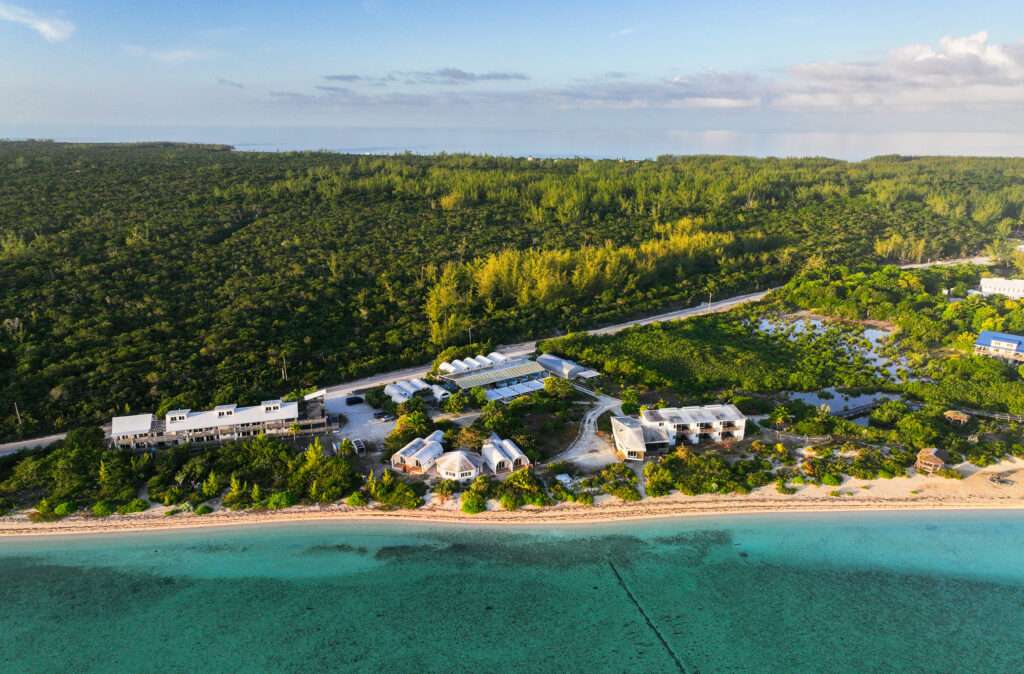
CEI was formed out of a growing need for The Island School to respond to local and regional problems associated with resource management and development. In the mid-1990s, The Island School’s Founder, Chris Maxey, began exploring solutions for sustainable fisheries with the University of Miami by developing an offshore aquaculture project located near Cape Eleuthera. This project, a cobia cage, aimed to address just a small piece of a larger question: “How can The Bahamas pursue sustainable development in a way that would not sacrifice the natural resources and cultural traditions that make this country so unique?” From this question, formal discussions began in 2003 about creating a dedicated research institute at The Island School, and, in 2006, the Cape Eleuthera Institute officially opened.
The original mission of CEI was to build relationships, infrastructure, and develop economies in South Eleuthera and The Bahamas that enhance local life, ecological health, and prosperity in ways that become working models for the region. Maxey and his team at The Island School began to bring this mission to life by implementing sustainable systems on the school’s campus, focusing on renewable energy sources and water management.
Developing Sustainable Systems to Model Small-Island Opportunities
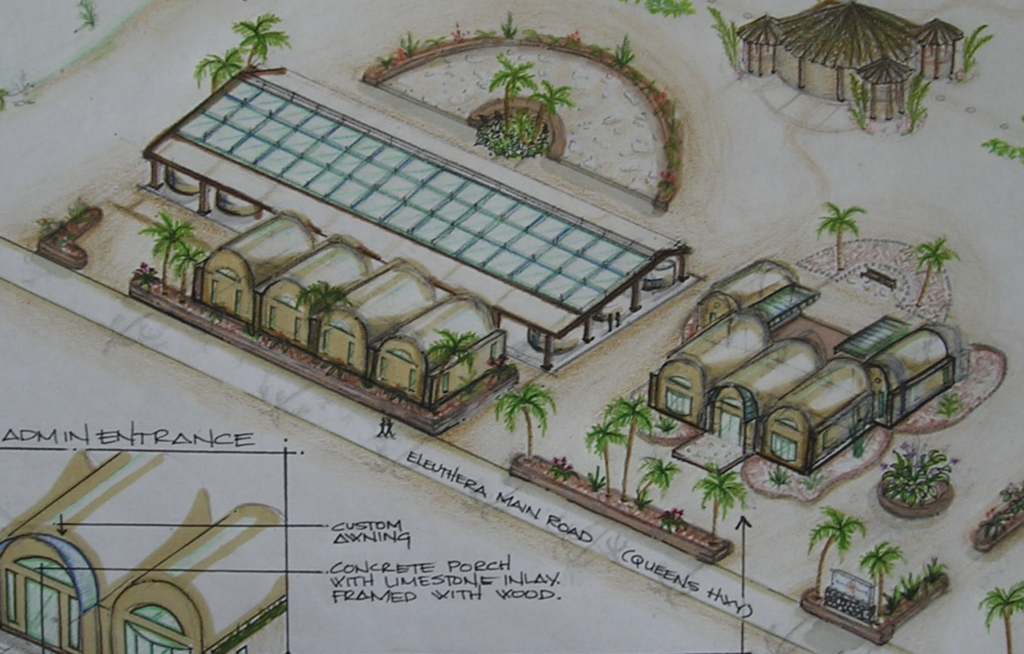
In its early days, CEI launched innovative approaches to water conservation, ecological wastewater treatment, and sustainable food production. The original areas of influence included renewable energy development, fresh- and wastewater management, marine resource management, aquaculture, permaculture, green building design and materials, biofuel development, and consulting services, with an additional emphasis on education and outreach.
Initial plans envisioned agricultural parks, sustainable fisheries initiatives, and aquaculture systems capable of reducing dependence on imported food while creating new economic opportunities for Bahamians. More than two decades later, many of those early ambitions have become reality, reflected in a thriving agroforestry program, a fully operational aquaponics system, the Queen Conch Conservancy and Mobile Lab, and a growing portfolio of aquaculture research and development initiatives.
CEI was designed to model the possibilities of sustainable living, with the largest and most successful renewable energy program in The Bahamas.

Solving Power Challenges With Solar Energy in The Bahamas
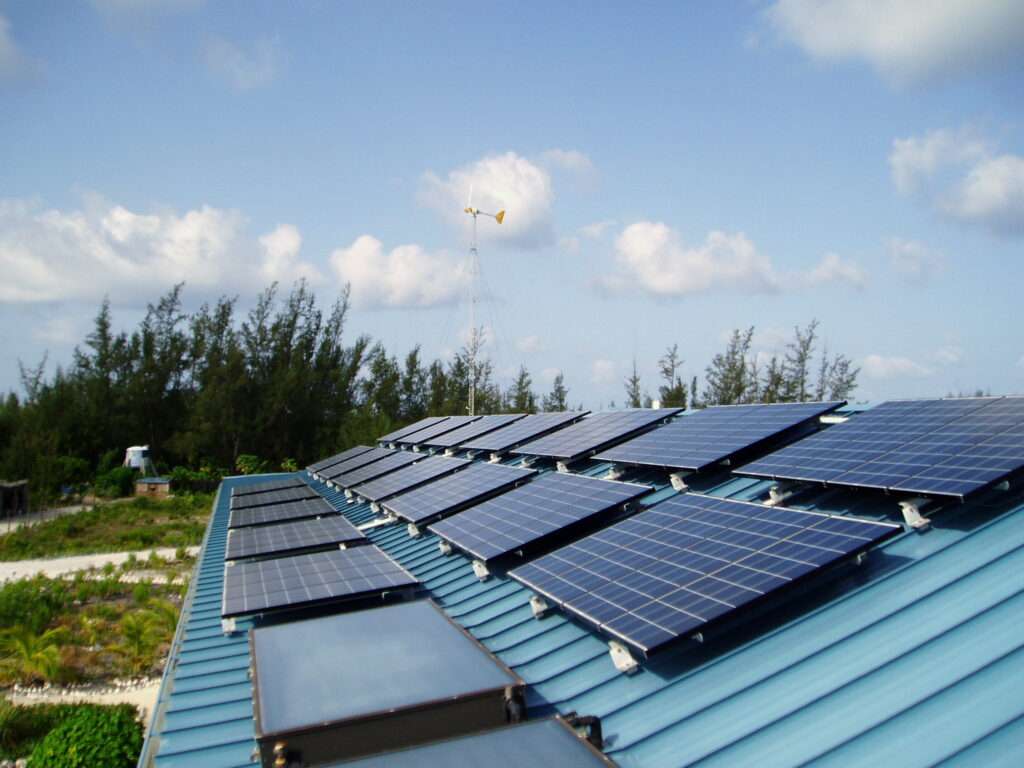
We introduced the country’s first solar-powered grid-intertied system, integrating our campus’s renewable energy with the local power program. Today, our campus still operates on that system, offsetting an estimated 40% of our energy usage through solar power, and a wind turbine harnesses the power of the ocean breeze to supplement the solar energy we produce. Additionally, the recent addition of an off-grid battery backup system continues to expand the possibilities of clean energy as we continue to strive towards 100% renewable energy.
A Pillar of Conservation in The Bahamas
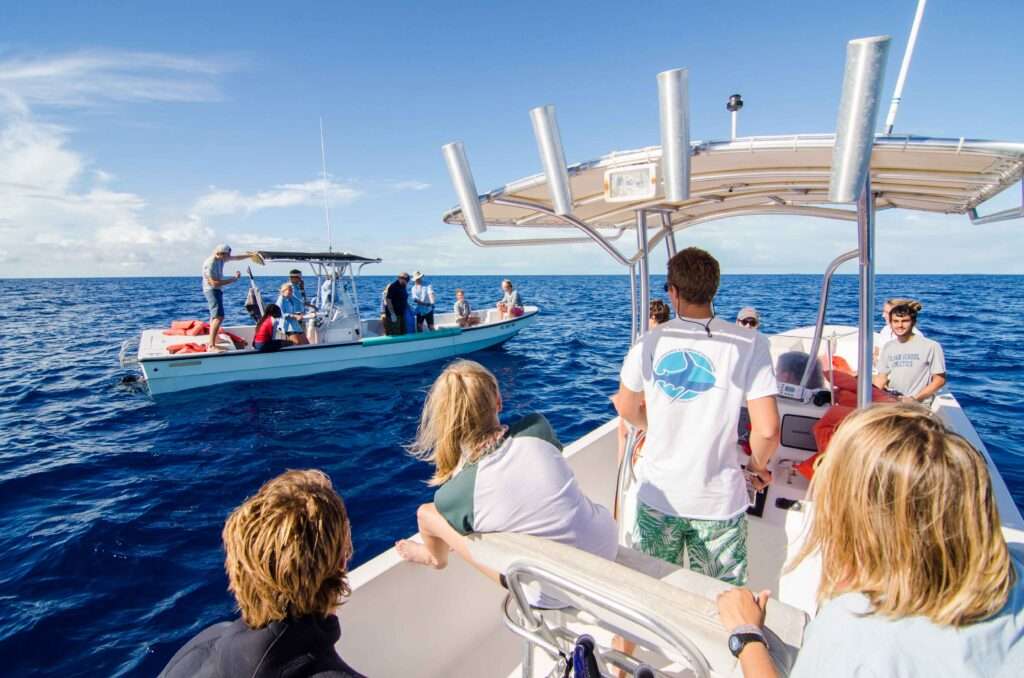
CEI has become internationally recognized for its marine conservation work, particularly in shark research, coral reef restoration, sustainable fisheries, habitat protection, and ecosystem monitoring. One of CEI’s most influential contributions to science policy came through shark tagging and migration studies that helped support The Bahamas’ landmark decision to establish the world’s first shark sanctuary in 2011. Our shark research and conservation program continues today, focusing on shark behavior, habitat use, and population dynamics, helping demonstrate the ecological and economic importance of healthy shark populations in Bahamian waters.
Fueled by Partners
Over the last two decades, CEI has achieved significant milestones in advancing its research and conservation goals through the invaluable support of our partners and donors. The scale and impact of our work have been amplified through partnerships with universities, conservation organizations, government agencies, and research institutes.
A few notable partners include the Save Our Seas Foundation for their contributions in making CEI a global leader in shark research and conservation and supporting our community engagement initiatives.
The Perry Institute for Marine Science and The Nature Conservancy have worked closely with CEI in creating The Bahamas Coral Innovation Hub (BCIH) as a regional leader in coral restoration and reef resilience research.
Since 2007, the Bahamas Reef Environment Educational Foundation and CEI have collaborated on the Bahamas Environmental Steward Scholars (BESS) Program, building local conservation capacity and environmental stewardship in the next generation.
Other major contributors to our research throughout our history include the National Oceanographic and Atmospheric Administration, the University of Miami, University of The Bahamas, The Earthwatch Institute, OceanX, The Bahamas Marine Mammal Research Organisation, Florida Atlantic University, One Eleuthera Foundation, The Bahamas National Trust, Bonefish and Tarpon Trust, and many more.
Together, these partners have helped to transform CEI from a small research station in South Eleuthera to a globally connected institute whose work has had significant impact in protecting vital ecosystems, innovating sustainable solutions, and educating young minds that will lead the next generation of environmental stewards.
Supporting Research and Innovation Across Disciplines
Our work addresses a wide range of the most pressing environmental issues facing our oceans and island habitats. Today, CEI maintains its identity as a hub for research and innovation where scientists, engineers, educators, and students work together to conduct meaningful work spanning the fields of conservation, sustainability, marine and terrestrial science, and outreach and engagement. Our research and innovation pursuits are guided by four thematic pillars: Sustainable Systems, Marine Conservation, Nature-based Tourism, and Food Security.
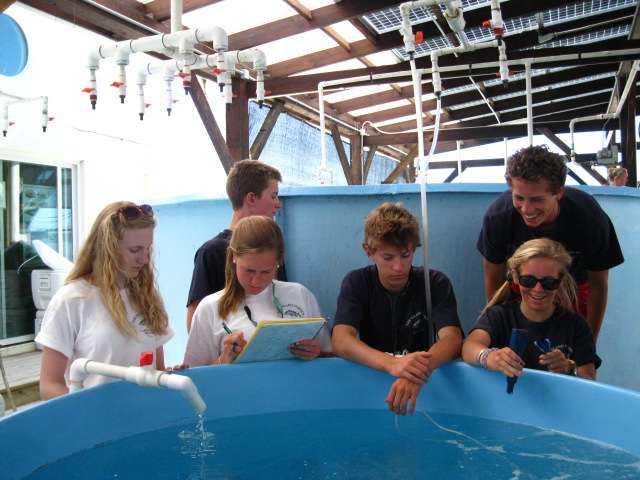
From the very beginning, a key attribute of CEI’s success has been its ability to integrate education and research, unlike traditional schools or research institutions. Students at The Island School have the unique opportunity to work directly alongside our scientists in the field, actively participating in research projects ranging from coral restoration and shark tagging to sustainable engineering and aquaculture. Many of our educational programs specifically aim to support Bahamian youth development, helping cultivate the next generation of environmental leaders and scientists within the community.
Perhaps its greatest success over the last 20 years, CEI has demonstrated that small island communities can be leaders in sustainability and innovation. Our work has shown that world-class science is possible in remote centers when community engagement, environmental stewardship, and collaboration are at the forefront. We look forward to continuing this impactful journey together, fostering a healthier, more sustainable future for our oceans and the people who depend on them.

At the end of November, we will host the Hope 20 Summit on our campus in South Eleuthera to honor 20 years of research grounded in place and purpose. We will look back on our accomplishments and invite what comes next for CEI: deeper collaboration, shared questions, and new opportunities to bring people together around science. This gathering puts research at the center, connecting scientists, partners, and ecosystem builders to drive the next chapter of discovery and impact.
To learn more or register for the event, visit the Hope 20 Summit webpage. For questions, please contact Kennedy Bliss (kennedybliss@islandschool.org).