Agroforestry Research
Promoting Food Security Through Thoughtful Agricultural Practices
The Bahamas is a food-insecure nation, importing nearly ~90% of its food. This food is primarily imported from the United States at an annual cost of ~$1 billion. This has significant environmental, economic, and social implications, including but not limited to a high carbon footprint from transportation, increased vulnerability to supply chain disruptions, strain on coastal and port ecosystems, and reduced local agriculture and biodiversity.
To combat this issue, the Cape Eleuthera Institute is working to lower The Island School’s dependence on imported food by supplying locally-grown produce in our campus dining hall using coppice-integrated agriculture.
The Cape Eleuthera Institute is establishing a 22-acre agroforestry system. Agroforestry involves intentionally integrating trees into agricultural systems to increase farm productivity, economic resilience, and ecosystem services by leveraging natural ecological interactions.
Agroforestry: Coppice-Integrated Agriculture
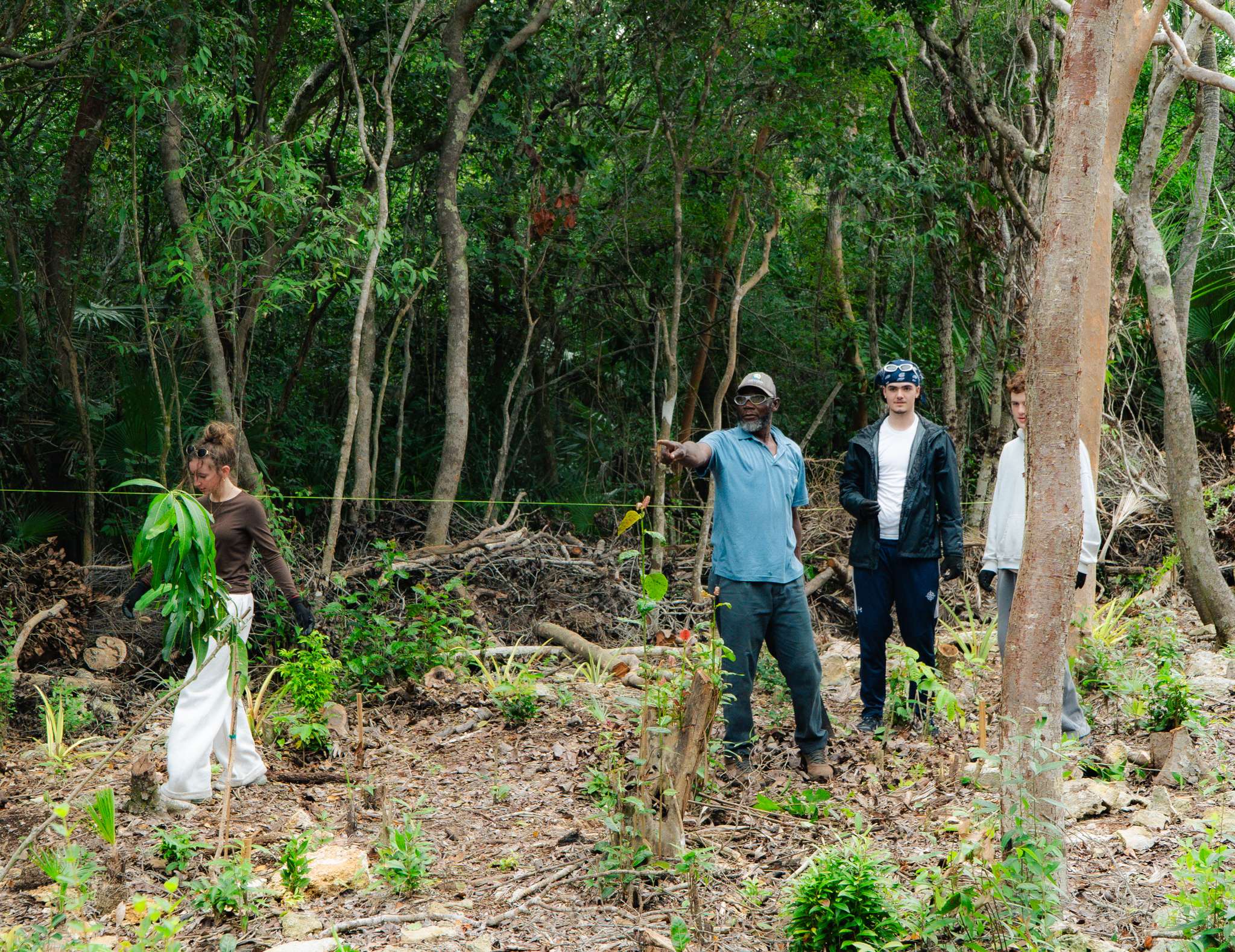
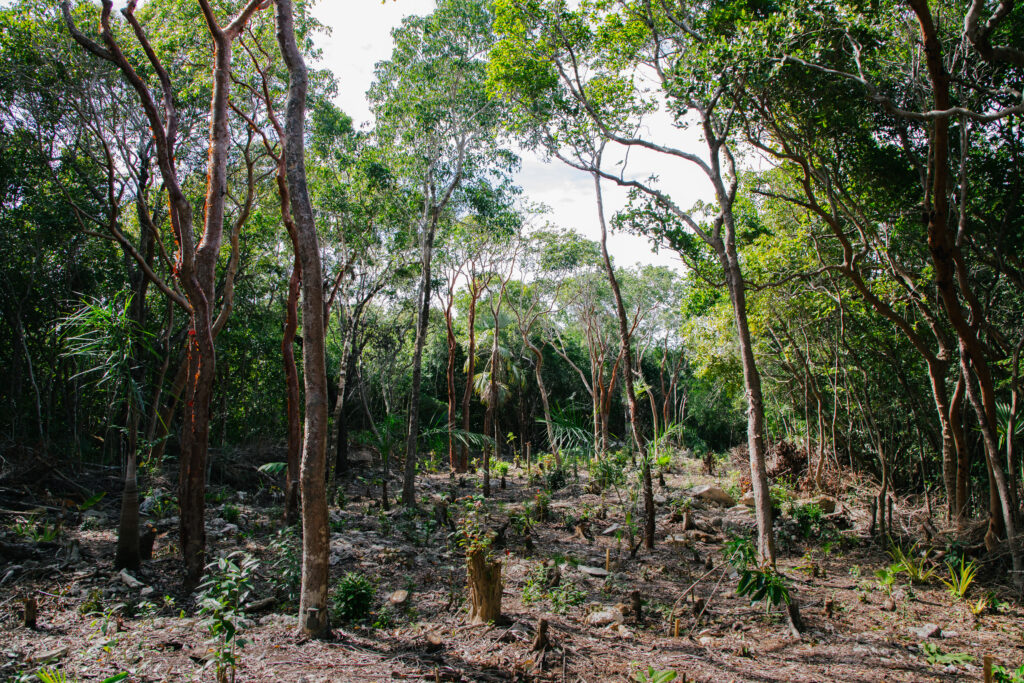
This project is establishing 40-foot by 300-foot agroforestry rows that are selectively cleared between existing, preserved coppice rows of the same size. These alternating coppice rows serve as windbreaks, protection from extreme weather events, and sources of natural soil fertility. The agroforestry rows are anchored by staple crops, with a sub-canopy layer of fruit trees to increase crop diversity and productivity.
Island School Semester students, visitors, and staff are all involved with the installation, monitoring, maintenance, and harvesting of the agroforestry system. Student participation serves as a core operational component, ensuring both experiential learning and long-term system stewardship. By playing a central role in day-to-day operations, students gain hands-on experience that connects academic learning with real-world sustainability practices.
Current research is focused on a comparison of insect biodiversity in an integrated agroforestry plot and the unaltered coppice ecosystem in Eleuthera, to better understand the environmental impacts of agroforestry in this specific ecosystem. On a wider scale, long-term research on the feasibility of agroforestry systems in The Bahamas is simultaneously being conducted.
Goals
Our goal is to enhance biodiversity, improve soil health, and build resilience, ultimately strengthening food security and supporting sustainable local economies while preserving the integrity of the natural Bahamian coppice ecosystem. We aim to be completely self-reliant for all of our campus produce needs while growing these crops in the most sustainable manner possible.
Long term, the project aims to scale production, continue biodiversity monitoring, reduce reliance on imported food, and ultimately meet dining hall needs while also contributing to food security in the greater Eleuthera community. We will need an estimated eight acres of planted space, equivalent to 32 completed rows, to feed the dining hall.