Cape Eleuthera Institute Brings Shark Research in The Bahamas to Global Stage at Sharks International

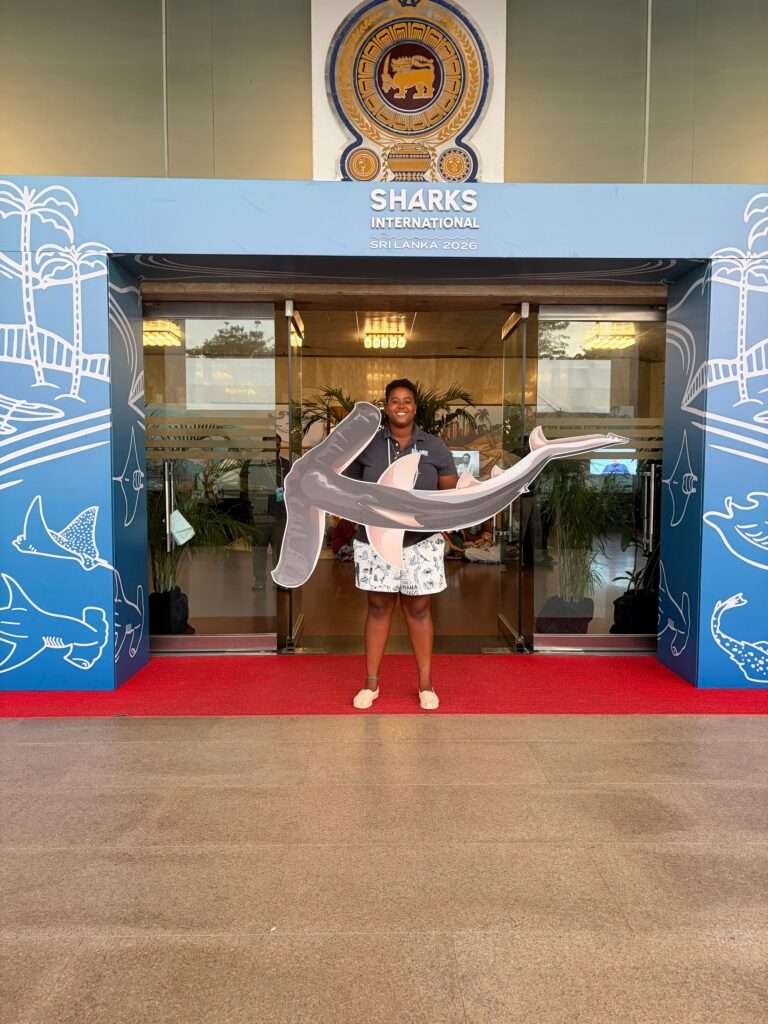
Last month, Dr. Candace Fields, lead shark researcher at the Cape Eleuthera Institute (CEI), traveled to Colombo, Sri Lanka, to attend Sharks International 2026, the world’s largest conference dedicated to shark, skate, ray, and chimera science, conservation, and management.
Held every four years, Sharks International brings together hundreds of researchers, conservationists, educators, policymakers, students, and advocates from around the world to share the latest scientific discoveries and collaborate on solutions to challenges facing our ocean planet.
This year’s conference marked a historic milestone as the first Sharks International conference hosted in Asia. More than 800 participants from over 80 countries around the world gathered in Sri Lanka, demonstrating a growing global effort to conserve sharks and rays while recognizing the importance of science, policy, and community engagement in protecting these species.
For Dr. Fields, the conference offered an invaluable opportunity to connect with colleagues from around the world and contribute to conversations that are shaping the future of shark conservation.
Experts Exchange Ideas and Research
Throughout the week, attendees participated in hundreds of scientific presentations, workshops, panel discussions, and breakout sessions that focused on topics ranging from shark movement ecology and fisheries management to climate change, marine protected areas, science communications, and international policy.
While the conference officially ran between May 4 and 8, workshops and panel sessions also took place both leading up to and following the conference. Dr. Fields had the privilege of speaking on a three-person panel at a workshop entitled “Developing Best Practices in Shark Science Fieldwork.” Alongside Brittany Finucci and Nico Fassbender, Dr. Fields discussed fieldwork successes and struggles and how the culture of fieldwork can be effectively navigated to provide the best outcomes both scientifically and personally. The panel also discussed opportunities for improvements as it relates to this culture and where and how the field excels. After taking questions from workshop attendees, panelists joined the workshop participants to further this discussion and came away with tips and tricks for working in difficult environments and/or working with difficult colleagues.
Dr. Fields also had the opportunity to present research that she conducted as part of her dissertation. This work, currently under review for publication in the journal Marine Biology, examined relative abundance indices for the critically endangered oceanic whitetip shark using pelagic Baited Remote Underwater Video Stations (pBRUVS). Abundance trends for this species typically rely on data derived from commercial fishing operations; however, the legal protection of this species may influence compliance in capture reporting, likely leading to inaccurate reports. As such, fishery-independent surveys can provide critical insight into the population status of threatened species. During this study, Dr. Fields conducted a fishery-independent pBRUVS study at Cat Island, The Bahamas, the first study of its kind in Bahamian waters. Using individual fin markings, she estimated the minimum number of individuals (IND) per deployment in order to determine whether this metric should be considered when assessing the abundance of oceanic whitetip sharks as opposed to the commonly used, conservative metric of maximum number of individuals (MaxN). Her findings indicated that IND increased abundance estimates 1-3 fold and that pelagic BRUVS can provide a scalable non-extractive approach to assessing oceanic whitetip population trends.
You can watch all of the oral presentations from the conference here. Dr. Fields’ talk begins at 1:51:34.


Building Connections in Conservation and Education
Beyond the formal presentations, Sharks International serves as a vital platform for building relationships among scientists, conservation organizations, and advocates.
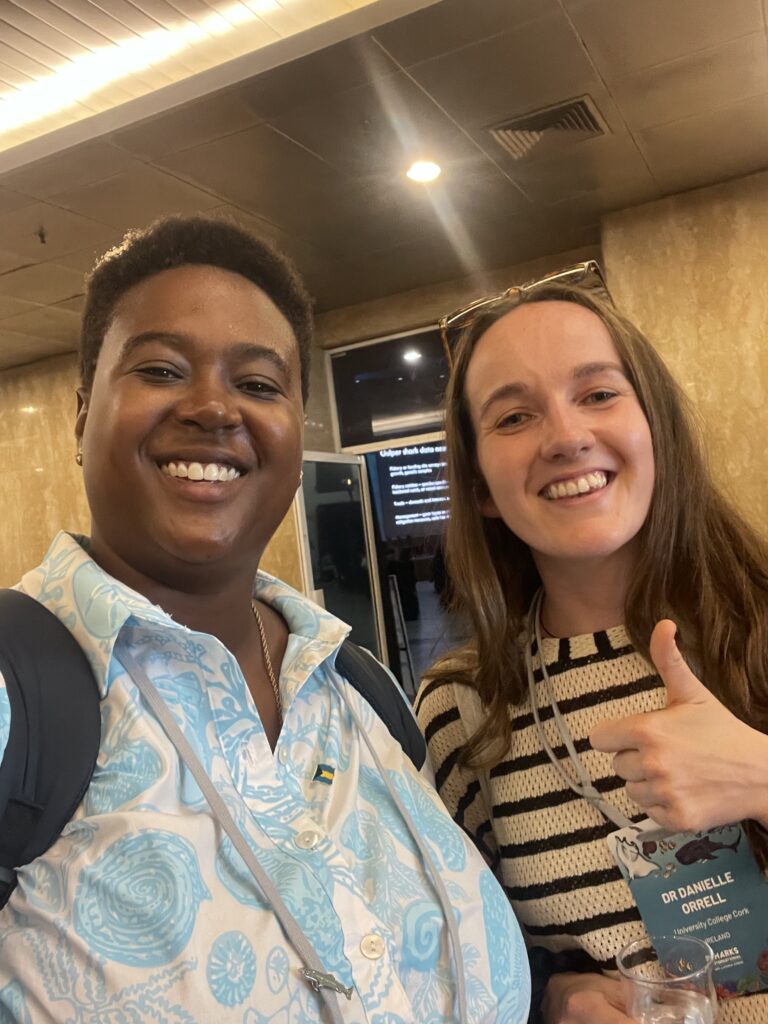
In fact, during the conference, Dr. Fields bumped into several Island School and CEI alumni, including Nicholas Tolen, a former Island School teacher, and a past student of Dr. Fields, Bella Garfield S18, who was at the conference sharing her Master’s work! Bella developed a passion for sharks and rays during her time as a student at The Island School, and has built a career dedicated to marine biology.
As CEI continues its mission to conduct impactful marine research and inform conservation efforts, participation in international gatherings such as Sharks International ensures that our scientists continue to grow in their work and ask important questions. These also offer an opportunity for us to share the important work being done in The Bahamas on a larger scale. Dr. Fields looks forward to participating in the next Sharks International, which will be held in Sabah, Malaysia, in 2030.