How Artificial Intelligence is Helping Advance Marine Mammal Conservation
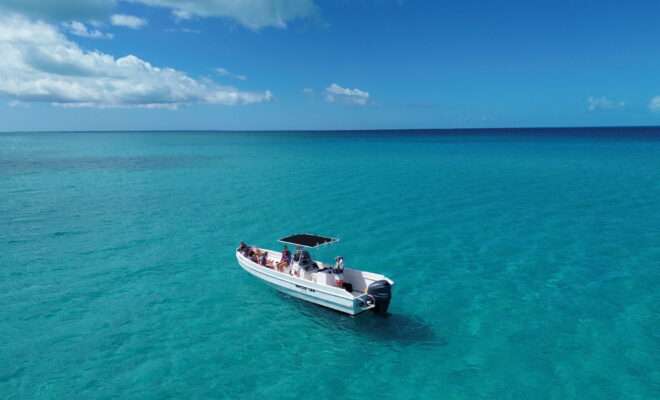
Written by Natalie Hodges, Research Faculty at the Cape Eleuthera Institute
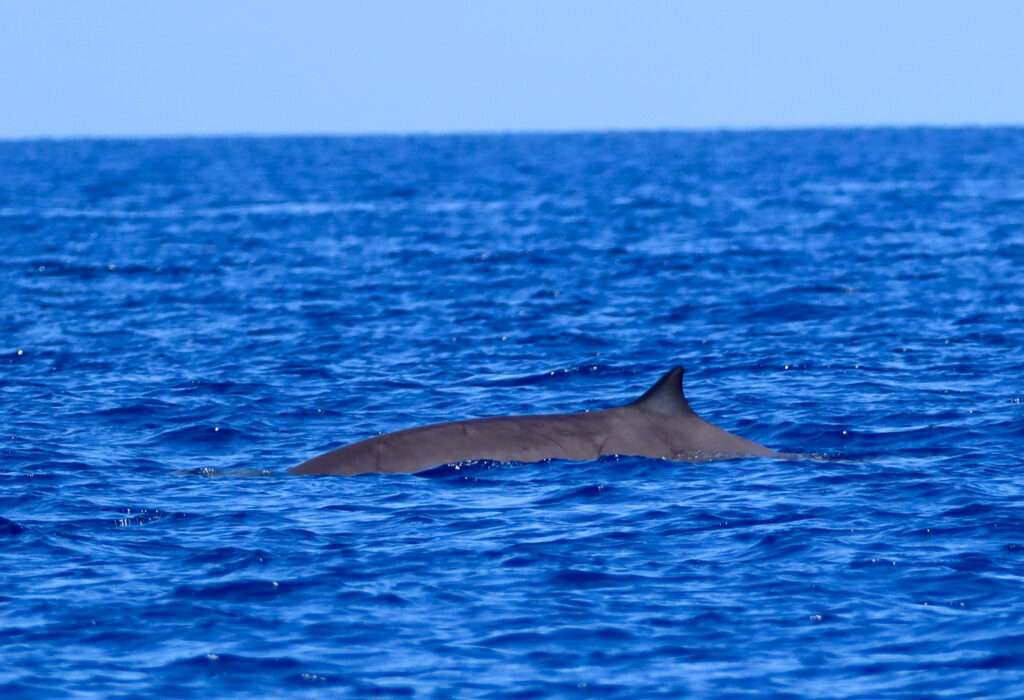
The Bahamas is home to over 25 species of marine mammal, and the waters surrounding Eleuthera provide habitat for species with vastly ranging requirements—from the shallow banks of the Bight of Eleuthera to the 3000 metre depths of the Exuma Sound.
One of the challenges in monitoring marine mammal populations is in establishing how many individuals are in a population to begin with. In order to know whether a newly introduced threat or disturbance is having adverse effects on our resident Eleutheran whales, we need a baseline to measure against.
So how can scientists count animals that spend the majority of their time underwater?
Methods For Identifying Marine Mammals
There are a few different methods that can produce reliable estimates of marine mammal abundance without having to count every single individual.
One of these techniques is called capture-mark-recapture.
This method works really well for smaller organisms, which are literally ‘trapped’ and then marked; for example, by putting a small amount of white-out onto the shell of a hermit crab. The trapped animals are released, and after a period of time, there is a second ‘trapping’ event. Depending on what proportion of the animals trapped in the second group were marked, the total population can be estimated using the equation:
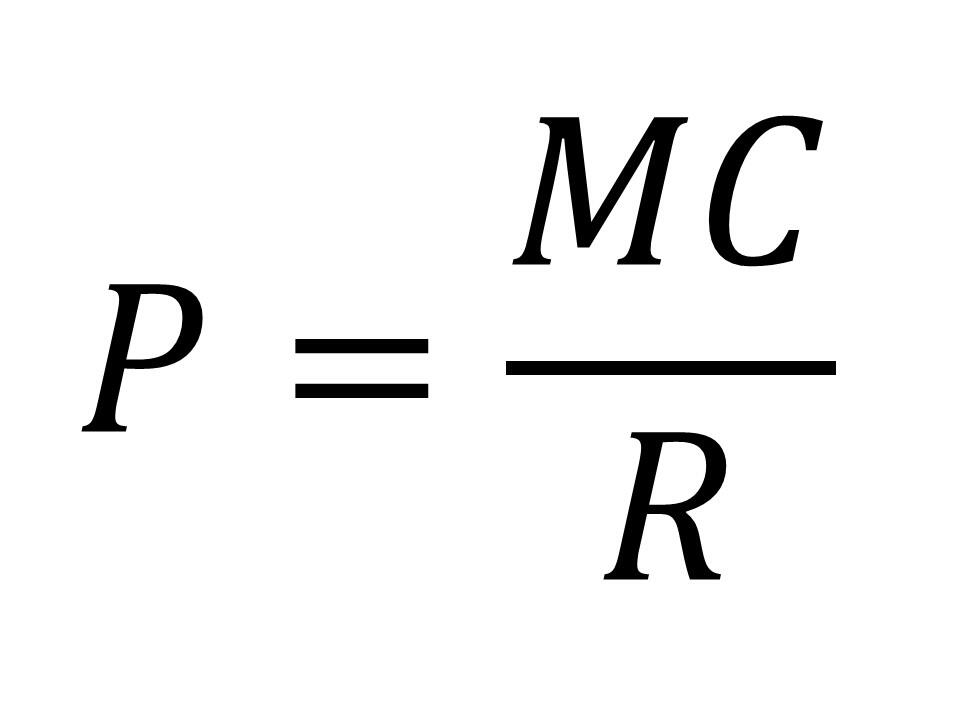
Where the estimated total population (P) is the number of animals caught in the first trapping (M), multiplied by the number of animals caught during the second trapping (C), divided by how many marked individuals were in the second group (R).
For example, say you caught 50 hermit crabs, marked their shells with paint, and then released them. A week later, you caught a second sample of 50 hermit crabs. 12 of them had paint on their shells. The total population (P) is the number you caught the first time (M) multiplied by the number of crabs you caught the second time (C) divided by the number of marked crabs in your second sample (R) = (50×50)/12. Meaning P equals 208 hermit crabs.
Determining Marine Mammal Populations Through Visual Clues
In The Bahamas, all marine mammals are protected by law from capture, harassment, hunting, or killing under the 2005 Marine Mammal Protection Act. Trapping a wild cetacean for research purposes to apply a tag would cause the animal stress (harassment) and could lead to infection (harm).
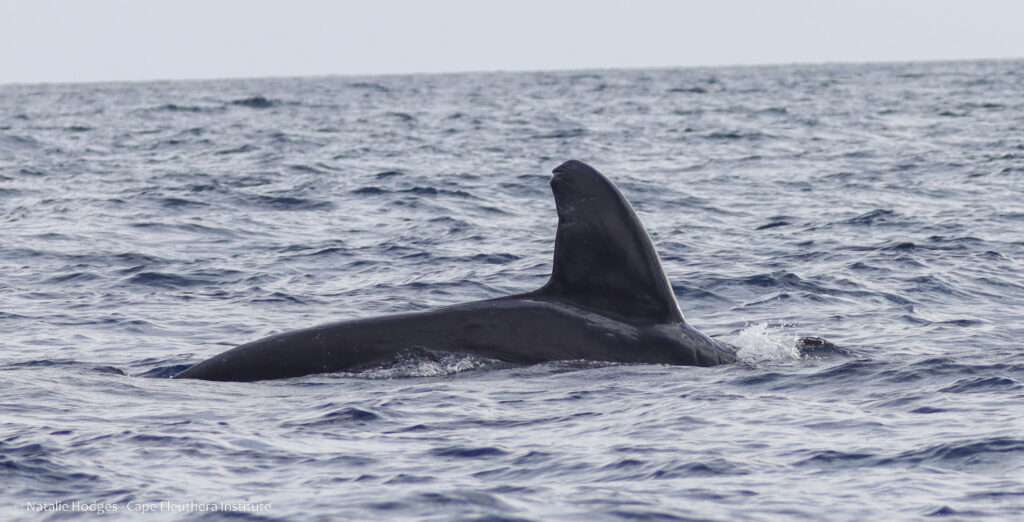
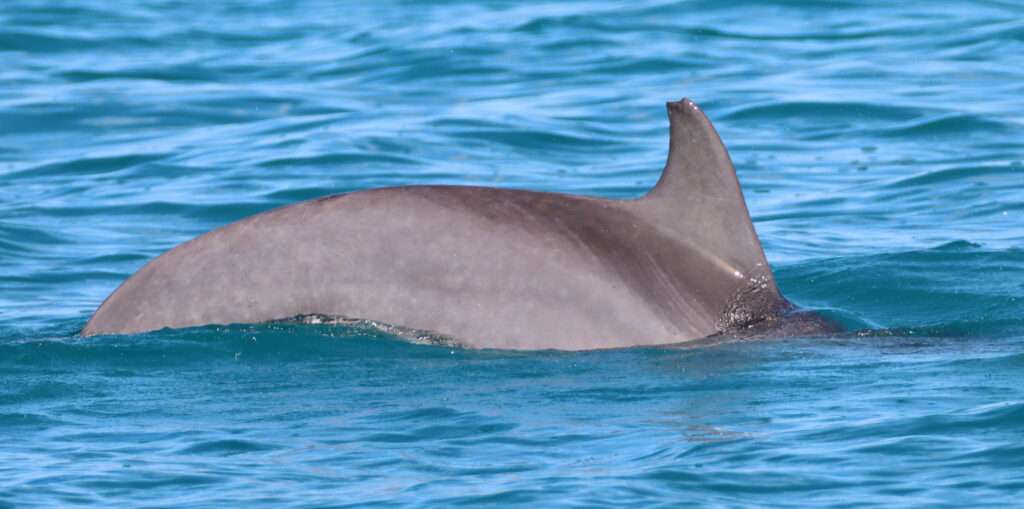
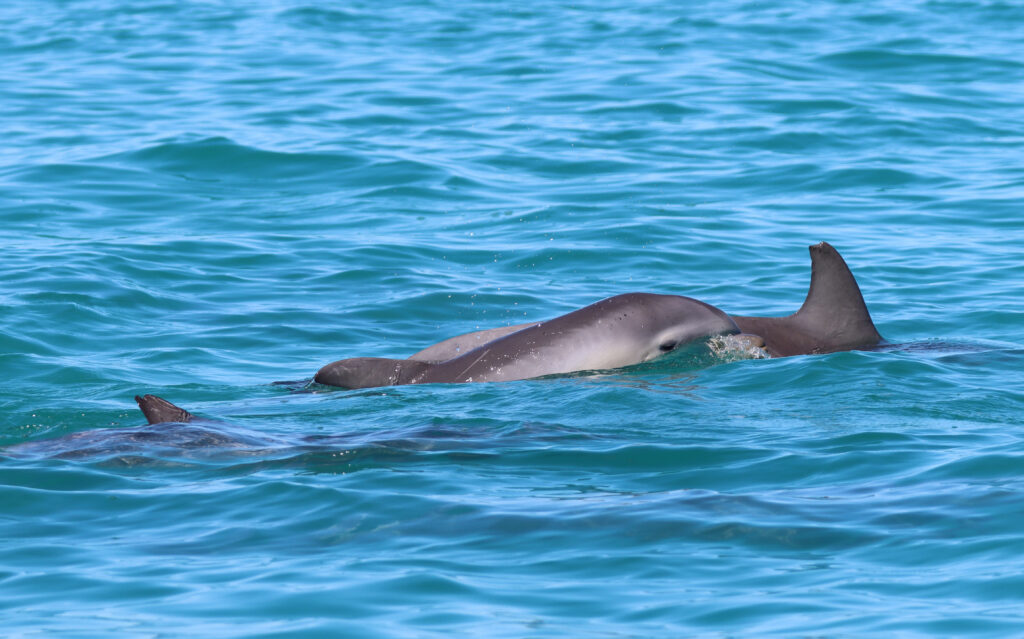
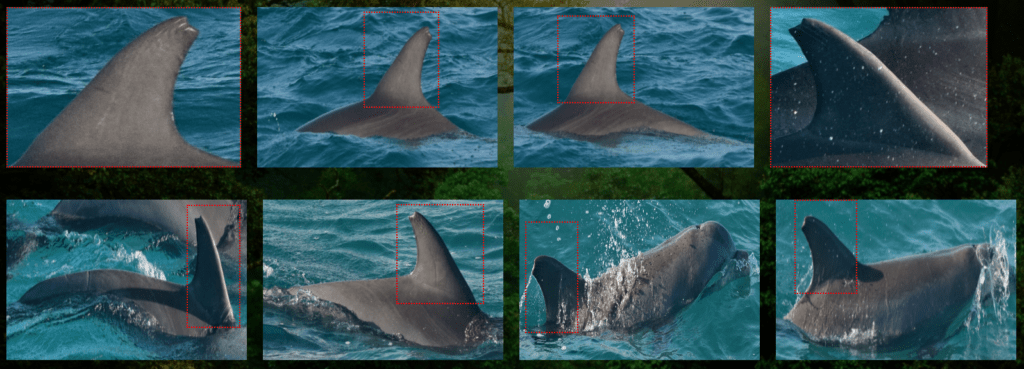
Fortunately, we don’t need to mark the animals. Whales and dolphins acquire a lot of injuries in their day-to-day lives, from boat propellers, sharks, and, a lot of the time, from conflict with other animals of their own species as they fight for mates. As marine mammals age, they accumulate more scars along their peduncle (the muscular portion of the tail leading towards the fluke) or pieces of missing tissue from their dorsal fins, called nicks and notches.
With each successive injury, the pattern of scarring becomes increasingly unique. This is what researchers have been using for decades to identify individual animals and track them over decades.
Applying the Capture-Recapture Technique to Marine Mammal Identification
So where does the ‘capture-recapture’ part of the process come in?
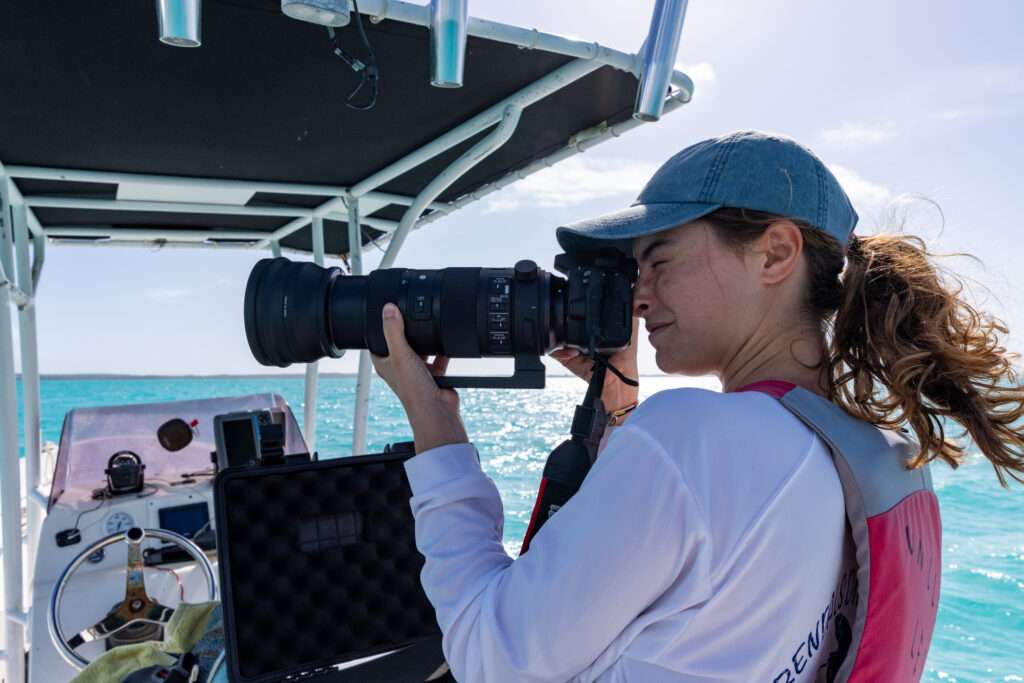
Cetacean surveys rely on photo-identification to confirm the presence of a given individual within a group sighting. By taking photos of the unique markings on each animal, researchers can track how often each individual within a catalogue is re-sighted or ‘re-captured.’
Using photo-identification and capture-mark-recapture techniques, wild populations can be studied from a distance that doesn’t disturb them or cause any change to their natural behaviour. This type of research is known as ‘non-invasive.’ There are minimal impacts on the animals being studied, which means that we can learn about their natural behaviours and social interactions without our presence—as researchers—causing them to shift or alter.
AI Aids Researchers In Animal Identification
There are a few limitations of photo-identification as a method. First, we are limited to windows of time where we’re able to physically observe animals, which rules out any period of time where it’s dark or the weather is hazardous for a vessel to be out on the water. Additionally, the process of going through photos to match them to a catalogue of previously sighted animals can also be quite time-consuming. Bottlenose dolphins can exist at quite high densities in coastal areas, typically around 0.5 individuals per square kilometre (the shallow banks of the Bight of Eleuthera cover approximately 2,500 square kilometres, potentially supporting 1,250 dolphins at this density).
This means that catalogues will contain many hundreds of individual dolphins. In the past, researchers would need to complete this matching step by hand, comparing each photo to their catalogue until they found a match.
Recently, with the development of artificial intelligence (AI), the process of going through these photos has become much faster, and also facilitated global collaboration between research groups to track migratory species as they cross borders and oceans.
Flukebook is an online research platform that uses computer vision algorithms to identify matches between images. When a photo is uploaded, it is compared against a database of hundreds of thousands of images, and any matches are identified within minutes.
Expanding Opportunities for Citizen Science
Members of the public can upload their own marine mammal encounters, and their images will be compared against the catalogues on Flukebook. The Eleuthera bottlenose dolphin catalogue currently contains 245 individuals. By uploading their sightings to Flukebook, citizen scientists can also help researchers track patterns in the distribution of marine mammals by identifying regions along the Eleuthera coastline where they are being sighted more regularly.
So why do researchers want to know how many marine mammals are in a population, or where these animals are spending their time?
Mapping Marine Mammal Distribution
Marine mammals are long-lived, with most species not reaching reproductive maturity until they are at least 5 years of age. Gestation periods can be upwards of 6 months to a year, and the inter-reproductive interval (the period of time before a female can breed again after having a calf) can be multiple years.
All of these factors affect a species’ ability to recover from population decline. Any decrease in the number of animals in a population can take decades to recover from. Continuous monitoring helps researchers rapidly identify any trend towards decreasing abundance in the early stages, giving us time to respond and implement protective measures before a population declines beyond the point of recovery.
Identifying patterns in marine mammal presence throughout the waters surrounding Eleuthera also has valuable conservation applications. Toothed whales are apex predators, hunting fish and squid. Their distribution is largely determined by where they can find the most prey, so any areas where we observe marine mammals regularly gathering to feed are likely important foraging (hunting) grounds.
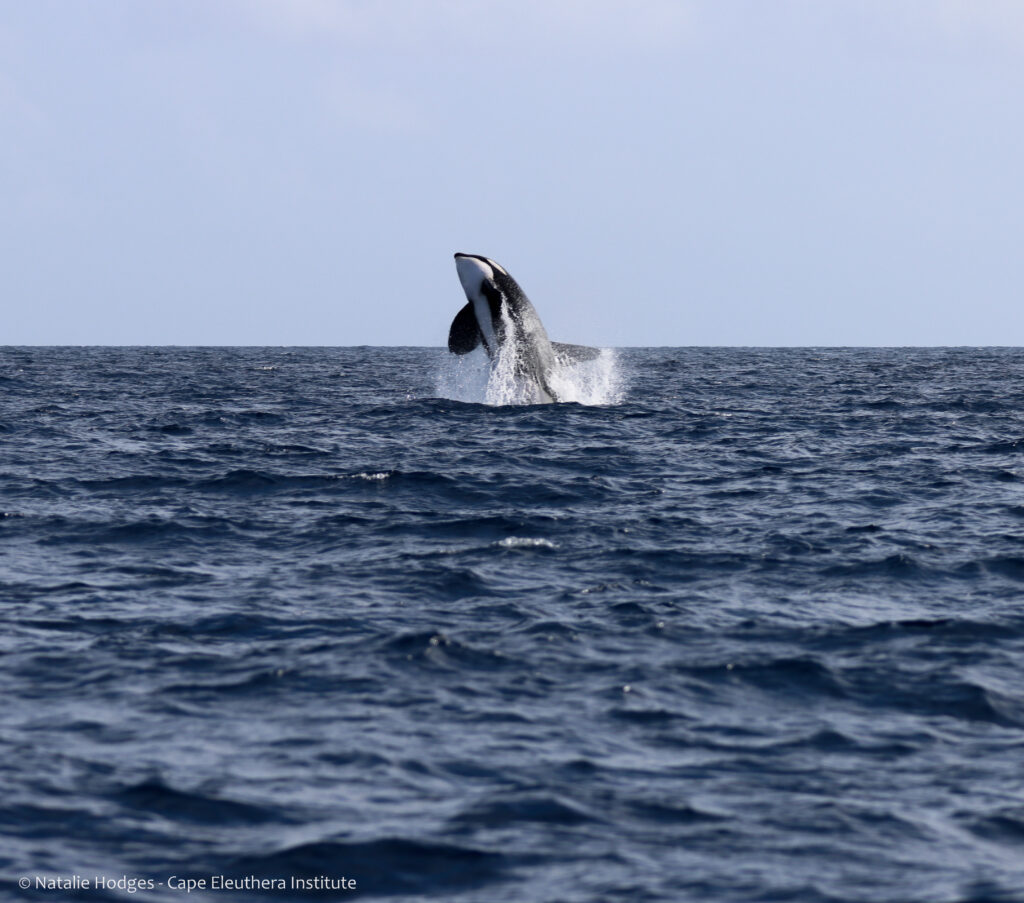
Marine protected areas are a successful conservation tool to provide protected species with the habitat they need for continued survival, protected from disturbance from human activities. Many Eleutherans also rely on access to the ocean as an income source, providing the resources they need for survival. If we are able to pinpoint specific regions which are most critical to marine mammals, we can designate protected area boundaries which support the continued health of our marine mammal populations without restricting access to marine resources for human residents of Eleuthera.
If you are interested in contributing to the ongoing monitoring efforts of Eleutheran marine mammals, you can report your sightings here: https://www.flukebook.org/react/report, or by email to nataliehodges@islandschool.org.
Many thanks to Michael Gould (sailordolphin.com) for sharing photos and sighting data used to create these catalogues.