The 2026 Coral Spawning Season Begins in The Bahamas
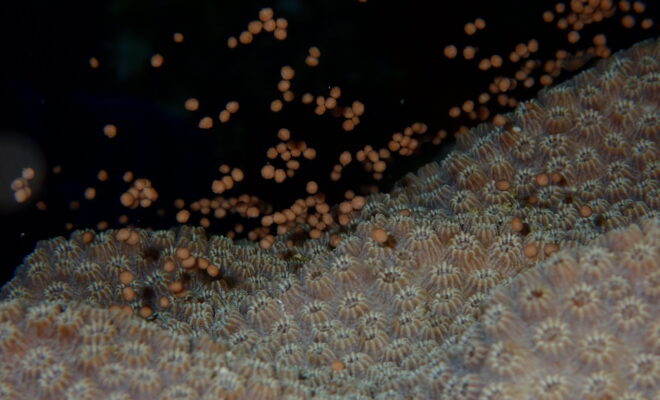
As summer approaches, we look forward not only to warm weather but to one of nature’s most spectacular events. Corals, brittle stars, and even sea cucumbers are preparing for a synchronized mass spawning event happening right on our own reefs!
Divers have been observing these mass spawning events on the reefs for decades. Coral spawning, in particular, has been of interest as the resulting offspring can be used as a key part of coral restoration efforts, making these events invaluable to the success of future coral reefs.
Corals, being animals, have the ability to reproduce, and they can do so in two different ways. Corals reproduce asexually by a process called budding, where their polyps divide and create new ones, effectively increasing the size of the colony. Corals can also reproduce sexually, with the combination of an egg and sperm, known as gametes—just like humans! This creates a new baby coral that is able to settle and grow into a new colony.
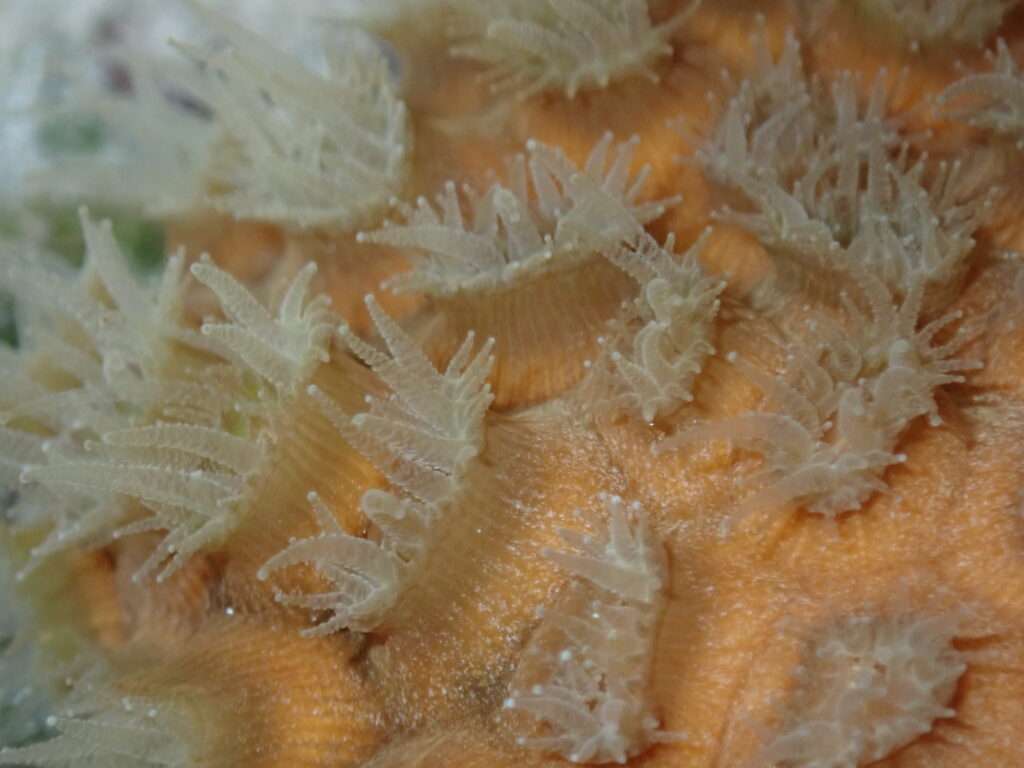
However, corals, unlike most animals, cannot move. They have therefore adapted to coordinate and synchronize the release of their gametes in order to have successful cross-fertilizations and viable offspring. To do this, they use factors such as water temperature, sunset time, and the moon cycle to help with the precise timing and triggering of these events.
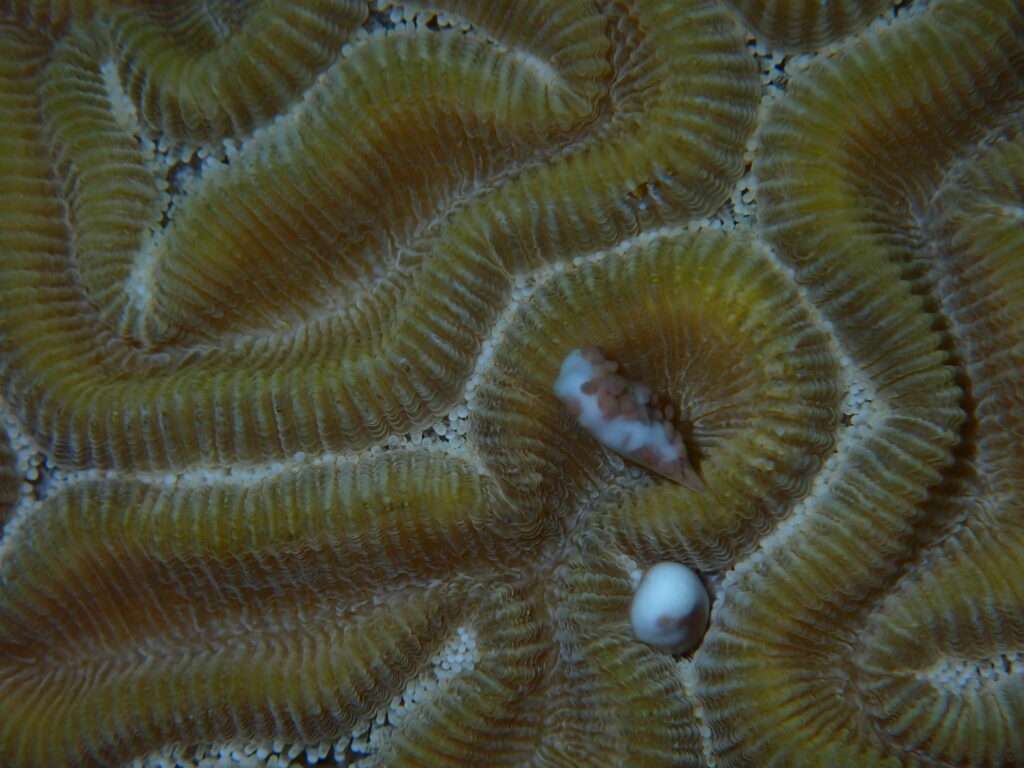
Many Caribbean coral species are hermaphroditic broadcast spawners, meaning individual colonies produce both eggs and sperm. They are packaged together into bundles that range in color from pale pink to brown, depending on the species. Once released, the bundles rise to the water’s surface, where they break apart, allowing fertilization to occur. Other species are gonochoric broadcast spawners, meaning male and female colonies are separate. In these species, eggs and sperm are released independently into the water column. Female colonies release tiny eggs, while males release clouds of sperm that resemble underwater smoke.
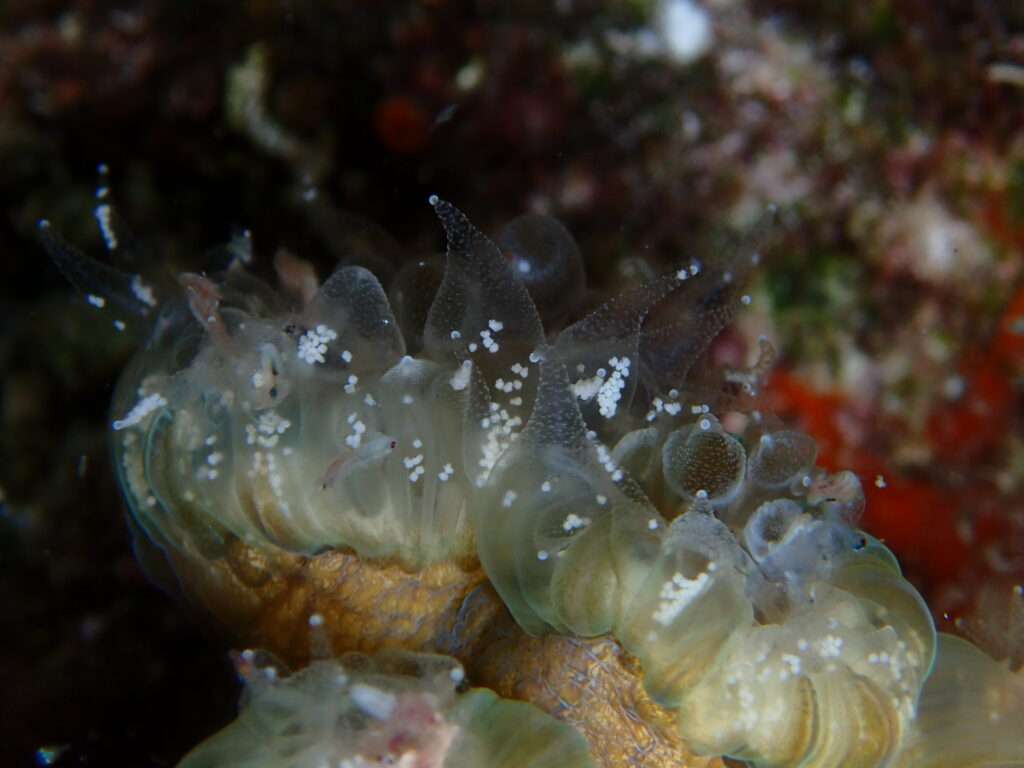
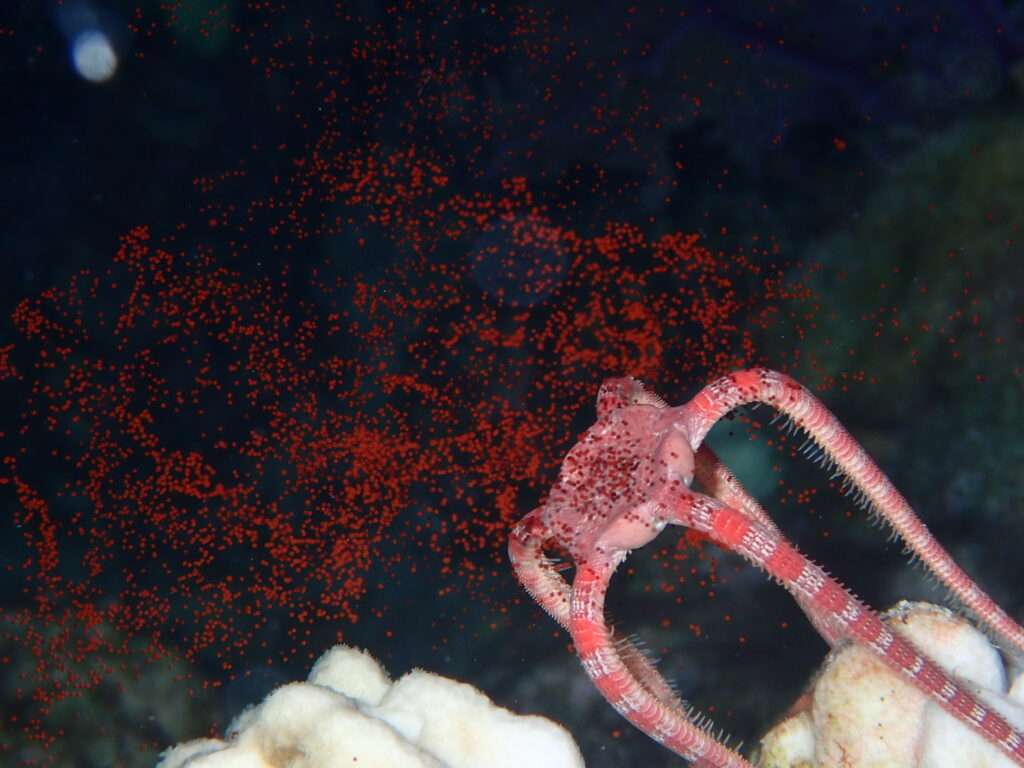
During these mass spawning events, more than just the corals can be seen. Throughout the summer months, a variety of marine invertebrates also synchronize their reproduction. Ruby brittle stars can be seen extending their arms into the water column while releasing thousands of tiny red eggs and clouds of sperm, while tiger tail sea cucumbers often stand upright and release streams of gametes into the surrounding water, and even some sponge species participate in seasonal spawning events.
Tracking Coral Spawning in The Caribbean
Decades of observations throughout the Caribbean have helped researchers identify patterns in coral reproduction. Most spawning activity occurs between April and October, after sea temperatures have begun to warm. The full moon acts as an important timing cue, while sunset helps synchronize the exact release of gametes. Because The Bahamas spans more than 500 miles from east to west, sunset times vary significantly across the archipelago. To improve prediction accuracy, The Bahamas was divided into three spawning zones based on sunset times. While these zones provide useful guidance, observers looking for the best chance of witnessing spawning around a specific island should use local sunset times whenever possible.
Researchers at The Bahamas Coral Innovation Hub, a collaborative partnership between the Cape Eleuthera Institute (CEI), the Perry Institute for Marine Science (PIMS), and The Nature Conservancy (TNC), have, through various observations on the reef, compiled a coral spawning predictions booklet for The Bahamas for 2026. The booklet contains helpful photographs to identify coral, as well as tables with dates and times when possible spawning may occur. Divers are encouraged to use the booklet as an educational resource, to plan dives and (hopefully) witness the excitement of coral spawning events.
Coral spawning is far more than a fascinating natural event; it is a vital process for ensuring the future of coral reefs. Healthy coral reefs provide countless benefits to The Bahamas, from helping protect coastlines to supporting fisheries. Unfortunately, coral reefs continue to face challenges from climate change, marine heatwaves, and coral disease brought on by anthropogenic factors. As coral populations continue to decline, now more than ever, restoration efforts have become crucial to help rebuild Bahamian coral reefs.
To download the Coral Spawning Guide for 2026, click here.