Fall 2025 Student Research Project: Coral
Each semester, Island School students dive into hands-on research alongside scientists from the Cape Eleuthera Institute, contributing to meaningful, place-based studies that explore the unique ecosystems of The Bahamas. These Fall 2025 research groups—focused on conch, corals, lobsters, sharks, blue economy, marine mammals, food security, and sustainable energy—are tackling real-world questions with curiosity, collaboration, and care.
In this blog series, students share their experiences, challenges, and discoveries as they navigate the research process and deepen their understanding of both science and self.
Fall 2025 Coral Research Project: Assessing Sustainable And Artistic Approaches to Coral Out-planting for Future Artificial Reefs
Written by Kailyn Willa, Paul McCullough, Sid Conrad, Ursula Blyth, Indy Hollibaugh, and Bodan Schnitzer with research advisors Silia Woodside and Natalia Hurtado
Coral reefs are a vital component of ocean and land life. They serve as a habitat for hundreds of fish and as protection from storms. However, in the most recent years, the coral reefs have started declining in health and dying.
For example, the coral reefs in Kenya have suffered a lot from human activities such as overfishing, land-based pollution, and climate change, causing 70% of the coral reefs in Kenya to be in poor condition. In the 80s, shallow reefs in the Caribbean experienced a massive mortality of coral species commonly known as Staghorn and Elkhorn corals. However, there are new methods to restore these dying reefs.
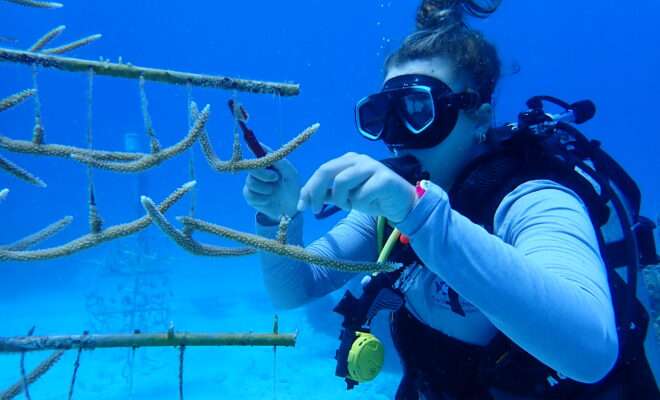
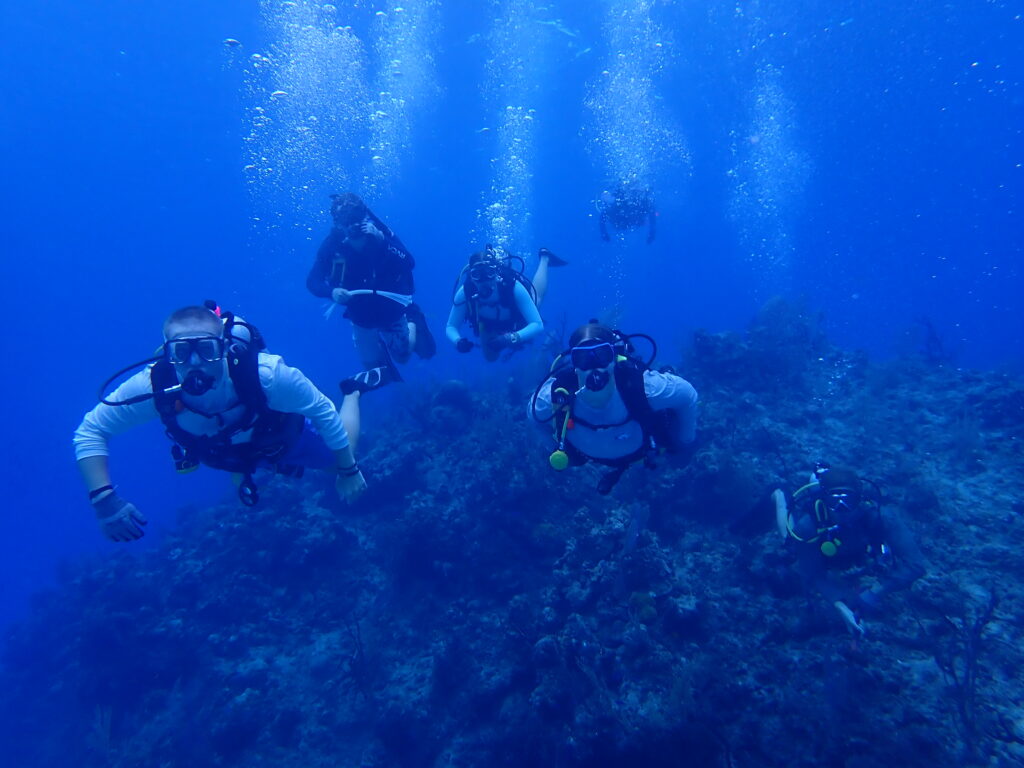
The Bahamas Coral Innovation Hub (BCIH), based at the Cape Eleuthera Institute (CEI), has spent many years growing coral nurseries (Figure 1) and experimenting with different reef restoration techniques, artificial reefs, and coral transplantation. Specifically, the team has been working with Acropora cervicornis, or Staghorn coral, and making coral fragments to reproduce the coral asexually. Every semester, students are tasked with becoming a part of a research group and a project that they will focus on for the entirety of their semester. Students work with scientists and researchers from around the world and on the island to help them succeed and help guide this project. During the Fall semester, students have been learning about coral propagation techniques (Figure 1) and will be testing sustainable materials with an artistic approach to coral out-planting for future artificial reefs.
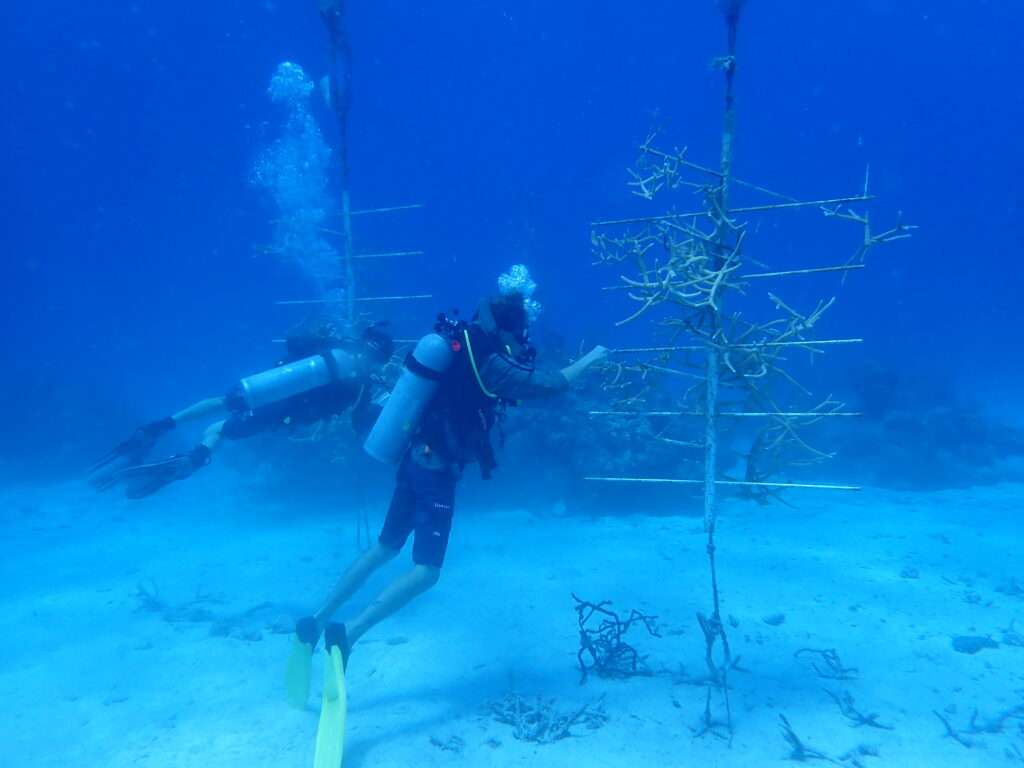
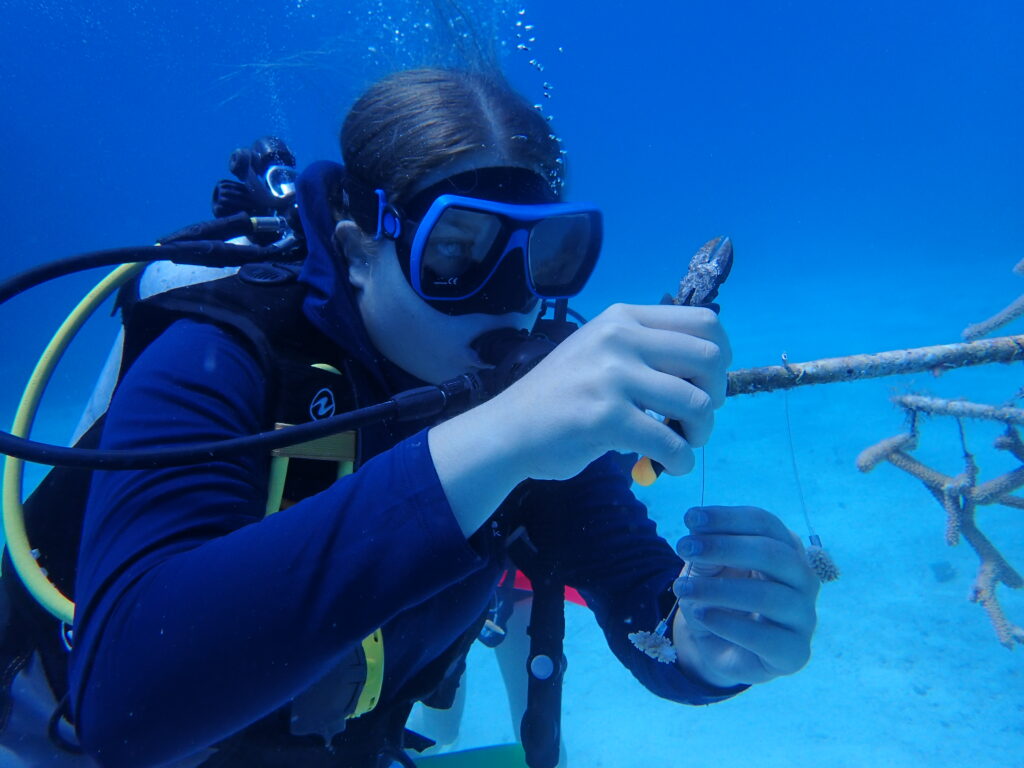
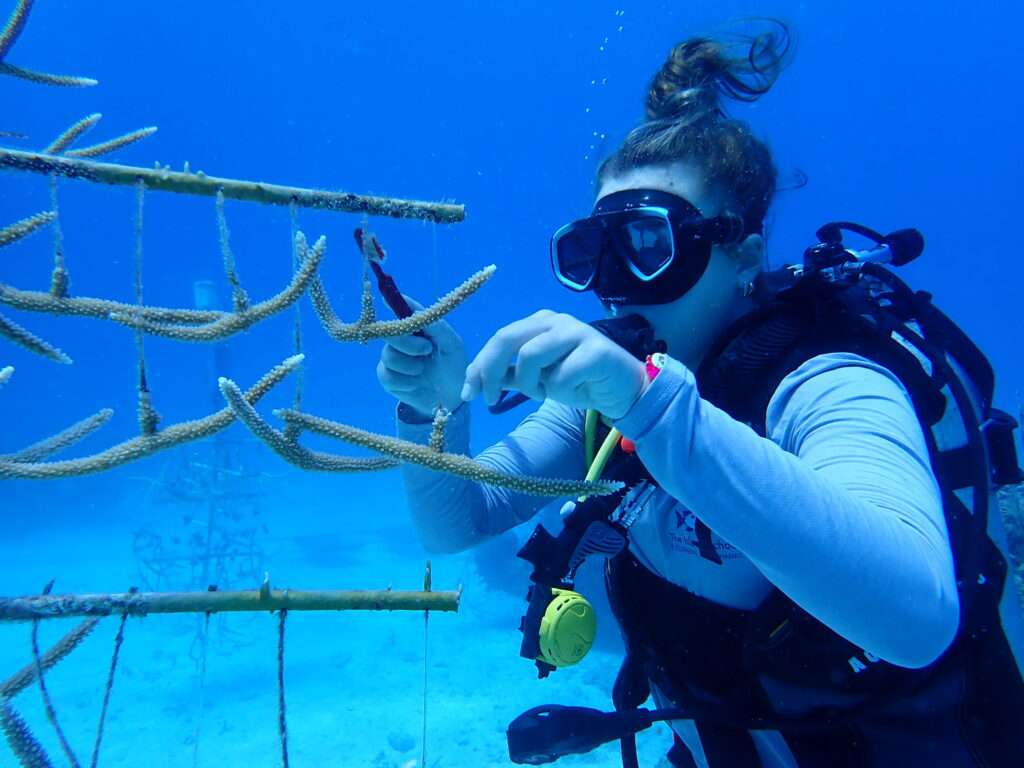
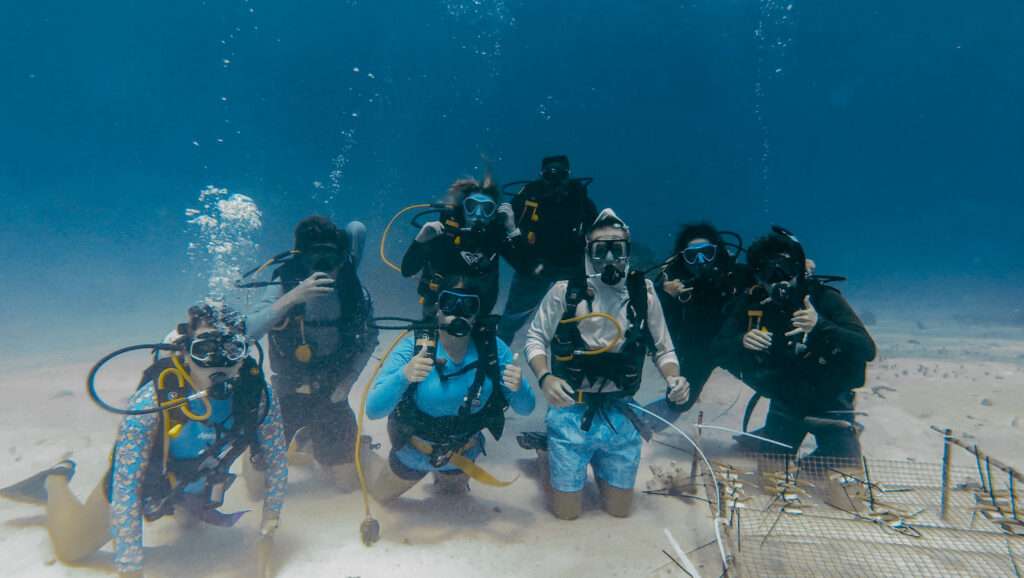
Figure 1: Semester students learning about ocean-based coral nurseries (left), how to propagate the corals (middle), and how to maintain the mid-water structures where corals are growing.
Objectives
Throughout the semester, a group of students will be working towards answering these questions (Figure 2): How do various types of sustainable materials influence the growth and well-being of Staghorn coral? They will also investigate the changes in the benthic community when different sustainable materials are used. They will mostly follow two experiment designs to focus on for this project. One focus is on coral growth and health; the actual experiment for this part of the project will be attaching fragments of coral from the nurseries to substrates and then monitoring the health and growth of the coral. The second focus will be benthic succession; the experiment will use empty substrates and then, similarly to the first, monitor the growth of organisms on the substrates. This is to determine the benthic succession of marine flora and fauna on different sustainable materials. The sustainable materials that are being tested are different combinations of conchshell, limestone, and glass with cement. All three of these materials are waste in the Bahamas that is abundant and is in need of being put to use.
Methods
The students installed a table nursery for the experimental setup (Figure 3), then they cut about 10 (cm) of coral off the living coral that is growing on the mid-water nurseries. They then take the coral and attach it to different substrate bases. There are 4 different types of substrates that the coral is attached to and tested on. The types of substrates are cement and conch shell (limestone/calcium carbonate/CaCO₃), cement with glass, cement, and lastly cement mixed with lime (calcium oxide/CaO, which is made from burning conch shell, which gets rid of the CO₂) and glass. The substrate with coral attached is then connected with a zip tie to the table nurseries. The students then continue the same process 5 times for each type of substrate until finally they are all connected to the table nursery.
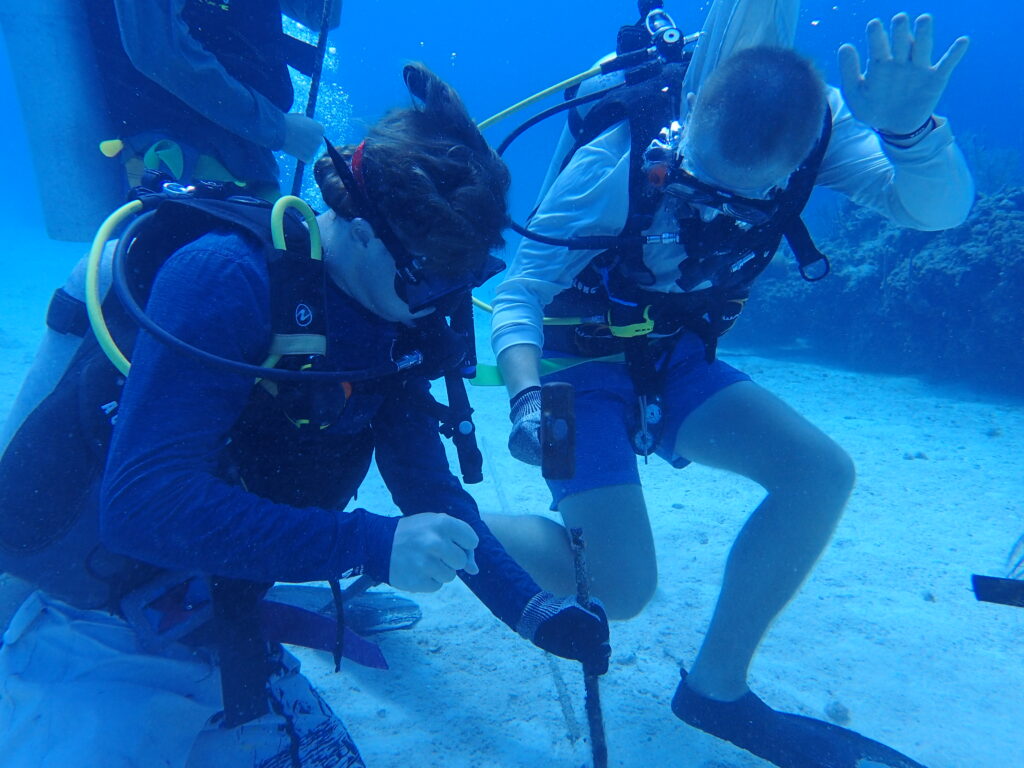
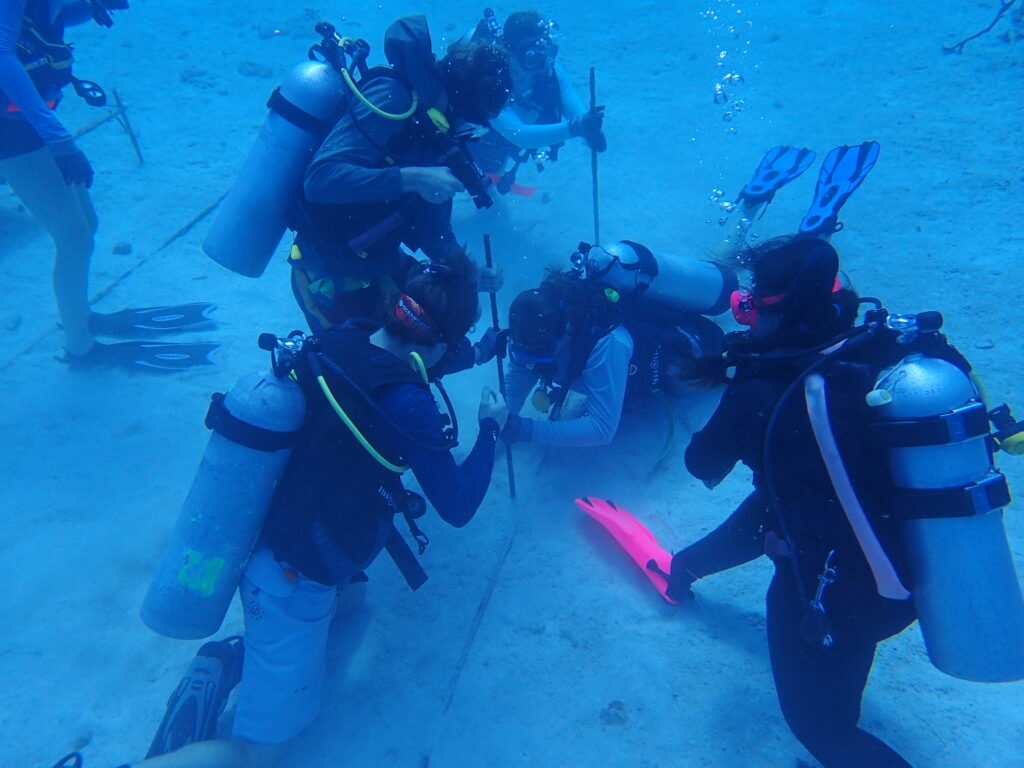
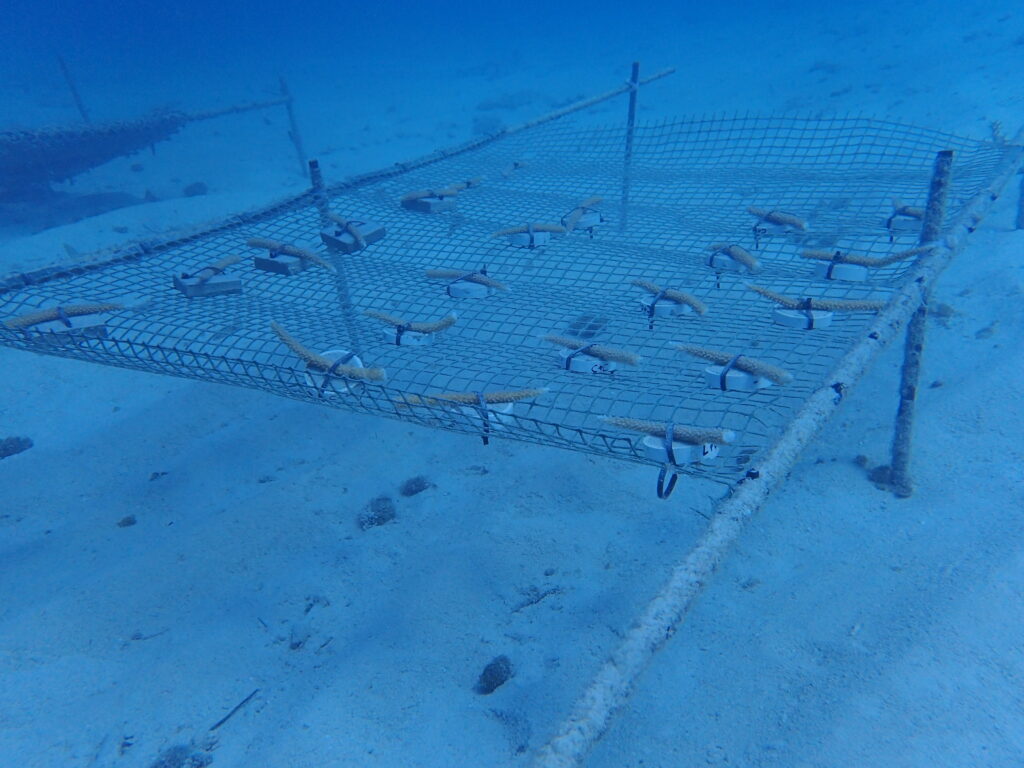
Figure 3. Table nursery installation (left & middle) and experimental setup (right).
Data collection
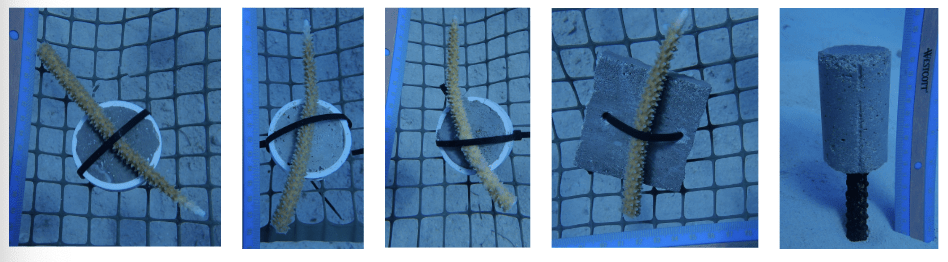
The students measure the substrates by taking pictures of the fragments next to a ruler (Figure 4), so that they can put those pictures into a computer program where they can compare the growth to scale. In addition to their diving work, the group also dedicates time to reviewing past peer-reviewed articles. They actively participate in discussions about the small changes they can make in their community to significantly impact the coral ecosystem.
Hypothesis & Expected Results
The students anticipate that the coral transplants will yield varying degrees of success. However, they hypothesize that the substrates with more texture, such as concrete and glass shards and concrete and sand, will demonstrate the highest success rates due to their enhanced ability to allow coral anchor and grow upon these substrates. For the second phase of the project, they anticipate a similar outcome. They believe that algae and sea sponges will favor substrates with greater anchorage capacity, including concrete and glass shards and concrete and sand. Nevertheless, they anticipate that the algae will eventually distribute itself evenly across all substrates.
Citations:
Abelson, A. (2006). Artificial reefs vs coral transplantation as restoration tools for mitigating coral reef deterioration: Benefits, concerns, and proposed guidelines. Bulletin of Marine Science. 78(1). 151-159.
Mwaura, J. M., Murage, D., Karisa, J. F., Otwoma, L. M., & Said, H. O. (2022). Artificial reef structures and coral transplantation as potential tools for enhancing locally-managed inshore reefs: A case study from Wasini Island, Kenya. Western Indian Ocean Journal of Marine Science, 21(2),83–94.
Patton, A. (2023, January 23). Reefs are in trouble. Can scientists nurture more resilient coral? The Christian ScienceMonitor.https://www.csmonitor.com/Environment/2023/0123/Reefs-are-in-trouble-Can-scientists-nurture-more-resilient-coral.