Fall 2025 Student Research Project: Energy
Each semester, Island School students dive into hands-on research alongside scientists from the Cape Eleuthera Institute, contributing to meaningful, place-based studies that explore the unique ecosystems of The Bahamas. These Fall 2025 research groups—focused on conch, corals, lobsters, sharks, blue economy, marine mammals, food security, and sustainable energy—are tackling real-world questions with curiosity, collaboration, and care.
In this blog series, students share their experiences, challenges, and discoveries as they navigate the research process and deepen their understanding of both science and self.

Making the world Brighter, One Solar Panel at a Time
Written by Brian Forster, Ethan StJean, George Jensen, Miles Hunter, Rachel Thedinga, Samantha Clark
It’s no secret that global warming is a huge problem in the world today, and some could argue it’s the biggest threat humanity has faced to date. This semester at The Island School, the energy research program is striving to make a dent in our carbon emissions using solar energy.
Currently, the majority of our global population runs off of power coming from fossil fuels, like gas, coal, and diesel. These energy systems are proven and accessible. Unfortunately, these sources emit Carbon Dioxide (CO2) which leads to climate change – rising temperatures and long term shifts in weather patterns [1].
Even though Small Island Developing States (SIDS) aren’t the ones emitting the most carbon, their locations leave them to face some of the most detrimental impacts from climate change. Some of these impacts are coral bleaching, loss of biodiversity, stronger storms, and loss of mangroves [2]. In addition, most small islands are relatively flat and low to the water. This poses a major threat because as the earth gets hotter, the water expands, glaciers melt, and sea levels rise, putting a large area of these islands underwater. By 2050, the areas affected by flooding are expected to triple [2]. This would be devastating to most SIDS’ ecosystems, economies, and cultures. For example, Tuvalu, a small island country near Australia, is having to evacuate their entire population because of this.
Like many SIDS, The Bahamas relies almost fully on imported fossil fuels for energy. Electricity here is sourced from massive power plants that burn diesel. This power is as expensive as it is destructive, making it burdensome for the majority of citizens. To combat these issues, The Bahamas has a goal of reaching 30% clean energy by 2030 [3,4]. This change isn’t something that can happen overnight. To reach this goal, citizens must unite over a common challenge. By raising awareness and educating people about where energy comes from, everyone can pitch in and change their own way of life for the well-being of our planet and society.
Grid power is also unreliable due to aging infrastructure, frequent storms, and flooding. The infrastructure that produces and transports power can be destroyed, which can lead to power outages that can stretch anywhere from a couple of minutes to upwards of a few months [5]. Furthermore, the money that is spent on electricity from large companies often does not benefit the community and instead benefits large corporations not even based in The Bahamas [5]. The fact that citizens are paying extra for power, combined with all of this money leaving The Bahamas– no longer circulating in Bahamian communities due to the influence of large corporations– is economically difficult.
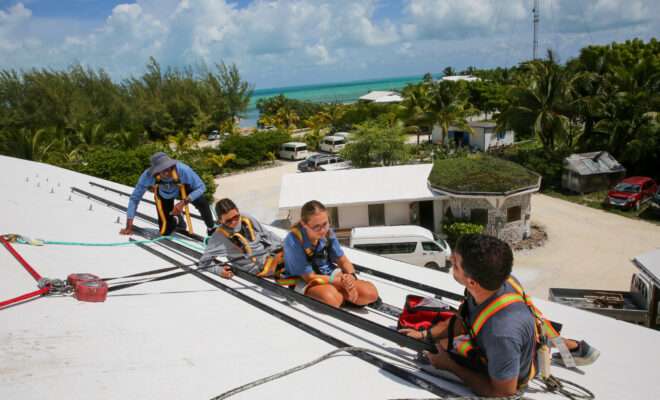
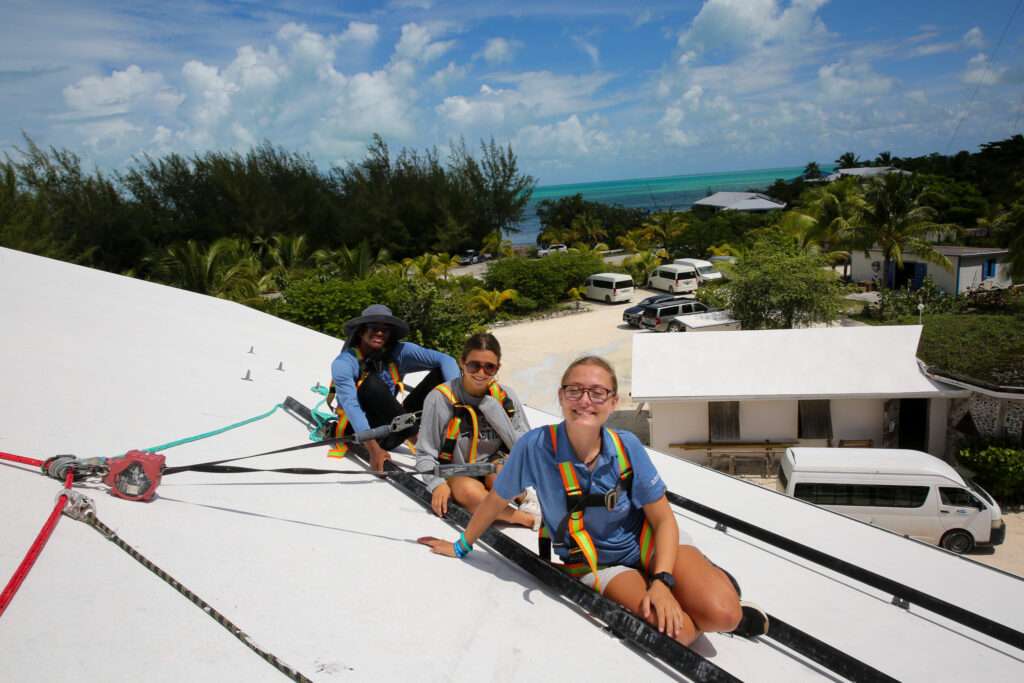
Our motto at The Island School is “leadership affecting change,” which is why we, the Energy Research Team, took the challenge of implementing a source of clean energy into our own hands. We will be installing 20 new, state-of-the-art solar panels on our Center for Sustainable Development (CSD), which serves as our hurricane shelter on campus. Currently, around 40 percent of all electricity used on campus is provided by renewable sources. Our goal by the end of the semester is to get that number closer to 50 percent. An additional goal we have is to add batteries to our new solar system, allowing us to store excess energy that we can use when the grid fails [6].
“How does a solar panel work?” You may ask. “What dark magic are these students doing, harvesting energy from the sun?” Well, to put it simply, a solar panel receives energy from the sun and converts it to electricity. An inverter then converts that electricity from Direct Current (DC) to Alternating Current (AC) [6].
Our instructor, Brett Ziter, introduced us to a concept called Distributed Energy Generation (DEG). In simple terms, DEG involves sourcing our energy locally and sustainably, so that we no longer have to rely on massive power plants that pollute the environment and long runs of power lines that could go down in a storm, leaving people without power for an undefined amount of time. This is where our idea of implementing solar panels comes into play.
Particularly in the last 25 years, advancements in solar energy have taken the world by storm. Prices drop as the panels become more compact, efficient, and common within our society [6]. The Bahamas, located near the equator, experiences intense sun exposure, making solar panels even more productive. Furthermore, batteries can be installed, which allows for stored solar energy and less need to depend on the grid [6,7]. All of these reasons made the energy team amped to create a plan for our campus.
Progress
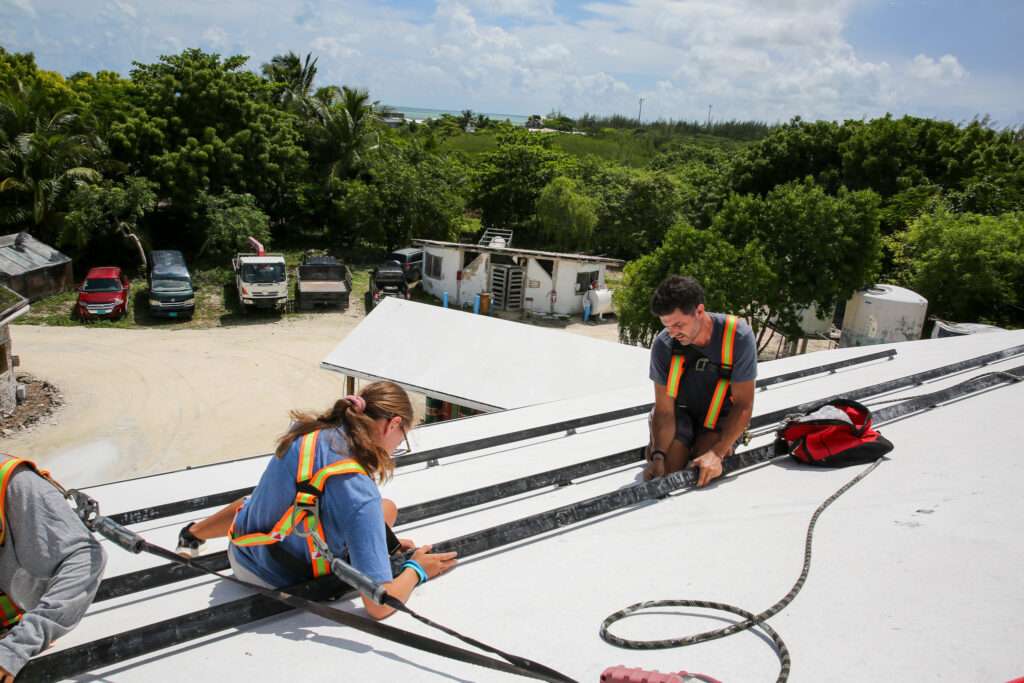
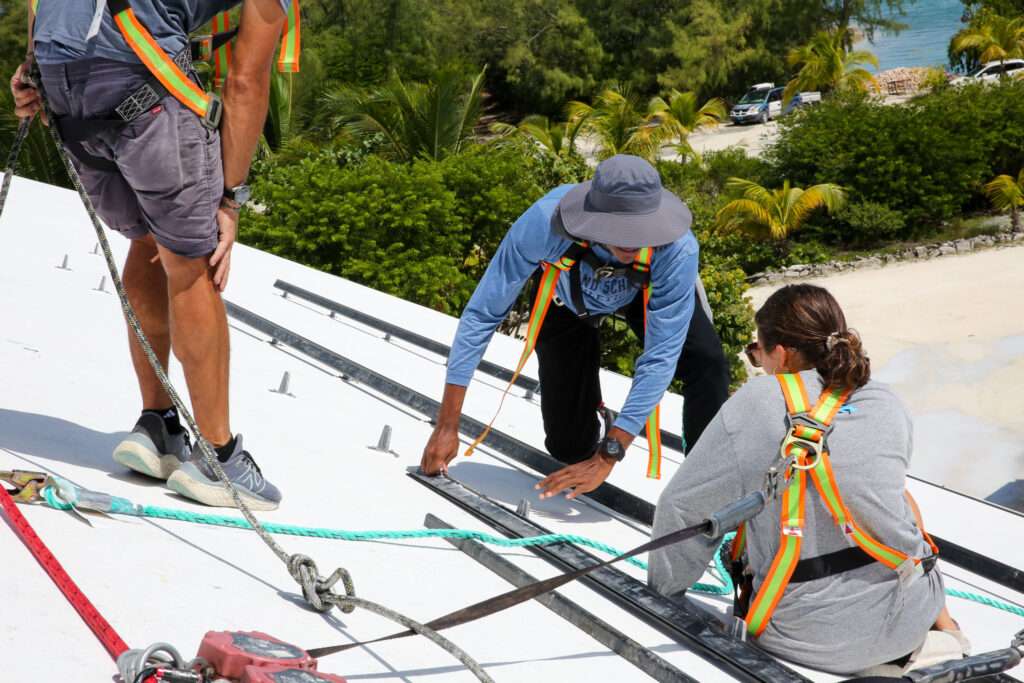
So far, we’ve installed several aluminum rails, wires, and 16 out of 20 solar panels. Over the course of the next few weeks, we expect to finalize our system which will produce sun-powered electricity for the next 40 years. By the end of the semester, this new energy boost will have profound impacts on our community. When we return from expeditions, we will analyze the early data and see how much our campus has improved with this new installation while simultaneously exploring what we still need to do to leave a lasting change.
Conclusions
By installing solar panels, we are not only confronting issues like climate change but also raising awareness of an important societal issue. Our hope is that we, and our project, can inspire people around the world to push towards a sustainable energy transition that slows the effects of climate change and benefits local communities. Making a difference isn’t as hard as you think it is. We hope to set an example for others and that you can find your own way to contribute to our global goal of sustainability!
References
- Holechek 1, Geli, H., Ect, (2022), A Global Assessment: Can Renewable Energy Replace Fossil Fuels by 2050?, sustainability, https://doi.org/10.3390/su14084792
- Vousdoukas, M. I., & Athanasiou, P. (2023, October 9). Small Island Developing States under threat by rising seas even in a 1.5 °C warming world. nature sustainability, 6, 1552-1564. https://doi.org/10.1038/s41893-023-01230-5
- National Renewable Energy Laboratory, US Department of Energy. (2015). Energy Transition Initiative-Energy Snapshot Bahamas.
- Whitaker, B. (2022) Storm Ravaged Bahamas Rebuilding Solar power grid with Emphasis on Solor Energy, CBS News https://www.tribune242.com/news/2024/aug/13/eleuthera-residents-to-get-50-power-rebate/
- Ziter, B., Wangenheim, E., Battiston, I., Ramirez Ruvalcaba, S. (2025). Review of last three research classes [PowerPoint Slides].
- (2024) An introduction to Solor PV Systems, Solor Design Guide, https://solardesignguide.com/an-introduction-to-solar-pv-systems/
- Ziter, B., Wangenheim, E., Battiston, I., Ramirez, S. (2025). Key Concepts – Forms of Energy & Consumption vs Production [PowerPoint Slides].